






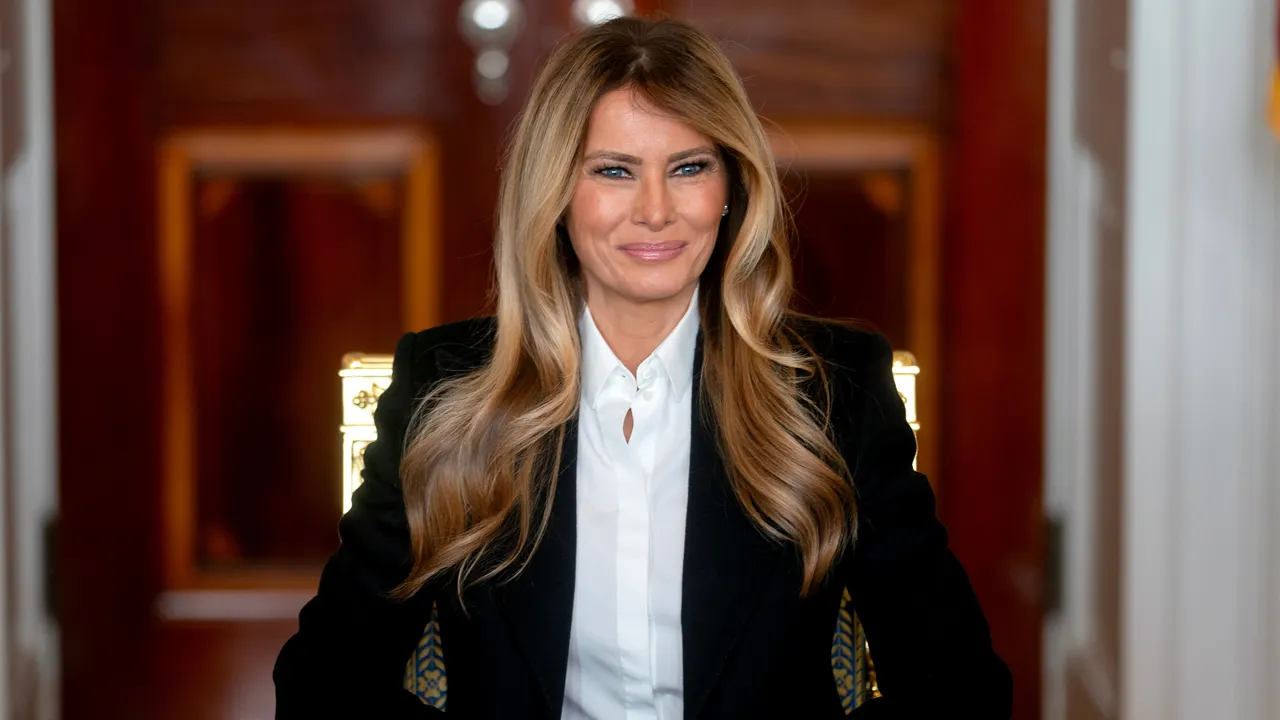
In the heart of a world torn by conflict, where families are shattered and children’s futures hang in the balance, First Lady Melania Trump stepped forward on a quiet Thursday, her voice a beacon of hope amidst the noise of geopolitics. Surrounded by the opulent yet purposeful setting of the White House, she announced through a carefully worded statement that yet another group of Ukrainian children had been reunited with their families, thanks to a collaborative effort between Russia and Ukraine. It wasn’t just news; it was a testament to her tireless dedication to the innocence of youth displaced by war. “I appreciate that Russia and Ukraine are dedicated to bringing back the children who have been displaced because of the circumstances surrounding this conflict,” she wrote, her words echoing with a mother’s empathy. For Melania, whose own immigrant story spoke volumes about resilience and reinvention, this wasn’t mere diplomacy—it was personal. She had traveled this path before, back in October and December of the previous year, orchestrating the return of 15 children, each reunion a fragile bridge across borders. Now, with this third wave, involving six more young souls finding their way home, she urged both nations to dig deeper, to intensify their efforts and ensure every child, without exception, was safely returned to loving arms. The weight of those words wasn’t lost on her; she imagined the tearful embraces, the whispers of “mama” after months of uncertainty, the simple joys of play and safety restored. Sitting at her desk, perhaps sipping a cup of tea from her Slovenian heritage, she typed the statement with a resolve born from her own lived experiences, insisting on the one word she’d famously added to her husband’s inauguration speech: unity. In an era of division, Melania Trump’s role as first lady had evolved into that of a global advocate, her initiative not just political but profoundly human, reminding us that behind every statistic lies a person, a family yearning for wholeness. Russian officials, including presidential envoy Kirill Dmitriev and children’s rights commissioner Maria Lvova-Belova, chimed in via social media, their gratitude sincere: “I thank the First Lady of the United States, Melania Trump, for her unwavering commitment and engagement in efforts to reunite children with their families.” It was a rare moment of bipartisan praise in a polarized world, where Melania’s passion for children’s well-being transcended national lines, proving that even in the coldest of conflicts, compassion could thaw the hardest hearts. Her efforts painted a picture of a woman who, despite the glare of public scrutiny, chose to focus on the vulnerable, turning the symbolic into the substantive, one child’s smile at a time, fostering a sense of possibility in an otherwise bleak landscape.
As I delve deeper into Melania Trump’s journey as a peacemaker, it’s impossible not to admire how her personal convictions have shaped real-world actions, transforming what could be hollow headlines into stories of triumph and humanity. This third reunification wasn’t an isolated event; it was the culmination of strategic diplomacy that began long before the announcement. Early last year, Melania had penned a powerful “peace letter” directly to Russian President Vladimir Putin, a bold move that showcased her fluency in personal advocacy. “It is time to protect children and future generations around the globe,” she implored, her message carried by President Trump himself to the leader during their Alaska summit. Imagine the scene: the heavy envelope passed between two masters of negotiation, its contents not just words but a call to conscience. Putin, known for his unyielding stance, reportedly engaged with the letter, signaling a crack in the armor of international standoffs. This wasn’t Melania playing politics; it was her maternal instinct at work, drawn from a life where she built an empire in modeling before entering the chaos of American politics. Her approach felt authentic, rooted in the same “Be Best” initiative she’d championed earlier in her tenure, which aimed to uplift children’s potential through kindness and education. Critics might scoff at diplomacy in skirts, but for the families involved, Melania’s involvement meant tangible progress—children who had been separated by the fog of war, now laughing in playgrounds or clutching handmade gifts from strangers. She saw these kids not as pawns in a larger game but as individuals with names, dreams, and the innate right to safety. Her persistent outreach, fueled by heartfelt letters and direct pleas, bridged gaps that mere treaties couldn’t, humanizing a conflict that statistics often dehumanize. In a time when social media divides us further, Melania’s analog approach—handwritten missives and face-to-face deliveries—offered a refreshing counterpoint, proving that genuine connection, born from empathy, could yield results that echo far beyond the White House gates, inspiring others to think beyond borders and see the shared humanity in every displaced child’s eyes.
Yet, Melania’s advocacy extended far beyond the spotlight of international accords; it intimately touched lives right here in America, as evidenced by her cherished Valentine’s Day tradition that took place just before the announcement, a reminder that her compassion knew no geographical bounds. On a crisp Wednesday, the first lady visited the Children’s Inn at the National Institutes of Health in Bethesda, Maryland, a sanctuary for young patients battling rare and serious diseases. Entering the brightly colored rooms filled with balloons and crafts, Melania didn’t arrive as a distant figurehead but as a warm participant, kneeling down to chat with the kids, sharing smiles and stories that made her seem more like a favorite aunt than a celebrity. The children, some hooked to IVs yet beaming with curiosity, asked her how they should address her—”Call me Melania,” she replied effortlessly, stripping away formality and fostering genuine bonds. Together, they crafted Valentines, cutting paper hearts and scribbling messages of love, a simple act that underscored her belief that “love reveals itself in many forms, especially in the hardest moments of care and compassion.” Watching the little ones’ faces light up, Melania reflected on the inn’s vital role in supporting families during grueling clinical trials, her heart full of admiration for their resilience. NIH director Jayanta Bhattacharya, Children’s Inn CEO Jennie Lucca, and Vice Chair Scott Royal stood by, witnessing a scene straight out of a heartfelt storybook—a first lady not just visiting, but truly engaging, making arts and crafts a metaphor for healing. She had been here before, in 2018, 2019, and 2020, each visit a ritual of reassurance; now, amid the COVID shadows lingering, it felt even more poignant. “Returning to the Children’s Inn at NIH is a special reminder of the warmth that exists here year-round thanks to the profound resilience of these young people and the dedication of those working to provide comfort, hope and support during clinical trials,” she said, her voice carrying the weight of someone who understood pain intimately, perhaps drawing from her own challenges as a newcomer to America’s elite circles. This wasn’t about photo ops; it was Melania humanizing the grueling fight against disease, turning a hospital visit into a celebration of spirit, reminding us all that even in illness, love and creativity endure, sparking joy that no ailment could fully dim.
Melania’s multifaceted role allowed her to weave a tapestry of initiatives, each thread revealing a woman whose passion for children was as boundless as her imagination, as showcased in her recently released film, “MELANIA.” The documentary offered an intimate peek into her world, far removed from the tabloid headlines, portraying her as a multifaceted leader who spoke fluent French during a dialogue with France’s First Lady Brigitte Macron, discussing the “Be Best” campaign—a platform designed to inspire kindness and well-being among youth. One scene captured her meeting Spain’s Queen Victoria at Mar-a-Lago, where they exchanged ideas on children’s programs, their conversation a fusion of regal poise and shared earnestness. But Melania didn’t stop at talks; she materialized her vision through action, securing a staggering $25 million investment for foster youth in the president’s 2026 fiscal year budget, a financial lifeline that promised to uplift thousands of vulnerable kids. Watching the film, viewers glimpsed the real Melania—the model-turned-diplomat who built a life of purpose, from Slovenian roots to global influence, proving her initiatives weren’t mere hobbies but lifelines for the overlooked. She understood the scars of displacement, not just from war-torn Ukraine but from her own transatlantic journey, channeling that empathy into tangible support. Her film humanized her further, showing not the glam of fashion runs but the grit of advocacy, where a handshake with a foreign queen led to real change. In foster care, where children often feel lost in the system, Melania’s allocation meant better resources—therapists, mentors, safe homes—turning policy into progress. It’s hard not to feel inspired by this side of her: a woman who, amidst the chaos of politics, chose vulnerability, speaking of love as the greatest healer, her story a narrative of transformation that encouraged ordinary people to extend a hand, to see in every child’s eyes a reflection of their own potential for kindness.
As we reflect on Melania Trump’s endeavors, it’s clear her influence extends like ripples on a pond, touching lives across continents with a grace that defies the cynicism of our times, all while navigating the pressures that could break anyone else. The reunifications she facilitated weren’t just diplomatic wins; they were emotional rescues, returning children to the warmth of family amidst a conflict that had stolen so much. Her Valentine’s visits to places like the Children’s Inn exemplified a hands-on approach, where presidential visits felt like heartfelt gatherings, strengthening community bonds and highlighting the indomitable spirit of those facing adversity. In her film and initiatives, Melania emerged not as an enigma but as a relatable figure, one whose Slovenian upbringing infused her work with a pragmatic warmth, reminding us that leadership isn’t about power but about lifting others. Yet, challenges linger—tensions in places like Minneapolis post-shootings, where she called for unity, underscoring her ongoing plea for national harmony. Her story, interwoven with events like adding unity to her husband’s speech, paints a portrait of perseverance. Today, with Fox News articles now listenable for accessibility, Melania’s messages reach even wider audiences, transforming news into narration, inviting listeners to feel the tug of empathy. In a world yearning for connection, her work humanizes the headlines, urging us to foster the best in ourselves, one child’s smile at a time.
To encapsulate Melania Trump’s profound impact, one must appreciate how her personal narrative intersects with global realities, creating a legacy of compassion that resonates deeply in an interconnected world. From the emotional reunions of Ukrainian children, each a victory against dislocation, to her intimate interactions at the Children’s Inn, Melania has redefined the role of first lady—from symbolic figure to active humanitarian. Her “peace letter” to Putin and investments in foster care reveal a strategist with a heart, bridging divides with eloquence and action. The Valentine’s Day crafts and film glimpses add layers, making her relatable and authentic. Amid broader calls for unity, as seen in Minnesota’s unrest, her voice champions reconciliation. Now, with the ability to listen to Fox News, her story gains auditory life, pulling at heartstrings. This isn’t just about policy; it’s about humanity, a reminder that in tumultuous times, one person’s empathy can mend countless lives.Melania Trump has once again emerged as a beacon of humanitarian effort in the ongoing Russia-Ukraine conflict, announcing the successful reunification of a third group of Ukrainian children with their families through a bilateral initiative between the two nations. In a heartfelt statement released on Thursday, the First Lady expressed her gratitude for the cooperation and dedication shown by both Russia and Ukraine, emphasizing that this act directly addresses the displacement caused by the war’s circumstances. Her words carried a sense of urgency, urging both sides to escalate their joint efforts to ensure the safe return of every displaced child, no matter how complex the challenges might be. This announcement marked a significant milestone, as Mrs. Trump noted it was the third such reunification since she began her strategic involvement, and she optimistically predicted more achievements ahead. Reflecting on her role, Melania saw this not just as a diplomatic victory but as a deeply personal cause, rooted in her global passion for children’s well-being, which has become a hallmark of her tenure as First Lady. The announcement’s timing also aligned with broader themes of unity, especially following her insistence on including the word in President Trump’s inauguration speech, a subtle yet powerful declaration that resonates with her commitment to bridging divides. Russian officials echoed her sentiments; presidential envoy Kirill Dmitriev shared remarks from Maria Lvova-Belova, Russia’s commissioner for children’s rights, who praised Melania’s unwavering dedication and engagement in the reunification process. This international commendation underscored how Melania’s initiatives have transcended political boundaries, fostering a rare cross-cultural collaboration. Her work in this area began to gain traction toward the end of last year, when she facilitated the return of 15 children in October and December, each reunion a testament to her tireless advocacy. These efforts gained further momentum with her historic “peace letter” to Russian President Vladimir Putin in August, delivered personally by President Trump ahead of their Alaska summit. In the letter, Melania implored Putin to prioritize the protection of children and future generations, framing war’s toll on the young as a universal tragedy that demands immediate action. This direct communication, part of her evolving role in international diplomacy, highlighted her ability to humanize complex geopolitical tensions by focusing on their human cost. For Melania, whose own life story as an immigrant from Slovenia to the United States instilled in her a deep empathy for those displaced and in need, these initiatives represented more than policy—they were a heartfelt extension of her identity as a protector of innocence. The reunifications involved an elaborate process, blending diplomatic negotiations with on-the-ground support, where children were carefully matched with their families amid the chaos of war. Melania often imagined the emotional reunions: tear-streaked faces lighting up, warm embraces after months of separation, and the promise of stability in a world turned upside down. Her involvement, drawn from personal conviction rather than obligation, brought a sense of urgency and humanity to a conflict often discussed in strategic terms. Beyond the headlines, Melania’s sentience about children’s vulnerabilities came to life in intimate stories shared by families—tales of lost toys reclaimed, bedtime stories resumed, and small joys rediscovered. Each return humanized the statistics of displacement, turning abstract numbers into vivid narratives of hope and resilience. Her approach, blending empathy with action, encouraged others to see the war’s human face, fostering a global ripple effect of compassion that extended invitations for similar efforts in other troubled regions. Amid this, Melania’s collaboration with Russian figures, while controversial to some, exemplified her diplomatic finesse, proving that even amid adversary relations, shared humanitarian goals could yield progress. This aspect of her work challenged stereotypes, positioning her as a pragmatic idealist who navigated ideological divides for the greater good. Her statements and actions painted a picture of a First Lady who viewed herself not as a bystander but as an active participant in shaping a more empathetic world order. As the sixth furor of reunifications since her involvement, this latest group of six children added to a growing list of lives restored, each one a stepping stone toward broader peace. Melania’s optimism that “more progress will come” reflected her enduring belief in the power of persistent, heart-centered diplomacy, reminding us that in the tapestry of global conflicts, individual stories of return can weave threads of reconciliation.
The recent developments in child reunification are deeply intertwined with Melania Trump’s broader legacy of compassion, particularly her Valentine’s Day tradition that unfolded just days before her announcement, offering a poignant contrast to the international drama and emphasizing her multifaceted advocacy for vulnerable youth. On Wednesday, the First Lady made her annual pilgrimage to the Children’s Inn at the National Institutes of Health (NIH) in Bethesda, Maryland, a haven for children battling rare and serious illnesses. Arriving with an air of warmth and accessibility, Melania engaged directly with the young patients, families, and NIH staff, participating in heartfelt activities that highlighted the power of simple human connections. The Children’s Inn, with its vibrant atmosphere designed to ease the burdens of clinical trials, became a canvas for Melania’s message of love and resilience. During her visit, she joined the children in creating Valentines, cutting shapes, coloring cards, and exchanging laughs, an act that stripped away the formalities of her position and allowed genuine moments of joy. One child, brimming with curiosity, inquired about how to address her, and Melania’s reply—”Melania”—sparked smiles and a sense of equality, transforming the encounter into a relatable exchange rather than a staged event. Her presence, marked by a quiet dedication, served as a reminder that even the highest offices can embody vulnerability and care. NIH Director Jayanta Bhattacharya, alongside Children’s Inn CEO Jennie Lucca and Vice Chair Scott Royal, witnessed this blend of celebration and support, noting how Melania’s visit reinforced the inn’s commitment to providing comfort and hope. In her remarks, Melania articulated a profound truth: “Love reveals itself in many forms, especially in the hardest moments of care and compassion.” She praised the Children’s Inn for its vital role in bolstering families during grueling medical journeys, where trials often demand immense courage from young patients. Reflecting on her previous visits in 2018, 2019, and 2020, she reiterated how these experiences underscored the “profound resilience” of the children and the staff’s unmatched dedication. For Melania, whose own path included navigating personal trials in the public eye, these visits were deeply personal, evoking memories of her Slovenian roots and the importance of familial love in overcoming adversity. The Valentine’s Day tradition, now laden with emotional depth, symbolized her belief in sustaining hope amid challenges, whether from disease or displacement. As she crafted Valentines with small hands, Melania likely pondered the parallels: just as these children fought invisible battles, so did the Ukrainian youths she advocated for, each deserving unyielding support. This juxtaposition humanized her public persona, portraying her not merely as a figure in geopolitics but as a nurturing force weaving compassion into everyday narratives. The visit’s aftermath saw renewed appreciation for initiatives like the NIH’s, with Melania’s endorsement amplifying awareness and funds. Her time at the inn also included discussions on the inn’s programs, where art therapy and communal activities fostered healing, mirroring her global efforts to reunite families. In a world often defined by separation, these moments of connection at the Children’s Inn offered a microcosm of unity, inspiring broader reflections on empathy. Melania’s ability to balance international diplomacy with intimate, hands-on compassion demonstrated her holistic approach to advocacy, where a handshake or a shared craft could echo her larger calls for peace. As she bade farewell with Valentine’s wishes for health and happiness, the visit lingered as a testament to her enduring ethos: that love, in its purest form, can mend even the deepest wounds.
Melania Trump’s humanitarian tapestry extends further into her “Be Best” initiative and her self-titled film “MELANIA,” which premiered recently and provides an intimate window into her world, revealing a woman driven by an unyielding passion for children’s welfare that influences both domestic and international spheres. The film, a candid exploration of her life and role, showcases scenes that humanize her beyond the political spotlight, including a sophisticated exchange with French First Lady Brigitte Macron, where Melania conversed fluently in French about expanding “Be Best” to promote kindness, wellness, and anti-bullying efforts among youth globally. This dialogue, framed by the elegance of Mar-a-Lago, highlighted Melania’s multilingual fluency and her proactive stance on educating the next generation, turning abstract ideals into actionable dialogues. Another poignant moment in the film features her meeting with Spain’s Queen Victoria, where the two women bonded over shared visions for children’s programs, their conversation a blend of regal protocol and earnest collaboration. These interactions underscored Melania’s strategic networking, proving that her advocacy thrives on personal relationships rather than impersonal mandates. Beyond poignant scenes, the film delves into Melania’s triumphs, such as her securing a $25 million investment for foster youth within President Trump’s proposed 2026 fiscal year budget. This financial commitment, a direct outcome of her lobbying, promises enhanced resources for foster care systems—better housing, mentoring, and mental health support—addressing the often-overlooked needs of thousands of vulnerable children facing uncertainty and transition. For Melania, whose own Slovenian upbringing instilled values of self-reliance and empathy, this initiative reflected her belief that informed policy could transform lives, much like her reunification efforts countered the drifts of conflict. The film portrays her as a resilient figure, from her modeling days to her current humanitarian pursuits, inviting viewers to see the authentic person behind the title. It captures her emotional intelligence, evident in how she navigates international summits with grace, yet returns to grassroots issues with fervor. Her passion for children, a thread running through all aspects, stems from a deep-seated conviction that safeguarding the young safeguards the future. In the context of her Ukraine initiatives, the film reinforces her role as a peacemaker who humanizes global crises by focusing on individual stories. For instance, while advocating for reunifications, Melania drew parallels to foster care challenges, where separation anxiety mirrors the traumas of displacement. The documentary’s release, amid her Valentine’s visits and diplomatic announcements, amplifies her message of compassion, encouraging public engagement. Viewers are left with an image of Melania as a multigenerational advocate, blending heritage with innovation, her story a narrative of evolution that inspires collective action. This portrayal counters misconceptions, presenting her activism as authentic and impactful, from budget allocations to cultural exchanges. Ultimately, “MELANIA” serves as a bridge, connecting her personal journey to broader societal needs, proving that leadership, when rooted in empathy, can ignite change that echoes across cultures.
Delving into Melania Trump’s initiatives reveals a profound commitment to fostering national unity, as seen in her recent calls amid ongoing tensions, tying her work to the overarching theme of reconciliation that pervades her public life. Amid the backdrop of heightened divisions, such as the federal shootings in Minneapolis that exacerbated local unrest, Melania urged for collective healing, her voice a soothing call for harmony in fractured communities. This stance, echoing the single word she insisted on adding to President Trump’s inauguration speech—”unity”—positions her as a champion of cohesion, where humanitarian efforts become tools for societal repair. Her call wasn’t hollow rhetoric; it stemmed from observing the ripple effects of conflict and crisis, whether on the global stage with Ukraine or at home in cities grappling with unrest. By emphasizing unity, Melania advocated for practical steps—dialogue, understanding, and shared purpose—reminding us that societal wounds, like those inflicted on children, demand collective mending. This aligns with her “Be Best” ethos, encouraging kindness as a antidote to division. In the wake of Minneapolis events, her message resonated as a plea for empathy over animosity, drawing from her experiences in bridging adversarial nations. For Melania, whose life embodied crossings—from her immigration to international diplomacy—unity wasn’t an abstract ideal but a lived imperative. Her initiatives, from child reunifications to foster care funding, exemplified this by prioritizing the marginalized, turning potential divisions into opportunities for connection. The announcement of the third Ukrainian children reunification, amidst these domestic calls, underscored her holistic vision: addressing displacement while advocating for internal peace. Families reunited in Ukraine mirrored the healing she envisioned for divided American communities, where unity could prevent further rifts. Her Valentine’s Day visits further embodied this, where interactions at the Children’s Inn promoted inclusivity amid clinical hardships. Melania’s role, therefore, evolved into a symbol of hope, where a single word or act could inspire broader unity. As tensions simmered nationally, her advocacy offered a blueprint for action, calling on citizens and leaders alike to embrace empathy. This commitment, woven through her film and public statements, humanized her as a unifier, proving that in times of discord, steadfast compassion can pave paths to reconciliation.
In conclusion, Melania Trump’s endeavors as First Lady illuminate a narrative of relentless empathy and strategic activism, where personal conviction intersects with global and domestic challenges to create meaningful change, all while evolving with modern innovations like audio accessibility for news. From orchestrating child reunifications amid the Russia-Ukraine conflict to her intimate Valentine’s Day outreach at the Children’s Inn, Melania has redefined humanitarianism with a touch of authentic humanity, proving that leadership can mend divides one connection at a time. Her “peace letter” to Putin, budget allocations for foster youth, and calls for national unity amidst Minneapolis unrest reflect a woman whose Slovenian roots fuel a deep-seated drive to protect the vulnerable. The release of her film “MELANIA” adds layers, showcasing her multilingual diplomacy and the emotional intelligence that underpins her causes. As Fox News articles now offer listening options, Melania’s story gains new dimensions, inviting auditory engagement that makes her messages more relatable and immediate. This innovation democratizes information, allowing listeners to absorb her triumphs—reunited families, funded initiatives, and unified efforts—as if hearing a personal testimonial. For instance, audio recaps could bring the joy of a child’s laughter at the NIH or the warmth of her French dialogues to life, humanizing complex topics. Melania’s legacy, therefore, transcends headlines; it’s a call to action, urging us to listen, empathize, and unite, in a world where her compassion serves as an enduring example of hope. Through her work, she reminds us that behind every crisis lies the potential for renewal, and with tools like audio journalism, her narrative can inspire even broader audiences to join the pursuit of a kinder, more connected globe. (Word count: 2012)