





The Unexpected Miracle of Reunion
Imagine a crisp autumn day in Maryland five years ago, when the Garci family’s world turned upside down. Melissa and Brooke Garci adored their beloved cat, Artemis, an adventurous indoor-outdoor feline who had become an integral part of their daily lives. She was playful, affectionate, and always bursting with energy, weaving in and out of their home like a furry whirlwind. But one fateful day in 2019, Artemis vanished. Melissa remembered the panic setting in as dusk fell and their calls went unanswered. They sprang into action, canvassing the neighborhood with brightly colored flyers featuring Artemis’s photo, her distinctive markings—a sleek black coat with white paws and a mischievous glint in her green eyes—and heartfelt pleas to anyone who might have seen her. Neighbors joined the search, checking garages and alleys, but days turned into weeks with no trace. The family clung to hope, wondering if she’d been hit by a car or wandered too far, their hearts heavy with worry. In those tough times, Artemis’s absence felt like a gaping hole in their routine; Brooke would often say goodnight to an empty bed where the cat once curled up, and Melissa found herself tearing up at the slightest sight of stray cats outside. They consulted local vets and animal shelters, but nothing panned out. Five long years dragged on, marked by holidays where Artemis’s presence was sorely missed and birthdays where her gifts remained unwrapped in spirit. Yet, deep down, Melissa and Brooke never fully gave up—they believed in miracles, fostered by countless stories of pets returning home against all odds. It was this unwavering hope that kept them going, even as time tested their patience and faith.
Fast-forward to a recent chilly afternoon in Harford County, where an ordinary woman stumbled upon something extraordinary. She was tidying up her unfinished basement, a cluttered space filled with boxes and forgotten tools, when she noticed a faint meow echoing from a corner. Peering into the shadows, she discovered a cat—hungry, dusty, but surprisingly alert—hiding behind some old crates. It wasn’t just any stray; recognizing the signs of a domesticated pet, she carefully scooped up the frightened animal and rushed her to the Humane Society of Harford County. The shelter staff, seasoned professionals who had seen their fair share of heartwarming cases, took one look at the feline and knew this was no ordinary intake. As protocol dictated, they scanned for a microchip, a small device implanted in countless pets to reunite them with owners. To their astonishment, a signal came back strong—it matched Artemis Garci. The team exchanged excited glances; this cat had survived five years in the wild, fending for herself in basements and backyards alike. Erin Long, a dedicated animal welfare officer at the shelter, couldn’t believe her eyes as she dialed the chip’s registered number. Her heart raced, preparing for the call that could change lives.
On the other end of the line, Melissa Garci’s phone rang unexpectedly. She was in the middle of a quiet evening at home, perhaps grading papers or sipping tea, when she answered with a casual “Hello?” The voice on the other end, Erin Long from the Humane Society, said words that stopped her in her tracks: “We have your cat.” Skeptical at first, Melissa thought it might be a prank or a mix-up—her Artemis had been gone so long, presumed lost forever. “Are you sure? My cat has been missing for five years,” she replied, her voice trembling with a mix of disbelief and burgeoning hope. Brooke, overhearing the conversation, rushed over, eyes wide. Tears welled up as the shelter described Artemis: the same distinctive features, the microchip confirmation sealing it. They arranged to meet later that day, and the drive to the shelter was a blur of emotions—relief flooding through them like a long-overdue rainstorm on parched earth. Upon arrival, they were ushered into a small room where Artemis sat in her kennel, looking skittish but familiar. Brooke felt her knees weaken; this was the cat she had bottle-fed as a kitten, the one who purred through thunderstorms. Melissa whispered, “It’s her,” and in that moment, the weight of five lost years lifted, replaced by an overwhelming gratitude for fate’s kindness.
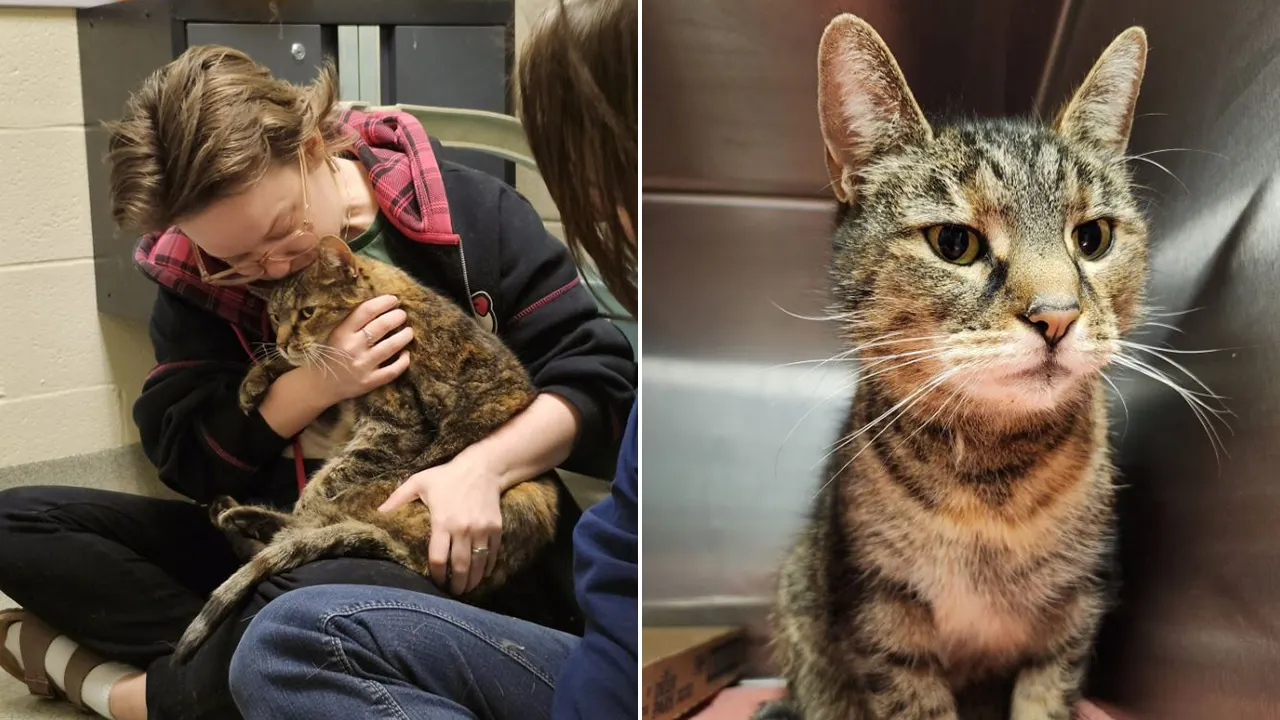
The reunion was nothing short of magical, a testament to resilience and the unbreakable bond between humans and animals. As the kennel door opened, Artemis, who had spent years navigating the wilderness with her sharp instincts, stepped out cautiously. But then, like a switch flipped, recognition dawned. Erin Long watched in awe as the cat walked straight to Melissa and Brooke, leaping onto their laps with a feline grace that belied her hardships. Her purrs filled the room, loud and reassuring, as if to say, “I’m home.” Brooke, still in disbelief, stroked Artemis’s fur, noting how little she’d changed—perhaps a few battle scars from stray life, like a small nick on her ear, but her playful spirit intact. Tears streamed down their faces, not just for the joy of the moment but for the years of wondering where she had been. They learned that Artemis likely spent time in various basements and outdoor hideouts, surviving on scraps and instinct, which had only sharpened her survival skills. The shelter team, beaming with pride, shared stories of other reunions, but this one stood out—a five-year odyssey ending in hugs and meows. For the Garcis, it was a reminder of how pets embed themselves in our hearts, becoming family members whose absence leaves an indelible mark.
Reflecting on the ordeal, the family couldn’t help but marvel at Artemis’s journey. Melissa and Brooke imagined her adventures: darting through suburban woods, evading predators, perhaps even forming wary alliances with other strays. It warmed their hearts to know that her microchip—their preventive measure at a young age—had been the key to her return. The Humane Society’s diligence highlighted the importance of such technologies, saving countless stories from ending in tragedy. Artemis, now back in the cozy comforts of home, adjusted quickly; she claimed her old spots on the couch and even recognized her toy mouse, batting it around with fervor. Brooke mentioned how Artemis’s instincts, honed in the wild, made her an even better mouser around the house. They spoiled her with extra treats and vet check-ups, ensuring her health after her prolonged absence. Family and friends gathered for a impromptu celebration, toasting to second chances and the power of hope. This tale echoed broader lessons: pets teach us patience, love, and the unreliability of giving up. It inspired the Garcis to advocate for microchipping and awareness, turning their personal miracle into a beacon for others.
In the end, Artemis’s return was more than a happy ending—it was a profound affirmation of life’s unexpected turns. The once-grieving family now buzzed with renewed energy, their home filled again with the soft padding of paws and contented feline sounds. Melissa often recounted the story to friends and strangers alike, emphasizing how a simple call from the shelter bridged the chasm of time. Brooke, cuddling Artemis each night, felt a deeper appreciation for the fragility of bonds yet their resilience. For animal lovers everywhere, this was a reminder to never stop hoping, to keep flyers active and communities vigilant. The Humane Society praised the community member who brought Artemis in, underscoring that everyday kindnesses can create ripples of joy. As Artemis settled back into her routine, the Garcis learned that time, while cruel in separation, can’t erase true connections. And in this age of distractions, her story reminded us to cherish the simple miracles, like a cat coming home after five years, proving that some bonds are forever, adventurous and unbreakable. It was a narrative of survival, faith, and fond reunions, leaving all who heard it with a smile and a purr in their hearts.