





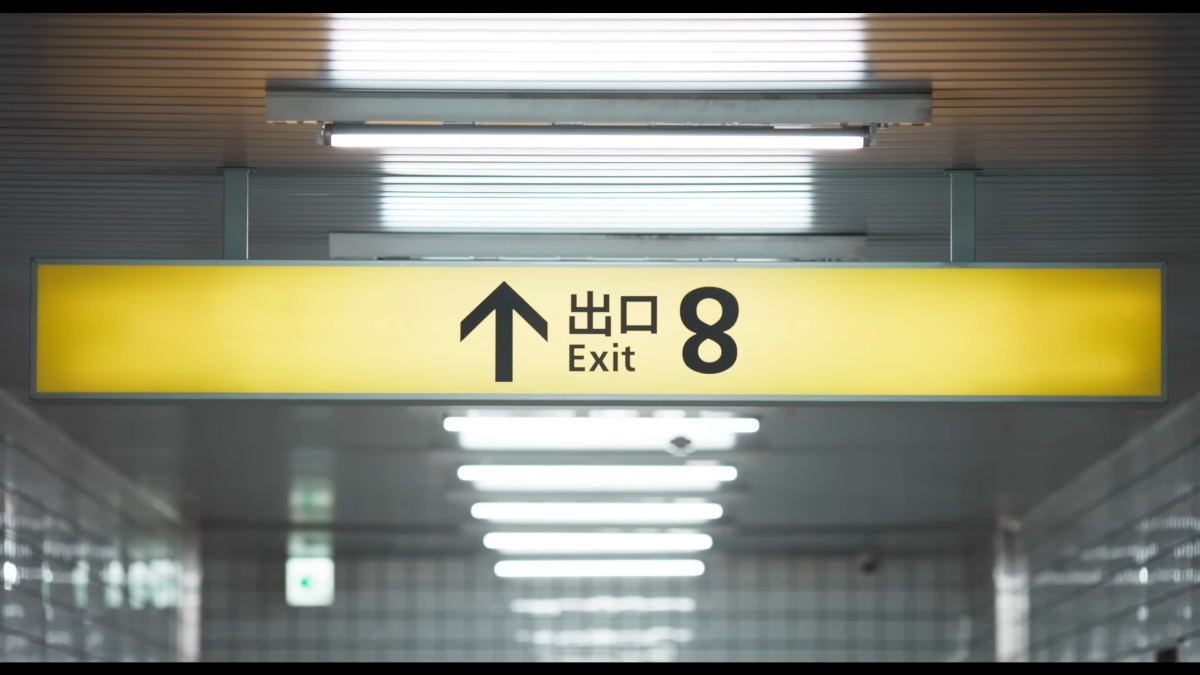
Ah, where do I even start with “The Exit 8”? It’s one of those indie gems that hit you like a perfectly timed punch—the kind that leaves you reeling but in the best way possible. Back in 2023, this little video game from a solo developer named Kotake Create exploded onto the scene, and honestly, it felt like the whole internet was talking about it for weeks. Picture this: you’re stuck in a bland, everyday subway station, and your mission is simple—walk towards Exit 8. But here’s the kicker—the game warns you, “Don’t overlook any anomalies. If you find anomalies, turn back immediately. If you don’t find anomalies, do not turn back.” It’s like those old-school “spot the difference” puzzles you used to find on cereal boxes, but cranked up to eleven with a horror twist. Some changes are sneaky little details, like a misplaced poster or a flickering light, but others? Oh boy, they morph into full-on jump scares that make your heart skip a beat. The whole vibe is this creeping unease, a knot in your stomach that builds with every step you don’t take back. It’s not overtly terrifying, but it’s unsettling in a way that sticks with you, making you question everything in that endless loop of repeats. I remember playing it on a rainy afternoon, headphones on, and feeling that paranoid itch the whole time—spotting anomalies felt like some secret victory, but missing them left you spiraling. For a solo project, Kotake Create nailed it; it’s short, maybe 45 minutes for a full run, but it packs emotional punch without a single line of dialogue. The anonymity of the player character lets you pour your own fears into it, turning a simple mechanic into something profoundly mysterious. And don’t get me started on that cult-favorite old Japanese man who pops up in fan theories—people still debate what he’s really doing there. Fast-forward to now, and they’ve turned this puzzle into a full-blown movie, and wow, is it an evolution worth celebrating. Titled simply “Exit 8,” it’s directed by Genki Kawamura, who seems to have channeled the game’s eerie essence into something cinematic and mainstream-friendly. My first thought? This flick is way longer than the game—95 minutes versus that quick 45-minute playthrough—yet it doesn’t drag. Instead, it expands on the game’s non-story into a proper narrative with real characters and heart, while staying loyal to that tense, claustrophobic subway aesthetic. It’s like someone took the game’s core puzzle and wrapped it in emotional layers, making it accessible to folks who might not get the indie vibe. I knew from the get-go that this wasn’t going to be a straight horror flick tearing up jump scares every five minutes; it’s more of a thriller with horror-adjacent feels, building suspense through mystery rather than gore. The filmmakers added this emotional core that the game lacks, giving viewers something to latch onto—a reason to care beyond just spotting the odd detail. It resonates thematically in a way that’s uplifting, almost hopeful, which is rare for stories in endless loops. Watching it, I felt that same uncertainty from the game, but amplified with a human touch; it’s like chatting with a friend who’s recounting their own strange dream, and you’re nodding along, feeling the weirdness seep in. News-wise, it’s popping up alongside other big adaptations like ‘Project Hail Mary’ and Pixar’s ‘Hoppers,’ proving cinema’s still hungry for source material outside the usual blockbusters. Kazunari Ninomiya steps into the spotlight as the nameless protagonist, dubbed “The Lost Man,” and right from the opening scene, you’re plunged into his world. The film kicks off in first-person view, just like the game, but it’s a fresh scenario—a crowded subway train where he’s blissfully zoned out with music, ignoring the world’s chaos around him. There’s this jerk yelling at a woman and her crying baby, and you can feel the protagonist’s relief when he finally escapes into the tunnel. Then, boom, his girlfriend calls with bombshell news: she’s pregnant. He’s going to be a dad. That personal hook sets the tone for everything that follows, grounding the loop in real stakes as he ventures deeper, each repeat layering on more dread and realization. It’s clever how the movie uses that prologue to build empathy; suddenly, the anomalies aren’t just spooky glitches—they’re tied to his inner turmoil, his fears of failing as a father in this mind-bending trap. The switch to traditional third-person cinematography doesn’t break the immersion; in fact, it enhances it with these masterful long takes that mimic the game’s relentless forward momentum. Genki Kawamura pulls off these insanely hidden cuts—seriously, try spotting them without rewinding, it’s like watching ‘1917’ but subway-style—that hammer home the claustrophobia. The tunnel feels alive, expansive yet suffocating, and there’s this extra wall added with lockers and a photobooth machine that’s faithfully pocketed from the game’s design. No cheesy montage here, thankfully, which keeps the tension brewing without cheap gimmicks. But man, as the story progresses, you see how the film outgrows the game’s abstract feel. The original ‘The Exit 8′ is all about void— zero narrative, zero characters to speak of—so you fill it with your own meaning. This movie? It dives into a specific tale with themes of regret, redemption, and facing the unknown, making it feel guided, almost parental in its direction. It owns the medium’s strengths: visual storytelling over interactive discovery. Sure, some unsettling bits pop up, but it’s not jump-out-of-your-seat scary; one anomaly in particular gets your pulse racing, but mostly, the tension comes from watching characters hunt for changes, like live-streaming a horror playthrough on Twitch. It’s compelling in that voyeuristic way, where you hold your breath waiting for them to spot it or not. And hey, while the game’s anomalies gave me straight-up goosebumps, the film’s more factual presentation can feel distance—less tactile—but it snaps with a twist that’s all movie magic. The film breathes life into other figures too, fleshing out the game’s vague silhouettes. That iconic older Japanese man, who became a meme-favorite in the gaming community with his mysterious swagger, gets his own dedicated chapter. We follow his loop, unraveling his backstory in ways that add layers of pity and profundity, turning him from a cryptic NPC into a tragic figure. There’s also a young boy who weaves in and out of the loop, injecting youthful innocence that contrasts the adults’ world-weariness. These detours could have derailed the core puzzle, but Kawamura keeps the focus sharp; the mystery endures, anxiety bubbling like a pot about to boil. It’s not flashy— no explosions or chases—just that steady build of “what if” unease. I won’t ruin the end, but let’s just say the game’s open-ended ambiguity feels like a dangling thread, while this movie ties it into a satisfying, even heartwarming bow. It’s uplifting, messaging hope amidst the dread, which elevates it beyond standard horror slasher territory. Not that there’s anything wrong with fun scares, but this? It’s a refreshing change, proving that not every loop has to spiral into despair. Overall, “Exit 8” nails the adaptation because it respects the source—doesn’t warp it into something unrecognizable—but enhances it for the screen. Faithful to anomalies and atmosphere, yet cinematic in scope. It’s not as viscerally frightening as playing the game yourself, and why would it be? Videogames let you interact with the fear firsthand; movies show it. Here, it offers a possible interpretation to that burning question every player has: “What the heck was all that?” And in doing so, it transforms a niche indie hit into a broadly accessible story. Hitting theaters on April 10, 2026, I’m betting it’ll draw in gamers and cinephiles alike, sparking chats about loops and life. If you loved the game, give the movie a shot—you might walk away with new insights into your favorite glitchy nightmare. And if not, it’s still a thoughtful ride down a tunnel that’ll linger longer than you expect.