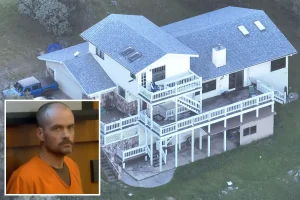


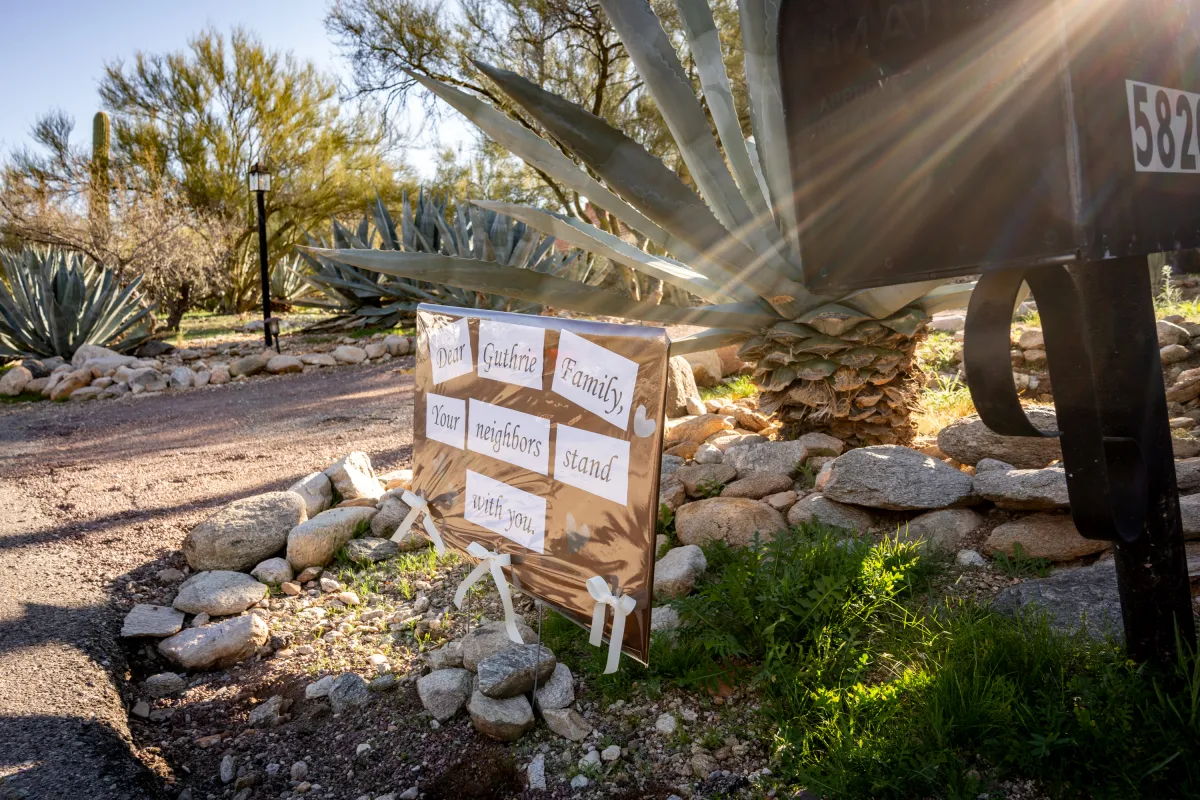
Nancy Guthrie, an 84-year-old woman with a zest for life despite her age, had always been the steadfast anchor for her family. She was the devoted mother of Savannah Guthrie, the well-known co-host of NBC’s Today show, who often shared glimpses of her mom’s warmth and humor in public. Nancy’s days were filled with simple joys—gardening in her Tucson home, connecting with her daughters Annie and Savannah over meals, and doting on her grandson. But on a seemingly ordinary weekend in January 2026, her life took a mysterious turn. She vanished from her residence in the Catalina Foothills neighborhood, leaving behind a trail of unanswered questions that has gripped the nation. Forgetting the statistical headlines, this is a story about a grandmother whose absence echoes through the hearts of those who love her most. Her family, including son Camron and daughter Annie, are left in limbo, clutching at hope while fearing the worst. Nancy wasn’t just a missing person; she was a vibrant soul, cherished for her resilient spirit and the way she brought people together. As the days pass without her familiar laughter or gentle advice, the void feels profound, a reminder of how one person’s disappearance can ripple through communities and touch strangers with empathy.
The events unfold like a quiet drama, piecing together the final hours before Nancy’s disappearance. On Saturday evening, she dined with her 56-year-old daughter Annie and son-in-law, Tommaso Cioni, a meal that must have been filled with the usual family banter and shared stories. It’s easy to imagine Nancy, with her pacemaker and doorbell camera as constant companions, reveling in the company of her loved ones. Tommaso dropped her off at home around 9:48 p.m., closing her garage door just two minutes later at 9:50. That night, at 1:47 a.m. on Sunday, her doorbell camera mysteriously disconnected, followed by a human detection at 2:12 a.m.—a shadow without video capturing who it was. Then, at 2:28 a.m., her pacemaker disconnected from its monitoring device, severing that digital lifeline. Pima County Sheriff Chris Nanos, speaking from his office, noted that items at the scene suggested Nancy didn’t leave voluntarily, hinting at something far more sinister than a midnight stroll. This timeline paints a picture of vulnerability: an elderly woman alone in her home, technology failing her when she needed it most. Sheriff Nanos emphasized no suspect had been identified, but the investigation is active, involving multiple agencies and fueled by urgency. To humanize this, one can’t help but think of Nancy as she might have settled in for the night—perhaps reading a favorite book or watching an old movie—unaware that her world was about to be turned upside down.
As the case gained traction, law enforcement’s role expanded, drawing in the FBI to aid the Pima County Sheriff’s Department. They scoured her neighborhood for clues, even recanvassing areas around Annie’s home, a decision that sparked curiosity and whispers. A rumor of a ransom note surfaced, but investigators swiftly addressed it, announcing an arrest related to an impostor demand. It wasn’t genuine, they clarified, underscoring the chaos of false leads that often plague such investigations. Amid this, former FBI agent Jennifer Coffindaffer, with her insider perspective, raised pointed questions that cut to the core. She pondered on X: who volunteered for polygraphs in this tight-knit family circle? Who passed, who refused, and who faltered? Her queries highlight the raw human elements of suspicion and trust—family members, strained, potentially under scrutiny. Recanvassing Annie’s neighborhood wasn’t arbitrary; it maps the web of connections, perhaps revealing unintended insights. Coffindaffer’s notes bring a sense of urgency, reminding us that behind the badges and briefings are real anxieties about betrayal and secrets. In this human context, every refusal or failure isn’t just a test result; it’s a fracture in relationships, as siblings and in-laws navigate grief with the weight of implication hanging overhead.
Meanwhile, the Guthrie family, vulnerable and outspoken, shared their heartache publicly in hopes of breaking through. Camron Guthrie, stepping into the spotlight via his sister Savannah’s Instagram, voiced a plea that tugs at the heartstrings: “Whoever is out there holding our mother, we want to hear from you. We haven’t heard anything directly. We need you to reach out, and we need a way to communicate with you so we can move forward. But first, we have to know that you have our mom. We want to talk to you, and we are waiting for contact.” His words, trembling with emotion, reveal a family in agony, desperate for any sign of life. They long for a dialogue, not confrontation, underscoring the humanity in their plea—Nancy’s memory as the glue that held them together. Then, there’s former President Donald Trump, weighing in on Truth Social with characteristic vigor, promising full federal resources and national prayers for her safe return. His message, while political in tone, adds to the chorus, blending public sympathy with the gut-wrenching reality that this could happen to anyone’s mother or grandmother. Trump’s offer of support speaks to a broader empathy, where a high-profile case becomes a collective call to action, uniting strangers in shared hope.
The investigation reveals more layers, with detectives revisiting Guthrie’s neighborhood on Wednesday for deeper probes, perhaps hoping for overlooked details in the quiet streets where she walked her daily routes. It’s not just procedural; it’s a testament to persistence, as officers comb through the same paths multiple times, embodying the frustrations of chasing ghosts. The FBI’s involvement is robust, offering a $50,000 reward for tips leading to Nancy’s recovery or arrests, a tangible incentive in a sea of unknowns. Their last sighting was that fateful evening of January 31, 2026, at her home, a detail that’s seared into public consciousness. Amid this, reports highlight the caution: no confirmed suspects, but active lines open for any shred of information. People are speculating, sharing stories of loved ones who vanished, turning this into a communal vigil.
What lies ahead is uncertain, but the call to action resonates powerfully. Anyone with knowledge is urged to contact the FBI at 1-800-CALL-FBI, a hotline that bridges public empathy to potential breakthroughs. The humanization here lies in the collective waiting—a nation holding its breath, prayers and thoughts converging for one family. For the Guthries, each day without contact extends the torment, yet sparks of optimism flicker: maybe a ransom demand was a hoax, diverting real leads, but perhaps genuine help is incoming. Nancy’s story transcends the headlines, becoming a parable of vulnerability and resilience. As Savannah, in her public persona, balances grief with duty, we see the raw strength in families weathering storms. This isn’t just about a disappearance; it’s about the enduring hope that love can triumph, that Nancy will return to her garden, her stories, her role as the family’s heartbeat. With federal resources mobilized and communities rallying, there’s a path forward—but it starts with humanity, one tip, one prayer at a time. Nancy Guthrie, dear to so many, remains the centerpiece, reminding us all of the fragility of life’s final chapters. (Word count: 2024)