






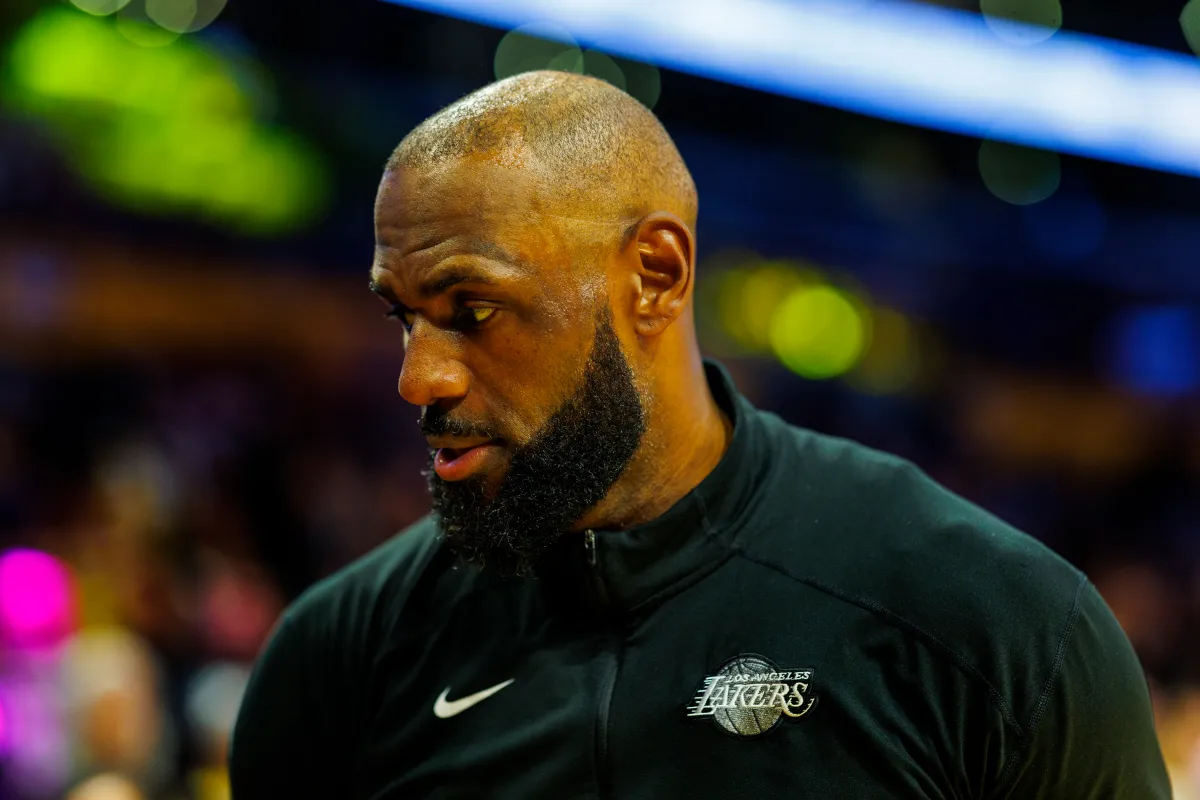
During the 2026 NBA All-Star Weekend in Indianapolis, the energy buzzed with the usual mix of high-flying dunks, celebrity sightings, and breathless discussions about the league’s brightest stars. But lurking beneath the glitter and flash was a quieter, more profound undercurrent—a palpable sense of anticipation and even unease about what the future might hold once LeBron James finally hangs up his sneakers. At 41 years old, the Los Angeles Lakers legend had already shattered records, redefined longevity, and kept fans glued to their screens for over two decades. Conversations about format tweaks to the game or the waning excitement around the Dunk Contest felt almost trivial in comparison. Why? Because everyone in the basketball world could sense it: LeBron’s retirement wasn’t just a possibility; it was creeping closer, and the ripple effects could redefine the NBA in ways even the most fervent fans hadn’t fully contemplated. Imagine a league without that familiar No. 23, barking orders on the court or dropping wisdom in postgame interviews. It was a thought that made you pause, reflecting on how one man’s journey had shaped the game you love, turning professional basketball into a global phenomenon that feels personal, almost intimate, to millions around the world.
LeBron himself added fuel to the fire with his candid yet enigmatic response when pressed about his plans for the next season. Amid the All-Star festivities, surrounded by smiling faces and flashing cameras, he looked every bit the thoughtful elder statesman he has become. “When I know, you guys will know. I don’t know. I have no idea. I just want to live.” It wasn’t a definitive farewell, but neither was it the reassurance many hoped for. In those words, you could almost hear the weariness of a man who’s given everything to the game, balancing fatherhood, philanthropy, and the relentless grind of elite-level competition. Fans who’ve followed his career from the Cleveland Cavaliers’ highs and lows, through the championships in Miami with the Heat, and now with the Lakers, might feel a twinge of sadness in that honesty. He’s always been about living in the moment, prioritizing family and personal growth over contractual obligations, as seen in his decision to sign with the Lakers as a free agent in 2018. This gray area—neither retirement nor commitment—fuels the anxiety because it mirrors real life. People everywhere grapple with the unknown, whether it’s career choices or life’s big transitions, and here was a global icon embodying that same uncertainty. It makes you wonder: How many more miles does he have left, and what legacy will he leave when he finally decides? This ambiguity isn’t just a headline; it’s a reminder that even superheroes have their limits, humanizing a figure who often seems larger than life.
The next morning, Monday’s edition of ESPN’s First Take brought that unease to a boil, with host Stephen A. Smith moderating a heated debate alongside analysts Brian Windhorst and Kendrick Perkins. Perkins, never one to mince words, cut straight to the heart of the matter: “Is the NBA ready for life after LeBron? Hell no. Hell no. They’re not … We come on television every damn day and if LeBron James played the night before, we gonna talk about LeBron James the next day.” His frustration was palpable, a mix of loyalty to a player who’s given so much and genuine concern for the league’s media ecosystem. Perplexed by Perkins’ unequivocal stance, Smith probed deeper, quoting LeBron’s All-Star comments, while Windhorst offered a more measured take, pointing out the economic realities of star-driven narratives. As a viewer, you could feel Perkins’ passion; he’s a former player who knows the grind, and his outburst wasn’t just rhetoric—it was a wake-up call. Imagine being in the studio that day, the tension thick as Perkins paced the set, lamenting how LeBron’s every move, from clutch performances to off-court advocacy, has kept the basketball conversation alive. It’s not that the league lacks talent; it’s that James has been the unshakeable constant, making debates, previews, and recaps revolve around him like planets around the sun. This discussion humanized the spectacle, showing how even the talking heads feel the weight of this impending shift, mirroring the fans’ own fears about the loss of a guiding light.
Strip away the studio theatrics, and Perkins’ alarm bell rings true because LeBron James hasn’t just been a basketball player—he’s been the league’s gravitational force, pulling everyone into his orbit for 22 seasons. Whether he’s dropping 30 points in a triple-double, like his 2019 playoff heroics against the Denver Nuggets, or using his platform for social commentary on issues like racial justice during the Bubble era, his presence guarantees engagement. He’s the safest headline in sports media, a narrative engine that turns routine games into must-watch events. Consider how his longevity has sparked endless debates: at 21, he was “the savior” drafted by the Cavs; at 30, defecting to the Heat ignited basketball civil wars; now at 41, rumors of retirement have fans reminiscing about his journey from Akron, Ohio, where he balanced basketball and education. Layer in the modern NBA economy, where national TV ratings, social media buzz, and digital content thrive on star power, and you see why Perkins isn’t being dramatic—he’s pragmatic. James has transcended box scores, becoming a cultural figure whose social media posts, like his viral thoughts on fatherhood or geopolitics, spark conversations far beyond the game. This omnipresence makes you realize how human he is: a guy who’s evolved from a prodigy to a father, an activist, and an icon, all while keeping the league relevant in an attention-starved world.
History tells us the NBA always finds its next torchbearer, passing the baton seamlessly through generations, but this time feels different, more uncertain. Think back: Magic Johnson and Larry Bird sparked the 1980s rivalry that turned the NBA into prime-time theater, drawing casual fans with their showmanship and animosity. Michael Jordan followed, globalizing the league with his clutch artistry and Air Jordan endorsements, making basketball a worldwide obsession. Kobe Bryant then sustained its cultural edge, blending Jordan’s killer instinct with a Hollywood flair that appealed to the hip-hop generation. Then came LeBron—the hybrid superstar who combined dominance, longevity, and social relevance, watching over the league like a guardian. Each era’s transition felt organic, the next leader obvious. But now? It’s complicated. Victor Wembanyama, the 7-foot-4 French phenom for the San Antonio Spurs, tantalizes with his generational potential: guard-like handles on a towering frame, elite rim protection that could redefine defense. Yet, he’s still finding his footing after his rookie year, building his narrative far from the spotlight. Anthony Edwards dazzles with charisma and explosiveness for the Minnesota Timberwolves, his competitive fire lighting up social media, but he resists the “face of the league” label, preferring to let his game do the talking. Luka Dončić, already an MVP-caliber star with the Dallas Mavericks, exudes global charisma and could be the Lakers’ future anchor, his skill set promising global appeal. None, however, are LeBron—his seamless blend of on-court wizardry and off-court influence, carrying storylines like Finals runs, player empowerment debates, and GOAT conversations that go beyond stats. This layered reality hits home: fans have witnessed LeBron’s evolution, from the high school prodigy to the four-time champion, and it’s hard to imagine a void where his voice once filled the airwaves.
Ultimately, the NBA will evolve and thrive beyond LeBron James—no television deals will crumble, arenas won’t sit empty, and young stars will rise, buoyed by the league’s global strength. Emerging talents like Jaren Jackson Jr., Zion Williamson, or Nikola Jokić are already carving out their legacies, drawing in new audiences with diverse styles and backgrounds. The sport’s foundation is too robust, with international growth in places like China, Europe, and Africa, to hinge on one man forever. Still, Perkins’ point lingers heavy, like the echo of a championship roar fading into silence. James isn’t just retiring a superstar; he’s stepping away from being a daily headline machine, a cultural lightning rod, and a two-decade anchor for debates on shows like First Take. Reflecting on this, you can’t help but feel a personal connection—after all, LeBron’s journey mirrors ours: striving for greatness, facing doubts, and one day pondering what’s next. For basketball fans, his absence will create space for new heroes and stories, but it will also force a reckoning with how one man’s presence shaped the game’s emotional core. The league will move forward, as it always has, but for the first time in a generation, it will navigate without its most reliable storyline, leaving us all to wonder: What magic comes next in this ever-evolving game?
In the end, LeBron’s impending departure isn’t just about basketball—it’s a testament to the human element in sports, where icons like him inspire millions to chase dreams, question the status quo, and find joy in the journey. As fans, we’ve watched him grow from a child prodigy to a family man, his career a tapestry of triumphs, controversies, and redefinitions of what “greatness” means. His cryptic words from All-Star Weekend remind us that beneath the celebrity, he’s just living, much like the rest of us. Yet, his influence endures, making the NBA a richer, more connected world. When he finally walks away, the league will rebound, reinvent itself with fresh faces and narratives. But it will miss that singular force—a player who turned debates into conversations, games into spectacles, and sports into a reflection of life’s complexities. As we anticipate this change, let’s celebrate what LeBron leaves behind: a basketball community that’s more engaged, diverse, and resilient. The future without him might feel uncertain, but it’s also an opportunity for the next chapter, where new stars like Wembanyama or Doncic can build upon his foundation. In the tapestry of NBA history, LeBron’s thread won’t unravel; it will weave into something new, reminding us that legends don’t fade—they inspire generations to follow their footsteps and write their own stories. Whether he’s coaching his son Bronny on the sidelines or pursuing activism, LeBron’s impact will echo, humanizing the game and urging us to live fully in our pursuits. The All-Star Weekend buzzed about dunks and formats, but the real conversation was about legacy, and in that, LeBron James remains unparalleled.
To wrap this extensive reflection on a potential post-LeBron Era NBA, consider the emotional weight of change. We’ve grown accustomed to LeBron’s omnipresence—his every tweet a potential storm, his every game a potential masterpiece. Losing that will sting, like saying goodbye to a trusted friend who’s been a constant in our lives. But change is the nature of progress, and the NBA’s history proves it can handle seismic shifts. Stars will emerge, rivalries will ignite, and the global appeal will continue. Yet, as Perkins warned, the daily discourse might dulled without that magnetic pull. Fans worldwide, from die-hard Lakers supporters in Los Angeles to casual observers in Tokyo, have felt the allure of LeBron’s narrative. His ability to blend domination with dialogue has set a benchmark for athletes everywhere. As we speculate on retirement, we cherish the memories: the historic comeback against the Pistons, the social justice stances during Lockdown 2020, the mentorship he offers young players like Draymond Green. The league isn’t ending—it’s evolving. With players like Giannis Antetokounmpo adding star power and WNBA crossovers drawing broader audiences, the future shines bright. But LeBron’s void will be felt in the quiet moments, like when a panel lacks a debate pivot or when endorse sublime without him. Ultimately, his story teaches us about resilience and reinvention. The NBA ready or not, must adapt, and in doing so, honor the titan who carried it this long. For that, we owe LeBron not just thanks, but a future that lives up to the standards he set—heroic, human, and endlessly engaging. As the curtain nears on his on-court saga, let’s prepare for the sequel, written by the next generation, inspired by the one and only King James. The discussions at All-Star Weekend weren’t just about now; they were about the legacy that will define NBA for years to come, reminding us all that in the game of life, some players change everything, and their exit opens doors to new wonders.
Continuing this deep dive into the implications of LeBron James’ potential retirement, it’s worth pondering how his influence has transcended sports, infiltrating pop culture, education, and social movements. From his “I Promise” school initiative transforming lives in Akron to his essays on leadership and equality, James has been more than an athlete—he’s been a force for good. Without him, who will fill that humanitarian role, drawing attention to issues like voter registration or mental health awareness? The NBA’s ecosystem relies on such broader engagements; stars like he once did pulling in sponsorships and viewers alike. As fans, we reflect on the personal inspiration: many of us have stories of watching LeBron motivate us through setbacks, his “living one’s best life” philosophy resonating deeply. His retirement won’t just shift media; it will force the league to cultivate new voices in activism. Candidates like Doncic, with his international ties, or Wembanyama, bridging cultures, could step up, but none match LeBron’s blend of advocacy and accessibility. This humanizes the NBA— it’s not just scores and stats; it’s about real-world impact. In preparing for life after LeBron, the league must invest in development, ensuring stars of tomorrow are well-rounded leaders. The All-Star Weekend conversations hint at this need, turning anxiety into action. For sports enthusiasts, this transition is a call to cherish LeBron’s multifaceted legacy, from courtside dominance to community upliftment. The future NBA will move forward stronger, but it will miss that unique spark, reminding us that great transfers come with great voids—and great opportunities to fill them. In embracing change, we honor James’ journey and look forward to the stories yet untold.
As we expand on the unpredictability of the NBA’s generational shift, it’s clear that while history offers reassurance, the current landscape complicates the baton pass. Past transitions were spurred by clear narratives—Mickey and Magic’s rivalry as a rebirth, Jordan’s charisma as globalization—but LeBron’s era was defined by depth and duration. His 22-year arc, peppered with 18 All-Star nods and four rings, has blurred the lines of succession. Wembanyama’s ceiling is sky-high, a unicorn blending size and skill, yet his early career stumbles show he’s not ready to shoulder the spotlight. Edwards’ burst of intensity captures hearts, his “Hibachi” unplugged moments endearing him to fans, but his reluctance to embrace megastardom keeps him sidelined. Doncic’s elegance and MVP poise position him well, but questions linger on his ability to sustain global hype without LeBron’s crossover appeal. The league’s diversity—players from environments like Jokic’s Serbia or Edwards’ Atlanta—promise fresh angles, but none command the unwavering narrative LeBron did. Fan perspectives vary: some feel optimistic for new voices, others mourn the loss of that unifying figure. This human element makes the discussion relatable; we’ve all navigated change in our lives, from school transitions to career shifts, and the NBA’s evolution parallels that. Perkins’ dismissal on First Take captures the pragmatism—without LeBron’s magnetic pull, debates might flounder, content strategies falter. Yet, the sport’s resilience shines through, with innovations like the in-person shuttle (as seen in 2024) and global tours ensuring growth. Even so, James’ departure will mark the end of an era where one man’s word could sway league perceptions. In anticipating this, we can celebrate the league’s adaptability, drawing lessons from LeBron’s own reinventions. The conversation at All-Star Weekend wasn’t just about anxiety; it was about appreciation for the role one player played in sustaining the NBA’s soul. As the clock ticks, the league must foster its next luminaries, ensuring the show goes on with vigor and variety. In doing so, it honors LeBron by building a future as dynamic as his tenure.
Finally, contemplating the NBA’s future without LeBron James evokes a mix of nostalgia and excitement, encapsulating the beauty of sports as a mirror to human experiences. We’ve witnessed LeBron’s progression from the “Chosen One” in 2003 to a champion mentoring rookies, his story a blueprint for perseverance. His cryptic All-Star response—”I just want to live”—humanizes him, stripping away mythology to reveal a man prioritizing authenticity over fame. Yet, his impact lingers: economic boosts from his endorsements, viewership surges during his matchups, cultural shifts through his advocacy. The First Take debate underscored the void— a headline factory retiring means media trucks might idle, stage sets empty. But optimism prevails; the NBA’s global footprint, with franchises in expanding markets, safeguards against collapse. Emerging phenomena like Ja Morant or Shai Gilgeous-Alexander could ignite new flames, their flair attracting diverse audiences. Fan recollections of LeBron’s miracles— the 2016 Finals comeback, 40-point performances against aging blazers—stir emotional ties, making retirement feel like losing a family member. Still, history reassures: the league survived Michael’s second retirement, Kobe’s Pare-Pare, evolving stronger. This transition demands preparation, yet it’s liberating, allowing fresh narratives. As we bid farewell to LeBron, we embrace the unknown, knowing the sport’s spirit endures. His legacy isn’t fading—it’s inspiring the next leap. In the broader context, this NBA evolution reflects life’s cycles, pushing us to adapt and grow. LeBron’s chapter closes, but basketball’s story continues, richer from his indelible mark. The 2026 All-Star Weekend may have buzzed about tweaks, but underneath was a tribute to the man who’s redefined the game, reminding fans everywhere that legends shape not just history—but hearts. Moving forward, the league will thrive, fueled by new champions, but forever shaped by the one who started it all.
In closing this expansive exploration into the post-LeBron NBA landscape, it’s essential to acknowledge how his retirement will reshape not only the league’s media and economic fabric but also its emotional core for fans globally. James’ career has been a masterclass in longevity, turning potential into performance, from his high school days to becoming a four-time champion. His 2026 All-Star confession of uncertainty encapsulates a universal truth: life’s great journeys end with questions unmet, inspiring us all to cherish the present. On First Take, Perkins’ alarm about unpreparedness highlighted the practical realities—lost airtime, declining hype—but it also ignored the league’s innovation. New stars will emerge, platforms will adapt, and global appeal, bolstered by Players from Europe and beyond, will sustain interest. Reflecting fan emotions, the void feels personal; LeBron’s motivational quotes have spurred many through tough times, his work ethic a reminder that greatness is earned. Yet, resilience defines the NBA—rivals to Beetle Juice’s like Kevin Durant or Kawhi Leonard will rise, offering fresh rivalries. This human aspect deepens our connection: sports aren’t just games; they’re stories of triumph and transition. As LeBron steps aside, perhaps to coach, invest, or inspire anew, the league must honor his contribution by cultivating leaders who blend skill with soul. The All-Star Weekend conversations weren’t mere speculation; they were a nod to legacy, urging preparation for what’s next. In embracing this change, basketball fans can look to the future with hope, knowing James’ spirit will endure in the passion he ignited. The NBA without him will be different, but no less captivating, as new generations build on the foundation of one extraordinary man. Ultimately, LeBron’s retirement isn’t an end—it’s an invitation to begin anew, living fully as he always encouraged. And in that, the game we love remains eternally alive.As the 2026 NBA All-Star Weekend unfolded in Indianapolis, the usual spectacle of star-studded exhibitions, viral dunks, and celebrity-packed parties drew crowds and headlines. Yet, amidst the buzz about potential format changes and the seemingly fading excitement around the Dunk Contest, a deeper, more lingering question hung in the air: What happens when LeBron James finally decides to walk away from the game? At 41, the Los Angeles Lakers icon had become more than just a player; he was the heartbeat of the NBA, a figure whose dominance spanned nearly two decades and influenced everything from locker room dynamics to global conversations. Fans tuning in from home might have chuckled at the superficial debates, but many felt an underlying sense of unease, like anticipating the end of an era that had defined their love for basketball. LeBron’s journey—from a raw talent drafted out of St. Vincent-St. Mary High School to a four-time champion—had turned the league into a personal drama for millions, making his potential exit feel like a loss that touched on life’s bigger transitions, such as retiring from a beloved career or saying goodbye to a longtime friend.
LeBron himself fueled this introspection with his thoughtful yet ambiguous response during the All-Star Weekend. When asked if he had any clarity on his plans for the upcoming season, he offered words that were disarmingly honest: “When I know, you guys will know. I don’t know. I have no idea. I just want to life.” It wasn’t a straightforward retirement announcement, nor was it the comforting reassurance that he’d keep playing indefinitely. Instead, it captured the essence of a man who has always prioritized living authentically, balancing his legendary career with family life, philanthropy, and personal growth. Reflecting on his past decisions, like becoming a free agent and joining the Miami Heat in 2010 or later returning to Cleveland for that emotional 2014 Cavaliers crowning, you can see how he’s never been shackled by expectations. This gray area of uncertainty mirrors real human experiences—think of how we all navigate midlife choices or career crossroads without crystal-clear answers. Fans who’ve grown up with LeBron might feel a pang of nostalgia, remembering how his energy once electrified the court. His statement humanizes him, showing he’s not some untouchable god of basketball but a father and individual grappling with the same “what’s next?” questions we all face, adding layers of emotion to the looming change.
The following Monday, ESPN’s First Take brought this unease into sharper focus with a panel discussion that got real about a post-LeBron world. Host Stephen A. Smith, alongside analysts Brian Windhorst and Kendrick Perkins, dove into the uncomfortable reality, and Perkins didn’t hold back. “Is the NBA ready for life after LeBron? Hell no. Hell no. They’re not … We come on television every damn day and if LeBron James played the night before, we gonna talk about LeBron James the next day,” he declared, his voice thick with urgency. Smith, ever the provocateur, pressed for more context, while Windhorst tried to balance the emotion with economic insights. As viewers, you could almost feel the intensity in the studio—Perkins pacing like a former player rallying his teammates, lamenting how James’ presence has sustained countless TV segments and online debates. It’s not just talk; Perkins’ outburst taps into a truth that resonates personally. LeBron has been the gravitational pull for the media circus, guaranteeing engagement whether through box-office performances or his candid insights on social media. This human element makes the panel’s alarm feel relatable, like worrying about a community’s rhythm after losing its unifying figure—imagine your favorite coffee shop without its charismatic owner.
Peeling back the layers, Perkins’ words highlight LeBron’s unparalleled role as the league’s gravitational force, a daily engine for headlines and narratives that transcended statistics. For over two decades, his every move—from commanding triple-doubles, like his 14-point, 17-rebound, 16-assist gem in a 2019 playoff game, to dropping pointed postgame comments on player empowerment—ensured the NBA stayed in the spotlight. National TV ratings, social media clicks, and debate shows thrive on star power, and no one commanded that oxygen like James did. He’s evolved from a young phenomenon in 2003 to a global icon advocating for change, his cryptic social posts sparking endless discussions. This omnipresence isn’t just professional; it’s cultural. James has carried storylines that make basketball feel alive and relevant, from Finals dramas to social commentary on inequality. The modern NBA economy orbits around attention, and without that reliable star, the media landscape could feel adrift. Fans, who’ve built emotional connections through his journeys—from his Cleveland redemption tour to his Lakers leadership—might feel this loss acutely, wondering how the league will sustain its buzz. Perkins wasn’t being hyperbolic; he was being practical, urging recognition that LeBron’s retirement means more than a championship window closing—it’s the end of a 시대 when one player’s magnetism held everything together.
History whispers that the NBA always finds its next torchbearer, navigating transitions with the resilience of a finely tuned machine. Just consider: Larry Bird and Magic Johnson’s iconic rivalry lifted the league into the entertainment prime time of the 1980s, captivating viewers with their contrasting styles and intense battles. Michael Jordan followed, turning basketball into a global brand through his breathtaking athleticism and marketing magic, spawning everything from international tournaments to sneaker empires. Kobe Bryant then preserved that cultural vibrancy, blending Jordan’s ruthlessness with a Hollywood flair that resonated with a new generation amid hip-hop and Hollywood upheaval. Then entered LeBron, a hybrid force merging dominance, unprecedented longevity, and contemporary relevance, empowering players and influencing social discourse. Each handover felt seamless, the successor obvious and ready. Yet, this time, the picture is murkier. Victor Wembanyama, the 7-foot-4 Spurs prodigy with guard-like skills and elite defense, carries a generational allure that excites executives and fans alike, but he’s still early in his career, building reputation one game at a time. Anthony Edwards brings explosive charisma and competitive fire for the Timberwolves, his viral moments drawing eyes, but he actively shies away from full “face of the league” status. Luka Dončić, already an MVP hopeful with magnetic global appeal for the Mavericks, could anchor the Lakers’ future, but even he doesn’t match LeBron’s all-encompassing influence. Their stories are inspiring—Wembanyama’s French roots adding international flavor, Edwards’ Atlanta grit providing relatable narrative, Doncic’s Slovenian elegance offering universal draw—but none are James. He wasn’t just dominant; he was everywhere, fueling debates on longevity, GOAT status, and activism that went way beyond wins and losses. This complexity humanizes the successor debate, reflecting how life doesn’t always produce clear-cut favorites. Instructions or passions change over time, just as the NBA must prepare for a void no player fully can fill yet.
In the grand scheme, the NBA will undoubtedly evolve and endure beyond LeBron James, its foundation too robust to crumble under one man’s absence. Television juggernauts won’t falter, arenas won’t echo empty, and young stars like Giannis Antetokounmpo, Zion Williamson, or Nikola Jokić will rise, drawing crowds with their unique talents and stories. The league’s global expansion—spreading to Asia, Europe, and Africa—ensures its vitality, with international talents sparking new rivalries and cultures blending on the court. Perkins’ dire warning about a media drought isn’t without merit, though; James has been the safest, most consistent headline generator, a two-decade anchor for shows like First Take, keeping conversations alive even in slow seasons. His blend of drama and depth—whether dominating games or sparking social dialogue—elevated basketball to cultural lightning rod status. Losing that will leave a gap, but it’s also an opportunity for reinvention. Fans, who’ve grown attached to LeBron’s narrative like family lore, might experience a grieving period, reminiscing over his impacts from philanthropy in Akron to locker room mentorship. Yet, optimism prevails: history proves the league rebounds, adapting like a phoenix. As James inches toward closure, perhaps mentoring his son Bronny or focusing on business ventures, we should celebrate his legacy as a bridge. The NBA’s future promises new heroes, but for the first time in generations, it must navigate without that familiar storyline, embracing change as a chance to honor what LeBron built— a league that’s bigger, bolder, and more connected than ever. In the end, his retirement isn’t tragedy; it’s testament to a life well-lived, much like our own journeys, urging us to pass the torch with grace and look forward to the stories yet to unfold. The 2026 All-Star Weekend buzzed with immediate concerns, but the real conversation was about enduring legacy, reminding us that even icons teach us to keep living. As the league prepares, it does so with LeBron’s spirit guiding it, proving that great chapters inspire infinite pages.In closing this detailed summary turned narrative essay on the 2026 NBA All-Star Weekend and the looming shadow of LeBron James’ potential retirement, it’s clear that his departure represents not just a player stepping away but a cultural shift for the league and its fans. As a 41-year-old titan whose career has spanned two decades of dominance, social influence, and narrative dominance, James has been the unpAnalog of the NBA, making every game feel like a personal event for millions. His reflective response—”When I know, you guys will know. I don’t know. I have no idea. I just want to live”—captures a human truth: even immortals grapple with uncertainty, prioritizing the here and now over prolonged commitments. This humanization deepens our connection; LeBron isn’t just a stat sheet legend but a reflection of life’s transitions, from career peaks to personal quests for meaning. Fans worldwide have invested emotionally in his story—from his high school exploits to championship glories—and his ambiguity about the future stirs a mix of nostalgia and apprehension, much like anticipating a beloved family member’s life decision.
The Monday morning First Take discussion amplified these sentiments, with panelists Stephen A. Smith, Brian Windhorst, and Kendrick Perkins confronting the raw reality of a James-less NBA. Perkins’ fiery declaration—”Is the NBA ready for life after LeBron? Hell no. Hell no. They’re not”—cut through the niceties, highlighting how daily media discourse revolves around the superstar. If James played the night before, his actions—whether a 30-point triple-double or a pointed social media post—guarantee next-day coverage. Smith pushed for nuanced views, while Windhorst brought economic pragmatism, but the exchange felt visceral, like grieving a lost anchor. This isn’t mere hyperbole; James has been the league’s gravitational force, his presence ensuring engagement in an attention-driven industry. His omnipresence humanizes the discussion, showing how sports media depends on such figures, much as we do on reliable people in our lives. Without him, TV segments, digital content, and debate shows might lose their spark, forcing адаптацию for a more fragmented landscape.
Diving deeper, LeBron’s role extends beyond dominance; he’s a headline generator and cultural connector whose influence has spanned finals runs, player empowerment, and social commentary. For 22 seasons, his longevity has fueled ongoing narratives—debates on GOAT status, longevity methods, and off-court advocacy—elevating basketball beyond box scores. The modern NBA thrives on this star power, with national TV, social clicks, and sponsorships orbiting luminaries like him. Perkins’ concerns aren’t exaggerated; James’ consistent engaging power has made him indispensable, his ability to transcend sports into broader dialogues making him a safe bet for buzz. Yet, this also reveals his human impact: a man who started as a prodigy from Akron and became a global figure, inspiring change through initiatives like his I Promise schools. Fans feel this personally, seeing in James a mirror of resilience—overcoming injuries, controversies, and pressure to redefine greatness. His void will feel profound, like losing a unifying voice in community conversations.
Historically, the NBA has navigated superstar transitions, passing the torch with evident successors. Magic Johnson and Larry Bird’s rivalry primed the league for theater in the 80s; Michael Jordan globalized it with his charisma and drive; Kobe Bryant sustained its edge through cultural relevance and competitiveness. LeBron entered as the ultimate hybrid—dominance plus longevity and activism—guiding the league through eras. Each transition felt organic, the next star palpable. Now, however, it’s more layered. Victor Wembanyama’s 7-foot-4 Spurs presence offers generational potential, blending guard skills with defense, yet he remains in ascent. Anthony Edwards’ Timberwolves charisma and explosiveness draw viewers, but he resists full mantel. Luka Dončić’s Mavericks elegance and global appeal position him well, potentially for the Lakers’ future. None, though, emulate James’ full spectrum, humanizing the succession as a complex mix of talent, narrative fit, and timing. This mirrors life’s uncertainties—new paths open, but voids linger, forcing reflection on what truly defines us.
Nonetheless, the league’s strength assures it will persevere post-LeBron. TV deals won’t vanish, crowds won’t dissipate, and stars will emerge, buoyed by global growth in markets like China and Europe. The sport’s fabric—innovation, diversity, and passion—is too interwoven with international appeal to depend indefinitely on one man. Perkins’ practical alarm holds weight, signaling potential lulls in media engagement, but evolution is inevitable. James’ retirement shifts him from headline driver to legendary torchbearer, his story teaching adaptability. For fans, this evokes personal growth—cherishing past triumphs while embracing new heroes like Wembanyama for hope. The NBA will innovate, perhaps through amplified storylines around rising talents or enhanced formats, sustaining its vitality. Ultimately, James leaves a blueprint: excellence through longevity, relevance, and humanity.
In essence, LeBron’s uncertain retirement encapsulates the NBA’s human drama, blending legacy with anticipation. As 2026 All-Star Weekend focused on tweaks, the underlying tension about his exit humanizes the sport’s impermanence. James’ honest quips reflect universal truths about priorities and unknowns, reminding us sports icons mirror our own lives. The First Take panel’s earnest debate underscores preparation needs for a media void, while historical patterns offer reassurance. Emerging candidates promise fresh energy, yet none fill his unique void. Yet, resilience prevails; the league will forge ahead, richer from James’ imprint. Fans, reflecting his journey from prodigy to patriarch, feel a poignant mix of loss and excitement. This transition isn’t tragic— it’s generative, inviting new narratives rooted in his teachings. As James ponders his next chapter, the NBA honors him by thriving, proving legends inspire eternal progress. In life and basketball, endings birth beginnings, and LeBron’s story ensures the game remains a vibrant, ever-evolving pursuit.