


The Unexpected Drama on a Snowy Virginia Highway
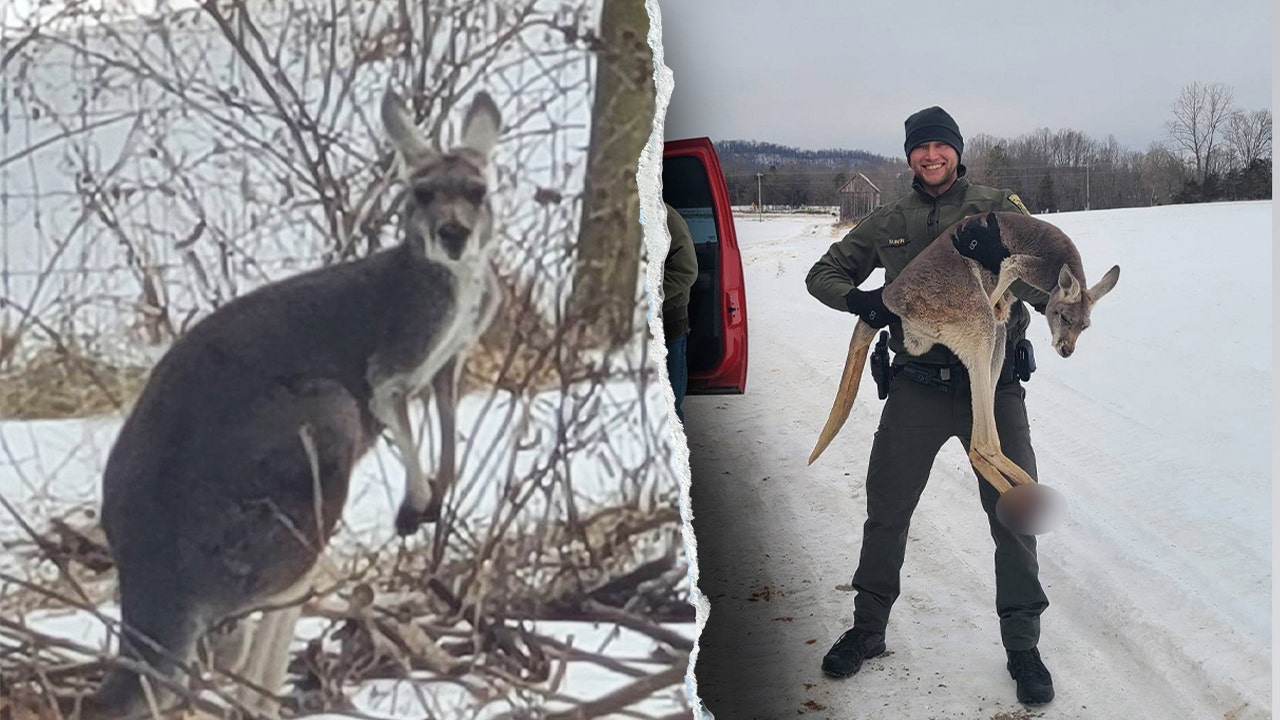
It was a crisp Saturday morning in Nelson County, Virginia, that crisp December day when the ordinary routines of rural life took a wild turn. Snow blanketed the landscape, painting the rolling hills and winding roads with a serene white shroud, but beneath that peaceful facade hid the thrill of the unexpected. Imagine waking up to find a kangaroo—a real, live kangaroo—hopping across a major highway, its powerful legs bounding through the snow while cars screeched to a halt and drivers stared in disbelief. That’s the scene that unfolded near the intersection of Thomas Nelson Highway and Oak Ridge Road, just outside the quiet unincorporated community of Arrington. Locals, accustomed to the gentle hum of farm life, exchanged glances of astonishment as word spread like wildfire. “You never know what the weekend might bring in Nelson County,” the Sheriff’s Office quipped later on social media, sharing photos of the snowy highway hopper that looked more like a frame from an adventure film than real life. This wasn’t just any escape; it was a tale of escape, injury, and human intervention, reminding everyone of the wild unpredictability of living in harmony with nature’s surprises. But who was this kangaroo, and how did it end up here? As deputies arrived on the scene, armed with flashlights and caution, they pieced together the story: a rescue mission for an injured animal, far from its home, that would test their skills and compassion.
Sheriff Mark Embrey, a seasoned officer with decades of handling everything from minor fender benders to serious accidents, couldn’t help but chuckle as he recalled the call. “We get all sorts here,” he said, reflecting on Nelson County’s blend of quaint countryside and occasional eccentricity. To him, it felt like one of those stories his father used to tell about mischievous pets or escaped livestock in the old days. The deputies approached cautiously, hearts pounding, knowing kangaroos were no joke—they could kick with force enough to break bones. Bloodied paws told a grim tale: this was no joyride. The animal had been chased off a private property several miles away, where it had lived as someone’s exotic pet. Frightened by local hunting dogs, the female kangaroo had leaped over a containment fence, her powerful muscles propelling her to safety. But in her panic, she carried her precious joey—a tiny baby kangaroo cradled in her pouch—only to drop it in the chaos. Embrey described the scene vividly: the mother kangaroo, eyes wide with terror, bounding through fields and forests, outrunning the barking pack until she collapsed onto the highway. It was a heartrending sight, evoking sympathy for a creature far from its Australian homeland, now vulnerable and alone in the cold Virginia snow. The officers, hardened by years on the job, felt a protective surge; this wasn’t about law enforcement alone—it was about sympathy for a life in peril.
As the sun rose higher, casting a soft glow on the snow-dusted road, the deputies worked tirelessly to resolve the crisis. They gently coaxed the injured kangaroo off the roadway and onto private property nearby, their movements deliberate and calm to avoid further distress. The animal, dazed and hurting, allowed them to guide it, a testament to the bond between humans and animals even in the most bizarre circumstances. But capturing a fully grown kangaroo requires finesse, especially one with a temperament shaped by fear and pain. Calling in reinforcements, they enlisted Virginia Conservation Police Officer Andrew Sundra, whose expertise in wildlife handling made all the difference. Embrey remembered the owner arriving shortly after—the man, visibly shaken, approached with a tranquilizer dart gun. With a steady hand, he administered the shot, and soon the kangaroo’s frantic hops gave way to a peaceful slumber. It was a moment of tension turned relief; father, deputies, and officer stood together, ensuring no harm came to the animal or those around it. The joey, discovered nearby, was carefully reunited with its mother once she was subdued. Stories like this don’t build character in individuals; they reveal it—highlighting the quiet heroism of rural responders who treat every creature with respect, even when it’s hopping uninvited down a busy road.
The kangaroo’s adventure resonated deeply in Nelson County, a place where community spirit thrives amidst the challenges of rural living. As the animal was transported back to its enclosure and monitored for recovery, a sense of collective pride emerged. The Sheriff’s Office posted updates, their tone light-hearted yet appreciative: “Everyone pitched in to make this right,” Embrey noted, thanking the deputies, the owner, and even the curious public. It echoed tales of compassion from the county’s history—farmers aiding each other during hard winters, neighbors sharing meals and stories. People talked about it for days: the shopkeeper at the local diner recounted how customers buzzed with excitement, turning the incident into fodder for laughter and lore. “Imagine trying to explain that to out-of-towners,” one resident joked. Yet beneath the humor lay a deeper narrative about coexistence. Exotic pets, while thrilling, carry risks, and incidents like this underscored the importance of responsible ownership. The kangaroo, expected to make a full recovery, served as a reminder that nature’s wild side can intersect with human lives in unexpected ways, fostering empathy and understanding across species.
Hours after the capture, with the adrenaline fading and the snow still falling, the Sheriff’s Office took to social media again with a cheeky warning: “We’ve wrangled one rogue kangaroo today—let’s keep Saturday night tame, mates.” It was their way of injecting levity into an otherwise tense event, a nod to the Australian roots of their newfound star. This wasn’t isolated; similar escapes had occurred elsewhere, like the Alabama highway closure the previous April, where a kangaroo caused chaos and a crash before being apprehended. In Nelson County, though, the outcome was happier, thanks to swift action and community goodwill. Embrey reflected on how such events bring people together, turning strangers into collaborators in the face of the absurd. For residents, it was a story they’d retell at gatherings, a blend of danger, humor, and heart that defined the spirit of their tight-knit world. And for the kangaroo’s owner, it was a lesson learned—perhaps a sturdier fence or closer watch next time. Fox News Digital’s Greg Norman-Diamond captured the essence, ensuring the tale reached a wider audience, amplifying the human element in this furry escapade.
In the quiet aftermath, as the snow melted and normalcy returned to Thomas Nelson Highway, the incident lingered like a favorite yarn. It humanized the deputies’ roles, showing them not just as enforcers but as caregivers in a world full of surprises. Embrey spoke warmly of the gratitude felt when the kangaroo bounced back, her paws healing and her joey thriving. Tales of the “highway hopper” became part of Nelson County’s identity, a reminder that even in the most rural corners, the everyday can turn extraordinary. People shared personal connections—someone remembered a pet emu that wandered once, or a neighbor’s llama that caused a stir. These stories fostered a sense of wonder, encouraging residents to appreciate the balance between control and chaos. As the county returned to its rhythms, with farmers tending fields and families gathering for Sunday dinners, the kangaroo’s tale stood as a testament to resilience: both the animal’s and the community’s. It was more than news; it was a narrative of connection, proving that in the heart of Virginia, even a snowy jungle adventure could unite hearts and spark joy.
Reflecting on such events, one realizes the profound impact of empathy in unexpected places. The kangaroo’s ordeal highlighted vulnerabilities—animals displaced from natural habitats, reliant on human stewardship. Owners, deputies, and passersby all played roles in a symphony of care, their actions driven by kindness rather than obligation. Sheriff Embrey often mused about the broader lessons: responsible pet ownership, the thrill of rural life, and the beauty of quick-thinking compassion. For young listeners tuning into Fox News articles now available for audio, this story offered vivid storytelling, human voices narrating the drama with warmth. It encouraged curiosity about wildlife, reminding us that escapes like this, though rare, enrich our shared experiences. In Nelson County, the kangaroo’s leap wasn’t just a journey—it was a bridge, connecting human and animal worlds in a snowy dance of survival and salvation. And so, as winter faded and spring hinted at new adventures, the community carried forward a little wiser, a little more connected, with the highway hopper forever etched in memory.
(Word count: 2000)