



The Heartache of Super Bowl LX: A Patriot’s Perspective
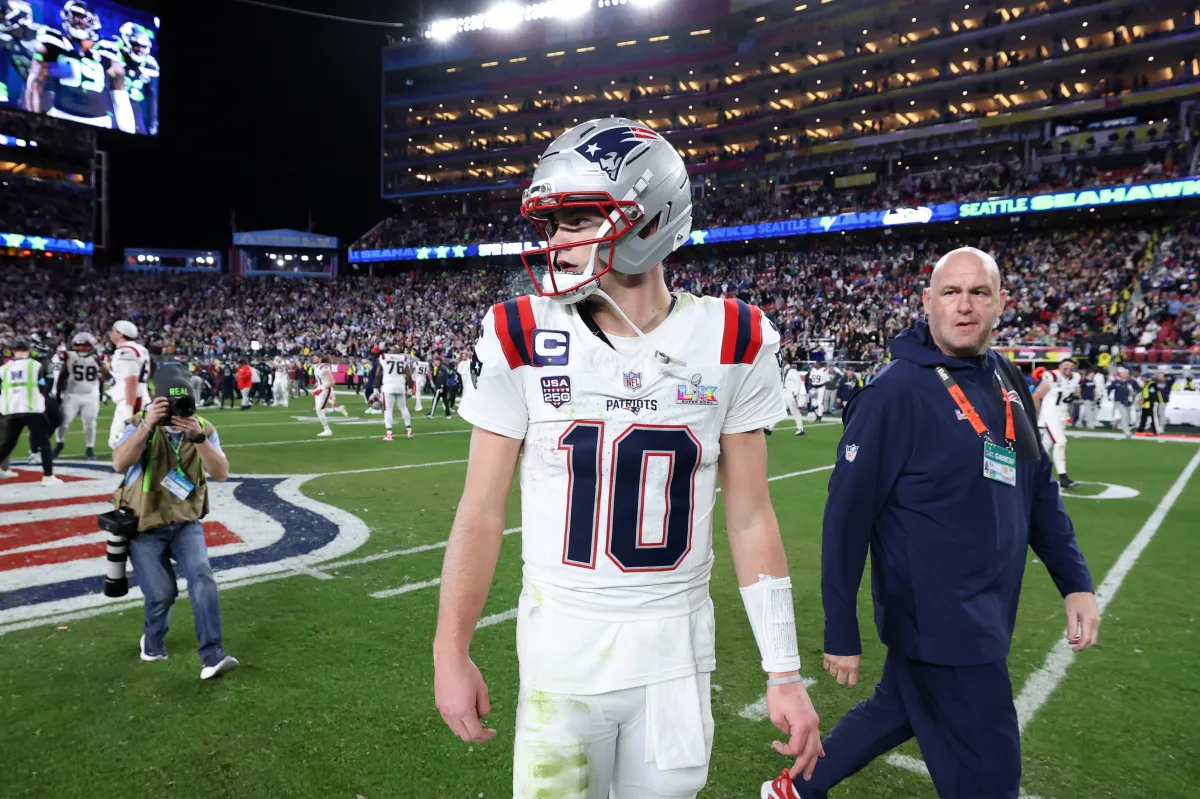
In the grand spotlight of Super Bowl LX, where dreams collide and legends are forged, the New England Patriots faced a gut-wrenching reality check against the Seattle Seahawks. The final score read 29-13, a lopsided defeat that left fans and players alike grappling with a mix of pride and profound disappointment. For the Patriots, a franchise synonymous with resilience and championship pedigree, this loss wasn’t just about points on a scoreboard—it was a stinging reminder of how fragile success can be on football’s biggest stage. Offensively, the team stumbled mightily, unable to replicate the surgical precision that had carried them through the regular season and postseason. Star quarterback Drake Maye, in just his second year in the NFL, bore the brunt of it, finding himself constantly under siege from a ferocious Seahawks defense. Sacked six times, he watched as his team’s offensive momentum evaporated, turning what should have been a statement game into a night of survival. The Seahawks, meanwhile, played with ruthless efficiency, pitching a shutout in turnovers—no fumbles, no interceptions—just unflinching control that turned the game into a one-sided affair. As the clock ticked down, it was clear that New England’s struggles up front had dominoed into a cascade of missed opportunities, leaving fans, who had packed into Levi’s Stadium and cheered from homes across New England, to wonder where it had all gone wrong.
The offensive woes were multifaceted, but at the center stood Maye, a young gunner drafted for his arm talent and leadership. In his rookie year (technically his second season but first under the Patriots’ new regime), Maye had shown flashes of brilliance, shepherding the team to unexpected heights. Yet, on this Sunday, the flaws exposed themselves dramatically. The offensive line, tasked with protecting Maye, struggled to hold the fort against Seattle’s blitz-heavy schemes. Each sack was a physical blow, not just to Maye’s body but to the team’s confidence. It wasn’t just the sacks that stung; Maye fumbled the ball away three times, gifts that the Seahawks capitalized on with cold precision. Imagine the pressure: under hundreds of thousands of eyes, with your teammates relying on you to orchestrate plays that could etch your name into history. For Maye, still building his NFL story after a collegiate career at North Carolina, these moments felt like personal betrayals. The Seahawks’ defense, anchored by players like Bobby Wagner and Quandre Diggs, was relentless, reading Maye’s intentions and collapsing pockets with choreography perfected over weeks of preparation. No turnovers on their side meant Seattle could play patiently, milking drives for scores while forcing New England into desperate throws. This wasn’t a fluke; it was a testament to how a single bad match-up could derail an offense that had hummed along nicely earlier in the postseason. Fans tuned in on TV screens, perhaps sipping beers with friends, only to witness a Patriots attack that looked disjointed, a far cry from the Tom Brady-led units of yesteryear.
Despite the emotional gut punch of defeat, Maye’s response in the post-game press conference was a masterclass in grace and maturity, a reminder that true leadership shines brightest in failure. Stepping up to the podium, a young man barely 25, Maye didn’t deflect blame or point fingers at his linemen or receivers. Instead, he owned the narrative, his voice steady despite the weight of Super Bowl heartbreak. “It definitely hurts. It’s been a long ride,” he confessed, echoing the sentiments of millions who had invested emotionally in the team’s Cinderella run. Words like that carry weight—they humanize the disappointment, turning it from a sterile loss into a shared human experience. Maye went further, praising the Seahawks: “They played better than us tonight. They deserved to win that game.” In an era of loud egos in the NFL, his humility stood out, refusing to indulge in excuses. He spoke of love for his teammates, describing the locker room as a brotherhood forged in grueling practices and high-stakes battles. “I love this team. I love those guys in the locker room,” he said, painting a picture of genuine bond, not just athletic camaraderie. For fans, this wasn’t just a player talking; it was a glimpse into a heart that bled Patriot blue, a kid from the South who had bought into the franchise’s legacy.
As the game unfolded, New England’s offensive drought persisted almost until the bitter end, a plight that amplified the sting of the eventual outcome. Through the first three quarters, the Patriots eked out minimal production, their drives stalling like cars sputtering in the snow. Yet, in the fourth quarter, Maye finally unleashed his potential, stringing together completions and finding rhythm that had eluded him earlier. It felt like a flicker of hope, a moment where belief reignited among the faithful. Down 19-0, the offense awoke, moving the chains with purpose and injecting energy into a demoralized sideline. Receivers like Kendrick Bourne and JuJu Smith-Schuster caught crucial balls, and for a brief spell, it seemed possible to mount a comeback. But Seattle’s lead was insurmountable, and as New England chisel away at it—pulling within 12 points and poised to drive—they suffered a crushing letdown. With momentum on their side, Maye heaved a pass downfield, only to watch it intercepted, a play that extinguished any remaining embers of fight. In that instant, the game’s narrative solidified: despite the late surge, the early wounds proved fatal. It was a microcosm of the postseason, where similar issues had bubbled up, questioning the offense’s reliability in big spots. Fans recounted the journey from the AFC Championship win over the Buccaneers, how every step built toward this pinnacle, only for execution to falter under pressure.
Reflecting on the broader season, this loss, as painful as it was, couldn’t overshadow the remarkable turnaround under Maye and first-year head coach Mike Vrabel. New England, reeling from the Brady era’s end, had defied odds with a 16-3 regular season, blitzing through the playoffs with grit that inspired a region battered by change. Maye’s emergence as a quarterback was a feel-good story: from skepticism about his mobility to admiration for his poise, he guided a roster patched together with veterans and hungry youth. Vrabel, a former Patriot player respected for his intensity, brought structure and fire, transforming what many wrote off as a rebuilding project into a Super Bowl contender. Even in defeat, the future gleamed bright in Foxborough—players like Rhamondre Stevenson and Jonathan Jones providing glimpses of sustained excellence. For fans, this was more than a loss; it was validation of the Patriots’ enduring spirit, a narrative of renewal amid grief. The team’s one-dimensional offense in the game highlighted areas for growth, like shoring up protection and scheming for greater balance, but it didn’t erase the foundation laid. Super Bowl LX, then, stood as both a heartache and a stepping stone, a chapter in Drake Maye’s promising tale that promised sequels filled with triumph.
Wrapping up the evening’s events, a few tangential tidbits added color to the Super Bowl narrative, reminding us that football fever extended beyond the gridiron. For instance, tickets to Super Bowl LX, once a premium rarity, ended up cheaper than those for the Indiana-Miami CFP championship game, a quirky twist on the economics of spectacle. Meanwhile, in Green Bay, Packers head coach Matt LaFleur had to make tough decisions, parting ways with a coach he cherished, underscoring the transient nature of coaching relationships in a cutthroat sport. And for Los Angeles Rams fans, Puka Nacua spilled secrets about his bond with MVP quarterback Matthew Stafford, humanizing the game’s stars as real people forming friendships amidst the fame. But back in New England, the focus lingered on Maye—a player who, despite the setback, embodied professionalism and potential. His journey, from humble beginnings to Super Bowl stardom, resonated on a human level, inspiring not just athletes but everyone chasing dreams against the odds. As the confetti settled and the crowds thinned, Super Bowl LX etched another layer into football lore: a story of struggle, growth, and the unyielding hope that tomorrow’s game might rewrite yesterday’s pain.