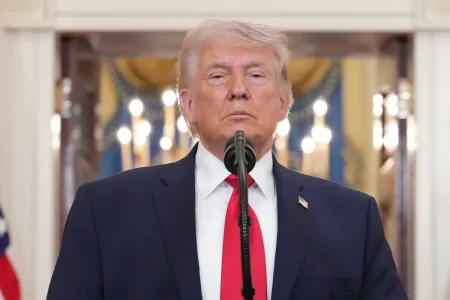





In the bustling world of American politics, where every poll feels like a pulse check on the nation’s heartbeat, Donald Trump’s disapproval rating has just climbed to a new peak, leaving political observers shaking their heads like weary parents watching a stubborn child. According to the latest analysis from Nate Silver’s Silver Bulletin, a trusted aggregator that sifts through polling data like a detective piecing together a crime scene, Trump’s net approval rating dipped to a stark negative 13.7 points as of February 9, 2026. This wasn’t just a minor blip; it highlighted how the President’s actions—often bold and divisive—continue to polarize the country, much like a controversial family dinner where everyone leaves with hurt feelings. Despite some stabilization after months of steady decline, this new high in disapproval underscores the tough headwinds facing the White House, especially as we barrel toward the crucial midterm elections later that year. It’s as if the American public is saying, “We’ve seen enough chaos for now,” echoing the frustrations many feel about economic worries, border tensions, and a sense of unsettled times. Newsweek reached out to the White House for a comment, and spokesperson Kush Desai offered a defiant retort, emphasizing the administration’s focus on cooling inflation, boosting the economy, securing borders, and deporting illegal immigrants—reminding everyone that, in the game of politics, belief in one’s mission can be a powerful armor against the critics.
Diving deeper into the Silver Bulletin’s findings, senior elections analyst Eli McKown-Dawson paints a picture of a President whose leadership has become a lightning rod for intense opposition, like a rock star whose concerts divide fans and foes. The net approval of negative 13.7 marks a slight uptick from the previous week’s negative 14.6, thanks to a few outlier polls that gave Trump a temporary halo, but McKown-Dawson cautions against reading too much into it. Polls from outfits like TIPP at negative 11, Harvard/HarrisX at negative 6, and even an unusually positive one from InsiderAdvantage at positive 1, suggested some voters were warming up, perhaps swayed by recent economic talks or border policies. Yet, the silver lining fades when you look at the raw emotion: over 46 percent of Americans now strongly disapprove of Trump, a first for the tracker, and a sign that the President’s detractors aren’t just mildly annoyed—they’re passionately against him. This intense disapproval is reminiscent of those viral online arguments where people dig in their heels, refusing to budge. Intriguingly, McKown-Dawson points out that Trump’s current standing is even worse than Joe Biden’s was at the same point in his presidency back in 2022, when Biden clocked negative 12.2. It’s a humbling reminder that no matter how many headlines you make or mandates you claim, public sentiment can shift like quicksand under your feet, leaving even the most powerful feeling exposed.
As we zoom out from one aggregator’s lens, the broader polling landscape paints an even grimmer portrait of Trump’s struggle, akin to a photographer adjusting the focus to reveal hidden blemishes on a nation’s face. CNN’s Poll of Polls, a composite of reliable surveys up to February 5, 2026, from heavyweights like NPR/PBS/Marist, Marquette Law School, Pew Research, and Reuters/Ipsos, shows Trump struggling with just 39 percent approval against a whopping 59 percent disapproval, resulting in a net negative 20. That’s like being 20 points underwater in a popularity contest, where every misstep feels amplified. Even Rasmussen, known for its more conservative lean, still pegs him at 42 percent approval and 57 percent disapproval, a net negative 15, showing that the negativity cuts across ideologies and methodologies. It’s not that Trump’s overall average has plummeted further—it’s stabilized, which in itself feels deceptive, like a calm sea hiding treacherous currents. Analysts note that this fragility stems from a volatile political ground, where events like recent controversies only partially show up in polls due to timing. Imagine promising economic growth and border security, but having your words drowned out by personal scandals or policy mishaps; it’s the kind of disconnect that leaves supporters feeling overconfident and opponents energized. Yet, amidst this, some individual polls this week offered glimmers of hope for the Trump camp, portraying him as a resilient figure pushing against the odds, much like a boxer who keeps swinging despite the rounds.
What makes this disapproval so palpable is the human element—the voices and vindications captured in quotes that breathe life into the numbers, turning cold data into simmering resentments. Eli McKown-Dawson doesn’t mince words in his Silver Bulletin piece: “After a consistent downward trend, Donald Trump’s approval rating has leveled out and somewhat improved this week. Today, it’s up to -13.7 on net, compared to -14.6 one week ago. Even still, the share of Americans who strongly disapprove of Trump broke 46 percent for the first time yesterday.” It’s those “even still” moments that resonate, like a friend acknowledging progress but admitting the uphill battle ahead. Then there’s Kush Desai’s staunch defense from the White House: “Nearly 80 million Americans gave President Trump a resounding Election Day mandate to end Joe Biden’s economic disaster and immigration crisis. The Trump administration remains laser-focused on continuing to cool inflation, accelerate economic growth, secure our border and mass deport criminal illegal aliens.” Here, you can almost hear the pride and determination, evoking the image of a captain steering a ship through storms, convinced of the course despite the waves. Trump’s own words on Truth Social add a folksy flair: “The highest Poll Numbers I have ever received. Obviously, people like a strong and powerful Country, with the best economy, EVER!” It’s that classic Trump bravado, self-assured and boosterish, like a carnival barker promoting his act even as the crowd thins. These statements humanize the divide, showing politicians not as abstract entities but as individuals grappling with legacy, legacy battles, and the need to be heard in a noisy democracy.
Beyond the headlines and hashtags, the implications of this disapproval are unfolding like ripples in a pond disturbed by a stone, affecting everything from policy to personal lives. With disapproval breaking 46 percent and aggregators like CNN showing Trump 20 points underwater, it’s clear that the political winds are forcing the White House to brace against formidable headwinds. Nate Silver himself has warned that the rating could worsen as more polls catch up with recent events—think public controversies that only grazed earlier data, leaving room for further dives. This isn’t just about numbers; it’s about the real people behind them—voters in suburban kitchens debating tariffs over coffee, urban dwellers grappling with immigration fears, rural communities weighing economic promises against perceived chaos. Trump’s administration might tout achievements like cooling inflation or securing borders, but the persistent negativity suggests the public is demanding more consistency, compassion, and perhaps a touch of humility. It’s like watching a family patriarch trying to reunite his divided kin; some forgive past transgressions, others hold grudges, and the tension builds toward elections that could reshape the nation’s story. As we move deeper into 2026, this high disapproval feels like a fork in the road, where choices on economy, borders, and more could either unite or further fracture the American spirit.
Ultimately, Trump’s approval saga in early 2026 serves as a mirror to America’s soul-searching, a reminder that leadership in a diverse, opinionated democracy is as much about perception as policy. The Silver Bulletin’s data, with its slight upticks belying deeper rifts, captures the paradox: while some polls hint at rebounds, the strong disapproval ratio—over 46 percent—signals that Trump’s presidency has stirred passions rarely seen, polarizing supporters and detractors in ways that echo historical divisions. Comparisons to Biden’s early tenure highlight how quickly fortunes can shift, urging caution for any leader. Yet, in humanizing these trends, we see not just a politician’s rating but a nation’s narrative, where economic policies, border strategies, and personal style converge. The White House’s focus on inflation cooling and mass deportations reflects a vision of strength, but the polls suggest the public craves unity and trust. As midterms loom, this disapproval could tip the scales, influencing congressional races and policy directions. People are watching, voices from Truth Social to polling analysts lifting up or tearing down. In this vast, chaotic dialogue, Trump’s story reminds us that even presidents must navigate the human heart—who approves, who disapproves, and why. Moving forward, the challenge lies in bridging divides, perhaps with more listening and less posturing, lest the negativity solidify into something irreversible. It’s a tale of ambition, backlash, and the eternal tug-of-war in the land of the free.
To wrap it all in a bow, let’s reflect on how this moment in 2026 underscores the cyclical nature of American politics, where leaders rise and fall like tides influenced by public mood. Donald Trump’s disapproval hitting new highs isn’t just a statistic; it’s a call to action for both sides—to engage, debate, and perhaps find common ground before the waves crash fully. The stability in his overall rating masks fractures that experts warn could widen with upcoming revelations, making this a pivotal time. Personally, as someone observing from afar, it makes me think about how our collective frustrations—over economy, borders, leadership—drive us, for better or worse. Trump’s confidence in his mandate, echoed by spokespeople, clashes with the raw anger in the polls, humanizing a system that thrives on conflict. Looking ahead, as 2026 unfolds, these ratings might predict electoral fates, policy pivots, and shifts in history. Yet, at its core, this is about people: the voters whose strong approvals or disapprovals shape the future, reminding us that democracy is messy, personal, and profoundly human.