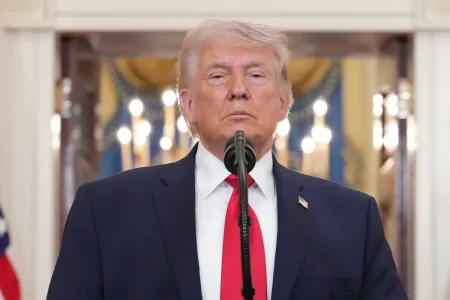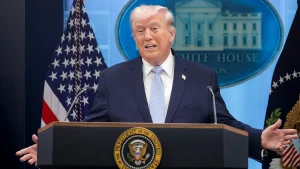



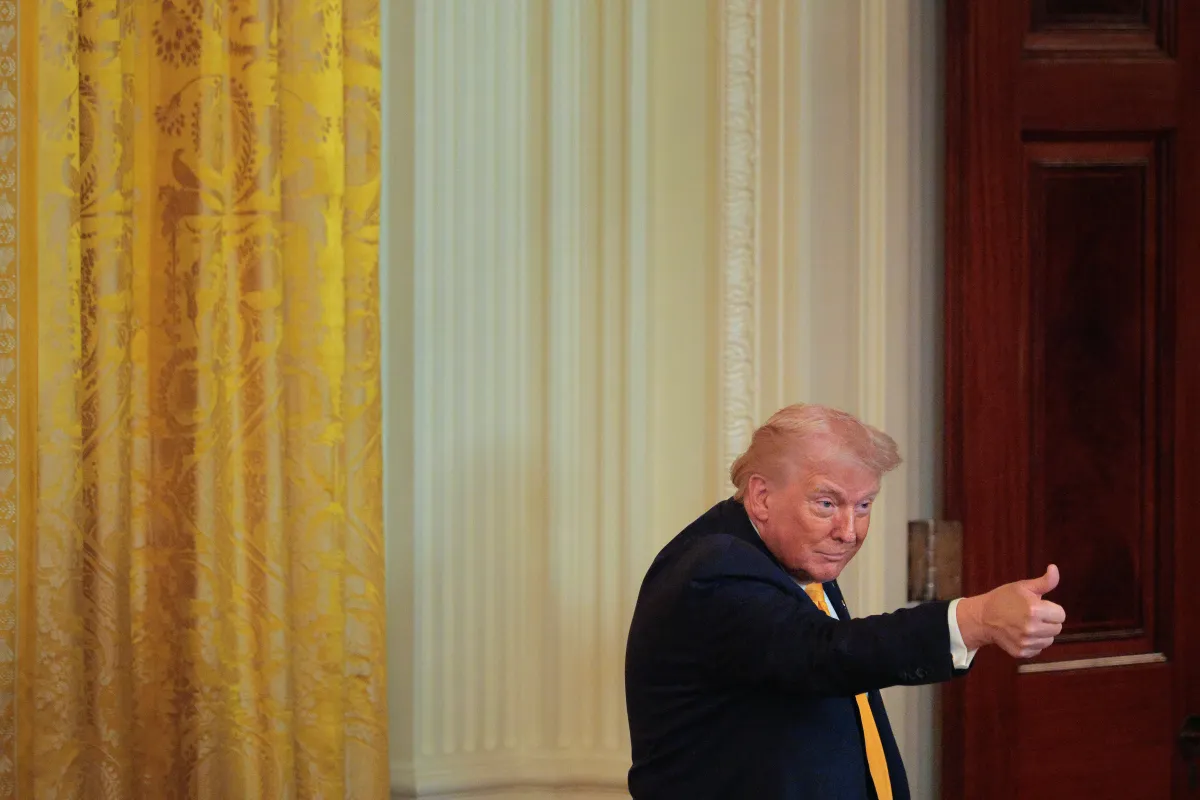
President Donald Trump stood in the grand East Room of the White House, the sunlight filtering through heavy curtains and casting a warm glow over the polished floors where dignitaries and guests mingled. It was Wednesday, and the occasion was a gathering to celebrate Black History Month, a moment meant to honor legacies and unite people under shared values. The air buzzed with anticipation as Trump, ever the showman, took the podium. He scanned the room, his eyes landing on one of his key appointees, Harmeet Dhillon, the assistant attorney general for the Civil Rights Division at the Department of Justice. But in that instant, something slipped—perhaps the rush of the moment or a momentary lapse in recollection. “How are you doing with Harvard?” he asked, his voice booming across the space. And then, the name: he called her Harmeet “Diller,” not Dhillon. It was a small thing, really, just a tongue-twister in the flow of his speech. But in the world of politics, where every word is dissected like a fine print contract, it sparked a wave of whispers. Dhillon, standing there with her poised smile, brushed it off gracefully, but the incident underscored the intense spotlight on Trump’s performances. You’ve got to imagine the scene: Trump, at 79 years old, commanding the room with his trademark energy, but also under the microscope for any signs of wear. His critics were already circling, whispering about cognitive blinks that mirrored the debates from years past when he was quick to label opponents as “sleepy” or unfit. This wasn’t just a name misfire; it was a reminder of how personal foibles get magnified in the high-stakes game of leadership. Down the line, reporters and pundits would replay the clip, analyzing the pause in his delivery, the slight hesitation before “Diller” tumbled out. Was it nerves? Exhaustion from back-to-back events? Or something more profound, as some speculated in hushed tones? Either way, it humanized Trump a bit—no one’s perfect, right? Even presidents forget names under pressure. But it also fueled the narrative machine, turning a simple slip into a symbol of broader concerns. Dhillon, with her sharp legal mind and immigrant story, became the unwitting star of this momentary blunder. She’s no stranger to tough battles, having litigated cases that defend free speech and civil liberties, but in that East Room, she was reduced to a name in a headline. As the event flowed on, talks of Harvard and ongoing investigations took center stage, yet the echo of “Diller” lingered like an unplanned footnote in history.
Digging deeper into who Harmeet Dhillon is reveals a fascinating journey that adds layers to this White House anecdote. An Indian-American immigrant, Dhillon came to the U.S. with aspirations that many can relate to—chasing the American Dream through hard work and intellect. Born and raised in an environment where resilience was key, she carved out a path in law, specializing in civil liberties long before Trump nominated her. In December 2024, after rounds of interviews and vetting that tested her mettle, he tapped her for the role, and by April 3, 2025, the Senate confirmed her appointment. It’s the kind of timeline that feels like a sprint in political circles, where months blur into accomplishments. Dhillon isn’t just an aide; she’s a champion of First Amendment rights, having defended speakers and thinkers against overreach for years. Picture her in courtrooms, advocating passionately for individuals whose voices might otherwise be silenced—whether it’s dissidents, activists, or ordinary folks pushing back against authority. Now, under Trump’s watch, she’s leading investigations into U.S. colleges, Harvard being the prime target. The Ivy League school is under fire for supposed civil liberties violations, particularly accusations of antisemitism that flared up after the Israel-Hamas war in 2023. Last week, the DOJ sued Harvard for its admissions records, a bold move Dhillon likely briefed Trump on directly. It’s personal for Trump; he sees these institutions as bastions of liberal bias, places that let prejudice simmer. Dhillon fits the bill as someone who bridges his agenda—she’s tough on what he views as threats to freedom. In that East Room moment, referring to her as “Diller,” Trump highlighted her work with Harvard, almost like a proud mentor spotlighting a protégé. But it made you wonder: does this slip diminish her credibility, or does it underscore the human element in high office? Dhillon’s background as an immigrant lawyer fighting systemic issues makes her story relatable, a reminder that power players like Trump trust folks who understand the grind from the ground up. She’s not just a name on a résumé; she’s a force advocating for fairness in an era of division, and her poise after the gaffe speaks volumes about her character.
Critics often paint Trump’s public moments with a broad brush, linking slips like this to broader questions about his mental and physical health. It’s a narrative that spun furiously during his rivals’ tenures, notably when he dubbed Joe Biden “Sleepy Joe” for perceived lapses. Now, at 79, Trump’s own missteps—even innocuous ones like name flubs—are fodder for scrutiny. Back in 2018, he famously pronounced “Yosemite” as “Yo-semite,” a hiccup that became meme-worthy, showing even a seasoned communicator can stumble on syllables. Fast forward to October 2025, during a Diwali event in D.C. to honor Indian heritage, Trump botched the U.S. ambassador to India’s name, calling Vinay Kwatra “Vinay Kwatruu.” It was awkward, almost endearing in its unintentional comedy, but it raised eyebrows. Was it fatigue from a relentless schedule? Or signs of age catching up, as some detractors claimed? The White House has always deflected these concerns, emphasizing Trump’s vigor and victories, but the public eye sees vulnerability. In Biden’s later years, every stutter or pause was dissected, with Trump leading the charge against what he called cognitive decline. Fair play, some say, should swing both ways. This latest error with Dhillon’s name isn’t isolated; it’s part of a pattern that makes Trump seem more fallible to voters. Yet, from a human angle, who’s to judge? We’ve all forgotten names at crucial times—your boss at a big meeting, or a friend at a party. Presidents juggle more than most, with global crises, policy battles, and endless optics. Trump’s history of bold pronouncements and unflinching style has won him a devoted base, even as slips like this fuel doubters. It begs the question: does one “Diller” outweigh decades of resoluteness? As midterms loom, these moments could sway perception, turning a slip into a rallying cry or a cautionary tale. But beneath it all, there’s a man navigating the unforgiving world of politics, where perfection is a myth and every error is immortalized in tweets and headlines.
Social media erupted almost instantly, transforming a private gaffe into a viral spectacle. On X (formerly Twitter), users couldn’t resist the humor. Journalist Molly Jong-Fast tossed out, “Is she related to Barry Diller? Or Phyllis Diller?” referencing the late comedian known for her eccentric style and self-deprecating wit. It was a quick joke, poking fun at the absurdity, and it caught fire. Another poster slapped a video clip with the caption “SLEEPY DON,” flipping Trump’s infamous nickname for Biden back on him in a clever, biting reversal. This wasn’t just online chatter; it was a mirror to polarized public sentiment. For some, it was lighthearted—after all, everyone has “senior moments,” as countless X threads lamented their own name fails. But for others, especially Trump’s opponents, it was ammunition, a nudge-nudge confirmation of declining faculties. Memes sprouted up: edited images of Phyllis Diller’s warbly laughter synced to Trump’s voice, or absurd searches for a nonexistent “harmeet diller” on Google. The platform’s algorithm amplified it, pushing the hashtag #TrumpSlips into trending lists, sparking debates that mirrored America’s divides. Dhillon herself even weighed in, posting on X post-event: “Pleasure to be in the White House with President Trump for Black History month and to be recognized by him for my work @CivilRights!” It was classy, deflecting drama while affirming her focus on the substantive. Yet, the social storm highlighted how our digital age turns personal blunders into collective conversations. People shared stories of their own Presidents, recounting slips from Reagan’s amnesia jokes to Obama’s teleprompter tangents. It humanizes the figurehead, forcing us to confront: are we too quick to judge leaders for the same flaws we overlook in ourselves? As laughs rolled in, the incident underscored the power of memes in shaping narratives—harmless fun or dangerous scrutiny? Either way, it connected people, turning a White House mic mistake into a shared anecdote for millions.
In the aftermath, key voices chimed in, offering statements that added depth to the unfolding story. From Harvard’s side, spokesperson Jason A. Newton fired back sharply on February 13, following the recent lawsuit over admissions records: “The University will continue to defend itself against these retaliatory actions which have been initiated simply because Harvard refused to surrender its independence or relinquish its constitutional rights in response to unlawful government overreach.” It painted a picture of a institution standing firm against what it sees as political bullying, invoking rights and resilience in phrasing that echoed centuries of academic freedom. Newton’s words weren’t just a challenge; they were a human defense, portraying Harvard as a bastion of thought over submission. Dhillon’s response stayed positive, focusing on progress rather than pitfalls, a savvy move that aligned her with the event’s celebratory tone. Together, these statements humanized the players: Dhillon as the dedicated public servant, Harvard as the defiant underdog, and Trump as the driving force behind the scrutiny. It wasn’t just about a name slip; it was about clashing visions of justice and power. Critics might view the investigations as overreach, retaliatory against schools that opposed Trump’s policies, especially on antisemitism post-2023 wars. Supporters see it as necessary accountability, rooting out biases in elite institutions. These reactions turn abstract politics into personal stakes—retaliatory lawsuits feel like vendettas to some, essential reckonings to others. In weaving these voices in, the story gains nuance: no one’s all villain or hero, just people batting for their ideals. Dhillon’s history of defending First Amendment cases now directly ties into this battle, making her more than a footnote. It’s a reminder that policy isn’t ide resolved in tweets or speeches alone; it’s in the courtroom and the court of public opinion where truths collide.
Looking ahead as the midterms approach, this incident with Harmeet Dhillon—call her “Diller” or not—feels like a precursor to intensified scrutiny for Trump. The 79-year-old leader, gearing up for elections that will decide House and Senate control, knows his public missteps could become campaign fodder. Critics, already primed to pounce on any hint of mental slip, will dissect every pause, every word choice, against the backdrop of his own attacks on predecessors. But Trump’s style has always been combative resilience; he thrives on deflecting doubts with bravado, turning potential weakness into strength. Imagine the campaign trail: rallies where he boasts about appointing Dhillon, spotlighting her work as a win against supposed liberal biases. Yet, the gaffe hangs like a shadow, especially with social media’s hawkish gaze amplifying every stumble. What happens next? Perhaps more investigations into colleges, more Diwali events with cultural mingling, and yes, more name flubs that remind us of fallibility. Dhillon might rise as a key figure, her immigrant journey inspiring voters, while Harvard braces for legal defenses that could reshape higher education. The midterms aren’t just votes; they’re a referendum on trust, health, and leadership in an aging era. For Trump, overcoming this scrutiny means doubling down on his narrative of fighting for the people against “elite” resistance. Humanely, it’s gripping: we root for the durable spirit, critique the cracks, and watch as history unfolds. One slip in an East Room doesn’t define a presidency, but it adds texture to the portrait of a man steering an immense nation through uncharted waters. Whether “Diller” fades or festers, it underscores politics’ unpredictability—where a name can launch a thousand analyses. As Americans head to polls, they’ll weigh these moments, humanizing leaders who, after all, are just people prone to the same simple errors as the rest of us. Yet, in the grand scheme, it’s not just about slips; it’s about the policies they propel, the futures they shape, and the stories we tell to make sense of it all.