





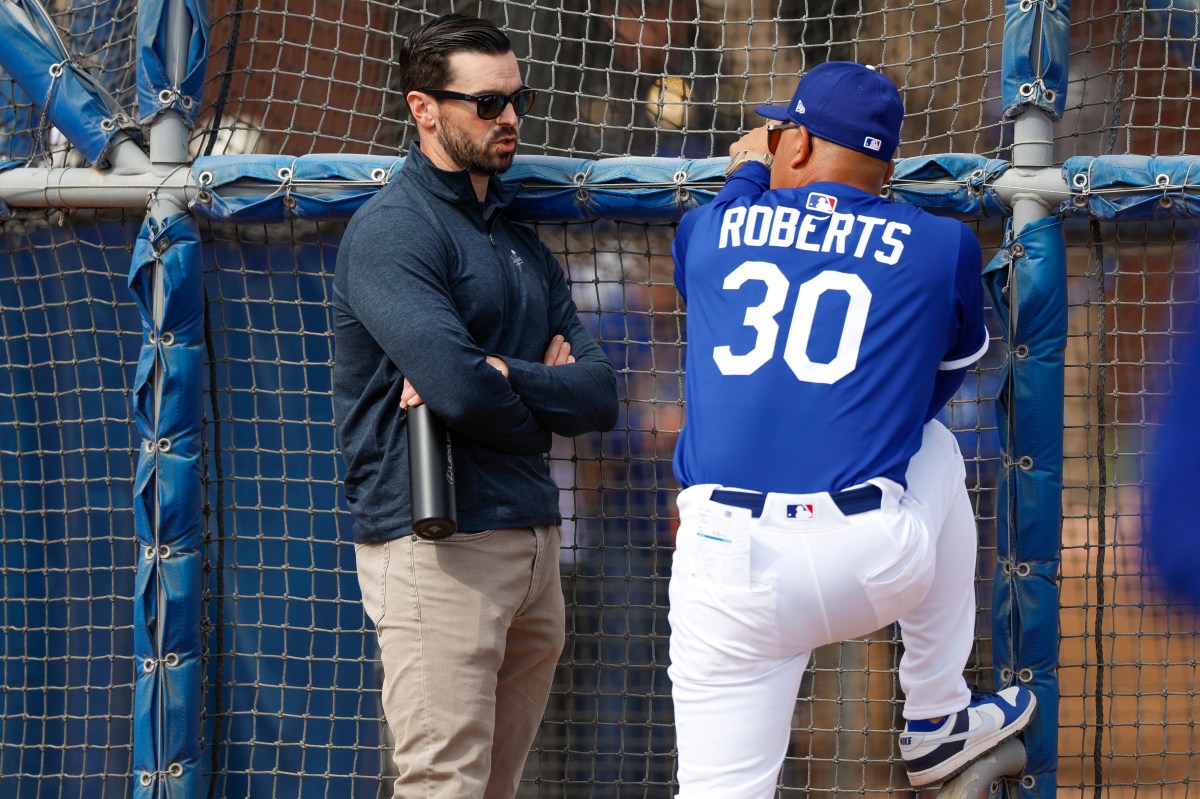
The Dodgers’ Inner Confidence: No Need for External Validation
Brandon Gomes, the general manager of the Los Angeles Dodgers, has always struck me as a guy who’s all about substance over show. In a recent interview, when asked if the praise from superstars like Bryce Harper and Manny Machado validated the Dodgers’ approach to building a winning roster, Gomes didn’t mince words. He shrugged off the idea that endorsements from individual players were necessary, emphasizing instead the hard-earned results that speak for themselves. Gomes pointed to the unwavering support from the team’s ownership, which has allowed them to consistently address roster needs without hesitation. This isn’t just about flexing financial muscle; it’s about strategic foresight. For the Dodgers, the real validation comes from hoisting championship trophies and fielding a lineup that’s better each season. Gomes isn’t one to get caught up in the fluff of public adulation. Instead, he’s focused on the grind: analyzing what the team needs, scouting available talent, and making deals that fit like a glove. It’s a refreshing take in the flashy world of baseball, where egos often run as high as home run totals. Gomes shared that the true measure isn’t fan tweets or player soundbites—it’s winning, plain and simple. And with a coaching staff and players who share that mindset, they push forward year after year, aiming for that elusive repeat glory. I find it inspiring how Gomes dismisses the noise; he’s the steady hand at the wheel, steering a team that’s navigated trades and acquisitions with a clear vision.
Diving deeper into Gomes’ response, you can sense the quiet confidence of a man who’s been in the trenches. He elaborated that the Dodgers’ ability to acquire players who seamlessly integrate into the roster isn’t luck—it’s good fortune built on smart investments from ownership. Think about it: they’re not just throwing cash around; they’re identifying gaps and filling them with precision. Gomes stressed that worrying about external validation is a distraction they can’t afford. Instead, the focus is internal: refining the squad, enhancing skills, and chasing that championship pedigree. He talked about how the Dodgers view improvement as a seasonal journey, not a destination. From the dugout to the front office, there’s a shared ethos of relentless pursuit of excellence. Gomes mentioned the coaching staff’s role in shaping this culture, where players buy into the process without needing pats on the back from outsiders. It’s like a well-oiled machine, where every cog knows its purpose. Personally, I admire how Gomes cultivates this environment; it’s reminiscent of old-school managers who prioritized teamwork over individual stardom. As the season looms, this philosophy could be the edge that sets them apart. Fans often forget the behind-the-scenes battles, but Gomes’ words reveal a team that’s built on resilience and strategy, not just headlines.
Manny Machado’s Blunt Enthusiasm and the Dodgers’ Spending Philosophy
Manny Machado, that fiery shortstop with a reputation for his unfiltered opinions, has had a front-row seat to the Dodgers’ evolution. Speaking recently to the media about his former team’s blueprint for success, he didn’t hold back. “I f—ing love it,” Machado exclaimed, his enthusiasm bubbling over like a kid in a candy store. He’s not just a fan; he’s an advocate for the approach that has transformed the Dodgers into a powerhouse. Machado believes every team should emulate what L.A. has done—spending wisely and aggressively to build a roster that dominates. He called it “f—ing great for the game,” urging the other 29 franchises to take notes. Growing up as a baseball junkie watching teams struggle with tight budgets, I’ve always wondered why more organizations don’t follow the Dodgers’ lead. Machado, with his own journey from the Dominican Republic to MLB stardom, knows the value of smart investments. He praised how the Dodgers have figured out a way to allocate resources that benefits both the team and the sport’s excitement. It’s not about hoarding wealth; it’s about reinvesting in talent that elevates the competition. Machado’s words carry weight; he’s been there, battling injuries and controversies, and now champions a system that rewards excellence. His frustration with stingy teams resonates with me—why settle for mediocrity when you can aim for greatness? As he hinted, the Dodgers’ model could revitalize baseball, making games more thrilling and fans more engaged.
Bryce Harper’s Insightful Take on Running a Franchise Like a Business
Echoing Machado’s sentiments, Bryce Harper brought his own thoughtful perspective to the table when discussing the Dodgers. A player who’s been around the block—contract drama, massive free agency deals, and a quest for a World Series ring—Harper appreciates the Dodgers’ business acumen. “I love what the Dodgers do,” he said simply, highlighting how they treat spending as an investment in success, not a frivolous expense. Harper noted that they “pay the money, they spend the money” when it counts, and it’s built them into a perennial contender. He admires their professional operations, running the team like a textbook business case study. For Harper, who’s experienced various organizations, the Dodgers stand out as ones who understand where to allocate funds—top talent, of course. Reflecting on my own understanding of baseball economics, I see Harper’s point: not every team has the guts or the strategy to pile on star power without overextending. Harper’s journey, from being a high-priced phenom to evolving into a veteran leader, gives him credibility. He sees the Dodgers as a model, emphasizing that their approach isn’t just flashy; it’s sustainable. You can almost picture Harper nodding knowingly in the clubhouse, sharing war stories with younger players about teams that scrimped and suffered versus those that bet big. It’s a nod to the Dodgers’ maturity, proving that frugality doesn’t always win games—sometimes, calculated boldness does.
The Winter Moves That Shaped 2025: Diaz and Tucker Boost Payroll to New Heights
This offseason, the Dodgers didn’t just tinker—they transformed. Signing Edwin Diaz, the elite closer with a fastball that seems to defy physics, cost them $69 million over three years. Then came Kyle Tucker, the versatile outfielder who can do it all, for a whopping $240 million over four years. Piling these onto an already star-studded roster pushed their payroll past $400 million, making them the undisputed kings of spending in baseball. But as we’ve seen, it’s not reckless; it’s strategic. Diaz shores up that ninth-inning bullpen, a weapon that’s been needed since the loss of stars like Blake Treinen. Tucker fills voids in the outfield, adding defense and power to a lineup already stacked with legends like Mookie Betts and Shohei Ohtani. Watching the Dodgers operate like this reminds me of a dynasty-building exercise—methodical, intentional. They’ve invested in guys who fit, not just names. Ohtani, Betts, Freddie Freeman—these aren’t impulse buys; they’re calculated moves to assemble a squad that’s greater than the sum of its parts. Tucker, with his Texas roots and all-around game, brings that homespun toughness, while Diaz’s electric presence electrifies the bullpen. It’s thrilling, really, to think about how these acquisitions could reshape games, turning close contests into Dodgers blowouts. Fans like me ponder: what will they do next? The offseason buzz isn’t just about dollars; it’s about dreams of October glory.
A Roster Rich with Heritage: From Betts to Yamamoto and Beyond
Beyond the big headlines, the Dodgers’ depth is awe-inspiring. They’ve poured resources into talents like Blake Snell, Tyler Glasnow, and newest arrival Yoshinobu Yamamoto, the Japanese ace who’s joined the elite pitching staff. Yamamoto’s addition alone feels like a masterstroke—his splitter and command could keep hitters off-balance for years. Then there’s the foundation: Betts’ speed and energy, Freeman’s consistency at first, Ohtani’s transcendent ability as both pitcher and hitter. Each player they target carries that “fit well” factor Gomes spoke about. It’s not just about quantity; it’s quality spending that builds legacies. Reflecting on this, I imagine the inner workings of Dodger Stadium as a melting pot of skills—betting on these guys means believing in their potential for synergy. Yamamoto, fresh from Japan, embodies the global appeal of baseball. Someone like me, who’s followed international stars’ journeys, sees how the Dodgers bridge worlds. Snell and Glasnow add strikeout punch, complementing the dominance. This isn’t a flash in the pan; it’s a testament to foresight. Owning stars like this means the Dodgers aren’t just collecting talent; they’re crafting narratives. What if they lose a key piece? The depth suggests they’ll adapt, just like last year’s postseason push. It’s a reminder that in baseball, money talks, but smart money wins championships.
Self-Competition: The Dodgers’ True Challenge Heading into 2026
As the 2026 season approaches, one thing becomes clear: the Dodgers’ biggest rival might just be their past selves. They’d built a nearly unbeatable squad, and with these signings, they’ve raised the bar even higher. Self-competition? That’s the real test—matching or exceeding their own heights under cloudless skies of success. Gomes’ philosophy shines here; it’s about constant improvement, not resting on laurels. With a payroll this hefty and talent this deep, complacency could creep in, but the Dodgers seem wired to avoid it. Historically, teams in this position face external envy—haters question if it’s sustainable—but internally, it’s about evolution. I often muse about what keeps them motivated: maybe the ghosts of near-misses or the thrill of outdoing the undefeated (well, almost). Harper and Machado’s praises hint at internal morale that’s sky-high. Going forward, will they snag more like Kiké Hernández’s spark or Gavin Lux’s growth? The themselves-challenge means innovating, perhaps through injury-proofing or scouting aces. It’s poetic—the Dodgers, masters of excess, battling their own shadow. Fans worldwide watch, hoping for fireworks. In the end, Gomes is right: championships validate everything. As 2026 dawns, the Dodgers aren’t just a team; they’re a force, perpetually chasing perfection. Just imagine: another ring, another era defined. Baseball needs more of this—ambition that fuels the game.