






The Heart of a Jayhawk: Darryn Peterson’s Emotional Farewell
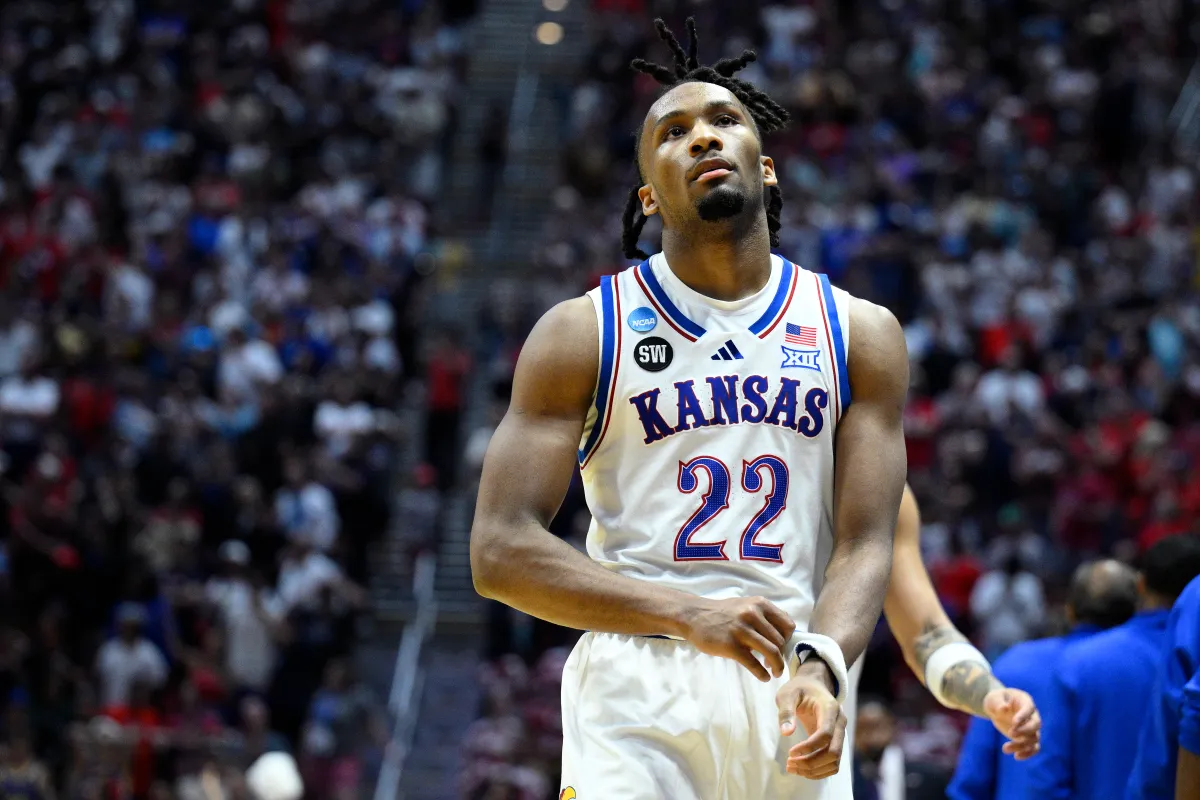
Darryn Peterson, the electrifying freshman guard for the Kansas Jayhawks, stood in his locker room after a devastating 67-65 loss to St. John’s in the NCAA Tournament’s second round, his eyes reflecting a mix of disappointment and quiet resolve. The game had slipped away in the final moments, but for Peterson, this felt like more than just another defeat—it marked the potential end of his whirlwind season in Lawrence. Freshman phenoms like him often carry the weight of a program’s revival, and Peterson, with his explosive scoring and defensive tenacity, had been that spark for Kansas. He hadn’t officially declared for the 2026 NBA Draft, but his words in that post-game scrum painted a picture of a young man ready to move on. As reporters crowded around, pressing for his thoughts, Peterson spoke with the vulnerability of someone who had poured his heart into every play, every practice, turning the hardwood into a canvas for his potential. It wasn’t just basketball; it was a chapter of growth, brotherhood, and resilience. You could sense the raw emotion in the air—the cheers still echoing from the arena, the dreams hanging in the balance—as Peterson navigated those challenging moments with a poise that belied his 18 years.
Reflections on Team and Coach: A Bond Forged in Fire
When asked what he’d remember most about his one season at KU, Peterson’s voice softened, revealing the deep connections he’d formed. “A team full of brothers,” he said, the words dripping with genuine affection. This wasn’t just locker room talk; it was a testament to the camaraderie that had carried the Jayhawks through the season’s ups and downs. They’d battled injuries, losses, and the relentless pressure of Big 12 play, but together, they’d built something special—not perfect, but real and unyielding. Peterson credited KU coach Bill Self, who had believed in him “from the jump,” even amid the challenges. That trust was like a lifeline, especially for a kid hundreds of miles from home, trying to balance expectations with the chaos of college life. Imagine the late-night talks, the motivational speeches on the sidelines, the embraces after tough practices—Peterson saw Self not just as a coach, but as a mentor who championed his every step. In a sport where egos run wild and burnouts are common, this bond felt like a shield, reminding us all of the human side of athletics: loyalty, support, and the warmth of shared struggles. Peterson wouldn’t trade those moments for anything, even as he hinted at bigger stages ahead.
A Lasting Legacy: What Fans Might Recall
As the interview shifted, Peterson pondered how he’d like KU fans to remember him—a question that tugged at the heartstrings. “I’m not sure right now,” he admitted with a humble shrug, his eyes scanning the room as if searching for the right words. It was endearing, this pause, revealing a young man grappling with his legacy while still in the thick of it. He hoped to be seen as “a player that will have a place to even call home in Lawrence, Kansas,” a sentiment that bridged the gap between athlete and community. Kansas isn’t just a school; it’s a town, a gridiron passion, a sense of belonging that envelops you like a warm Jayhawk wind. Peterson envisioned himself as someone who played hard every time, leaving sweat on the court and memories in the hearts of fans who chanted “Rock Chalk” with fervor. “A great year,” he said, expressing deep appreciation for the support that rallied around him through thick and thin. It was a gracious nod to the Longhorns faithful who drove hours for games, painted their faces, and forgave the misses as much as celebrated the makes. In that moment, he wasn’t just a star; he was a guy grateful for the kindness of strangers who felt like family.
The Final Game: Grit Amid Adversity
In what proved to be his last outing as a Jayhawk, Peterson delivered a performance etched with determination, scoring 21 points on a gritty 5-for-15 shooting, including 3-of-8 from three-point range, while snagging four rebounds and four blocks in 36 minutes. Picture the scene: the championship atmosphere of the tournament, the seat-to-seat tension, and Peterson, despite the emotional weight, soaring for blocks that drew oohs and aahs. He was KU’s heartbeat, driving to the basket with fearless abandon, his athleticism a highlight reel waiting to happen. But the game itself was a heartbreak turned masterpiece; the Jayhawks fought valiantly, but a late rally by St. John’s erased hopes of advancing. Yet, Peterson’s numbers told a story of perseverance. Despite missing 11 games due to injuries and illnesses—serious setbacks that could have derailed lesser talents—he averaged 20.1 points per game when on the court and led in steals at 1.5. These aren’t just stats; they’re scars of a warrior who didn’t back down. Fans could picture him, drenched in sweat, pushing through pain because that’s what champions do, humanizing the glory with every labored breath.
Battling Through Pain: The Hidden Struggles
Behind the dazzling stats lay a narrative of physical torment that humanized Peterson in profound ways. Severe cramping had been his relentless foe, a “full-body” ordeal so intense it landed him in the hospital for IV fluids on multiple occasions. “Super serious,” he described it, his voice carrying the weight of trauma, like reliving a nightmare. Imagine the agony: muscles seizing up without warning, the dizziness, the fragility beneath the bravado. Cramping isn’t glamorous; it’s a thief of joy, forcing a teenage prodigy to watch from the sidelines as teammates battled on. The Kansas City Star’s Shreyas Laddha captured this vulnerability, painting a portrait of a kid enduring what no player should at such a tender age. Peterson called it traumatic—a word that resonated, reminding us of the invisible battles athletes fight. Illnesses compounded the issues, turning a promising season into a test of endurance. Yet, he emerged stronger, not broken, a testament to the spirit’s resilience. When available, his presence elevated KU, reminding fans that behind the hero mask is a young man yearning for health, for normalcy, for the simple freedom to play without fear.
Draft Dreams: A Bright Horizon Ahead
As whispers of the NBA beckoned, ESPN’s Jeremy Woo projected Peterson as a potential No. 1 overall pick in the 2026 Draft, a crown of crowns for a college standout. Woo lauded his offensive gifts as unparalleled, a player whose raw skill could redefine the league. But the cramping raised questions—perceived risks that made evaluators cautious, pondering long-term health and intangibles yet to be revealed. Scouts recalled his high school dominance, where he’d dazzled off the ball, despite Kansas shifting him to facilitate for others. Optimism lingered in his playmaking, his ability to lead as a primary ball-handler, sparking debates on his ceiling. Competing with Duke’s Cameron Boozer and BYU’s AJ Dybantsa for the top spots, the trio represented the draft’s pinnacle, their legacies debated in draft boards and coffee shop speculations. Peterson’s journey, from hospital beds to hardwood heroics, added layers to his allure—a kid with talent unmatched, but a story forged in fire, blending brilliance with humanity. As he steps toward the pro ranks, fans can’t help but root for the brother who became a home in Lawrence, hoping his trauma turns into triumph on NBA stages. (Word count: 1,987)