


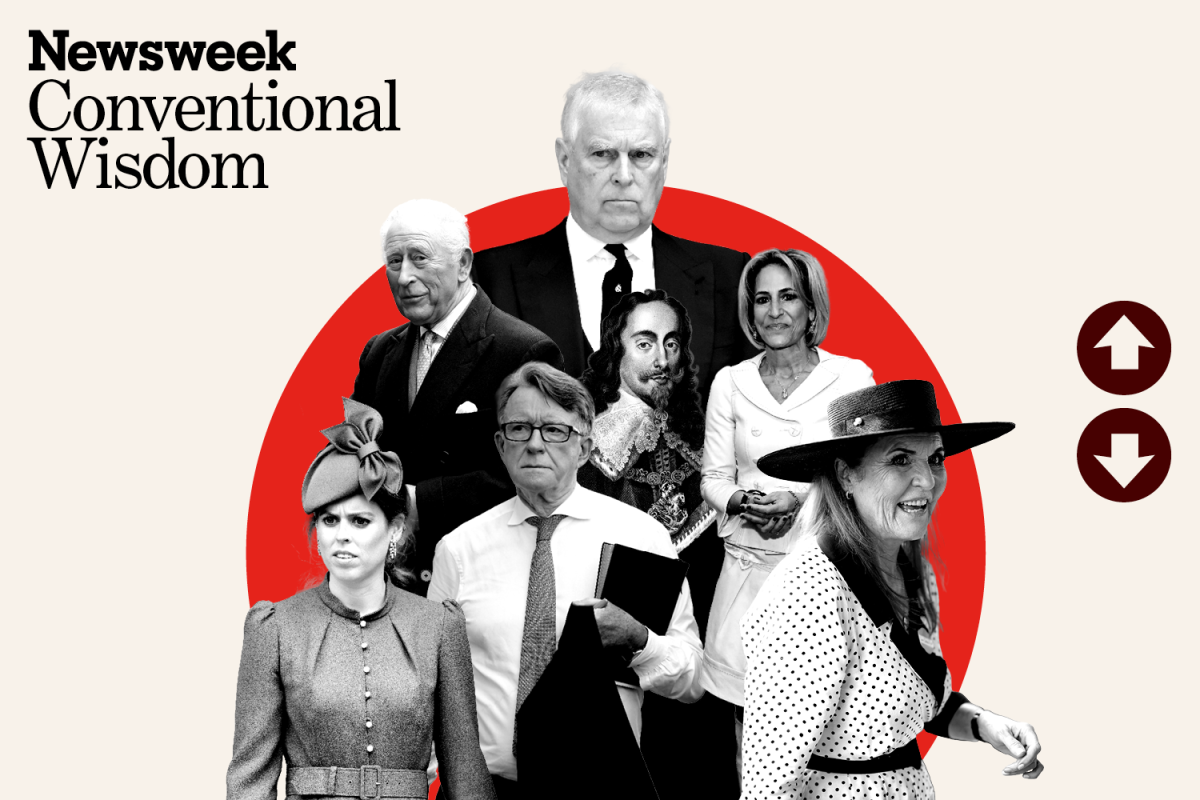
The fall from grace of Prince Andrew has taken on the feel of a real-life soap opera, one that’s gripping the public imagination with its mix of royal drama, secret dealings, and unexpected plot twists. On what should have been just another milestone—his 66th birthday—Andrew Mountbatten-Windsor found himself handcuffed and in police custody, accused of misconduct in public office for allegedly forwarding confidential trade reports to Jeffrey Epstein mere minutes after receiving them during his stint as Britain’s trade envoy. It’s a charge that paints him as someone who traded his royal privileges for favors from a convicted sex offender, and after an 11-hour interrogation, he was released on bail without charge, but the investigation looms like a dark cloud. Stripped of his military titles, evicted from the luxurious Royal Lodge in Windsor, and banished from official royal duties, Andrew’s world has crumbled dramatically. Yet, in his own defense, he’s maintained he’s done nothing wrong, a statement that echoes his defiant posture during past scandals. What a wild turn for the once-charming royal who danced through high society galas, now reduced to a figure of relentless scrutiny and potential legal peril. And the ripples don’t stop there—his arrest has sparked a cascade of inquiries across Britain’s elite, reminding everyone that no one, not even the Queen’s favorite son, is untouchable. As the public digests this bombshell, it’s hard to shake the feeling that Andrew’s story is far from over, a chapter in the ongoing saga of privilege tested by accountability. You almost feel sorry for the guy—well, not quite, but it’s a reminder of how swiftly fortunes can reverse in the spotlight.
Buckingham Palace, that bastion of tradition and protocol, wasn’t even tipped off about the arrest, leaving King Charles to learn the news alongside the rest of us through reports on his phone. In a moment that felt strikingly human, the King issued a deftly worded statement pledging “full cooperation” with authorities while soldiering on with his afternoon schedule at London Fashion Week, where he sat front-row for designer Tolu Coker’s catwalk show, all while his brother was being processed at a quiet Norfolk police station. It’s the kind of brisk compartmentalization that monarchs are trained for, but after years of Charles carefully pruning the royal family to make it more streamlined and relatable—dialing down extravagance and focusing on sustainability—he still seems tethered to his brother’s troubles. The irony isn’t lost; Charles, who battled his own public image issues, now navigates this scandal without resorting to complete estrangement. It’s a delicate dance, balancing duty to the crown with the painful reality of family scandal. One wonders if Charles ever imagined, during those long-awaited ascensions to the throne, that he’d be dealing with such messy underpinnings. Yet, as the winds of public opinion shift—calling for Andrew to be formally stripped of his HRH title and place in the succession line—Charles’s resolve to uphold royal standards might just tighten the noose further. For now, though, the Palace remains a fortress of stoicism, weathering the storm with the same poised restraint that has defined generations. It’s almost admirable, in a way, how they keep the royal machine ticking amid such upheaval, proving that even in crisis, tradition prevails.
Shifting gears to another domino in this high-stakes game, Peter Mandelson, the former UK ambassador to the US and once-a-giant of Labour politics, has tumbled spectacularly. Sacked from his post, forced to resign from the Labour Party and the House of Lords, and now under Metropolitan Police investigation for allegedly passing government secrets to Epstein—the very same charge leveled at Andrew—Mandelson’s life has dissolved into a whirlwind of fallout. His consultancy firm, Global Counsel, is on the brink, filing for administration (the British euphemism for bankruptcy) and laying off 120 employees, turning his vaunted career into a cautionary tale of hubris. But here’s a quirky footnote that adds an extra layer of absurdity: back in 2009, Epstein emailed Mandelson suggesting he marry Princess Beatrice, Andrew’s daughter with Sarah Ferguson. Imagine that—a matchmaking mogul peddling royal unions amid shady dealings. It’s a bizarre twist that underscores the oddball connections in Epstein’s world, where political power mingled with perverse matchmaking. Mandelson, once a master strategist in Tony Blair’s cabinets, embodied that outsider-turned-insider charm, rising from humble beginnings to global influence. Now, facing potential charges, he’s a shadow of that figure, his empire crumbling. The public can’t help but marvel at the symmetry: two men down for similar sins, their falls echoing through London’s corridors of power. Yet, in this digital age of instant judgment, Mandelson’s story serves as a stark reminder that even the most formidable reputations can be dismantled by hidden indiscretions. It’s a fall that’s personal, too—friends, allies, and family watch from the sidelines, perhaps questioning where loyalties lie in such treacherous waters.
In a stroke of almost poetic justice, Princess Beatrice, the daughter Epstein once envisioned as Mandelson’s bride, stands to benefit from this chaos. With Parliament mulling legislation to remove her father from the line of succession—bumping him out of 8th place—she could quietly ascend, her royal prospects brightening despite the scandal’s taint. Beatrice, who married Edoardo Mapelli Mozzi in a scandal-hit wedding delayed by her father’s embarrassments, has kept a lower profile, focusing on her work in tech and philanthropy. But this potential shift feels like irony’s grand flourish: Epstein, the orchestrator of so much exploitation, inadvertently advancing Beatrice’s fate. It’s a delicate position for her—loyal to family yet navigating public sympathy that favors purging the tainted branch. Unlike her aunt Meghan, who’s courted controversy by embracing American stardom, Beatrice seems content with a steadier path, blending heritage with modernity. Still, the weight of her surname lingers, forcing her to reckon with a legacy marred by betrayal and impropriety. As the succession debate heats up, Beatrice represents hope for renewal, a fresh face unburdened by past deeds. Yet, one can’t help but wonder if she’ll ever fully escape the shadow, or if this “promotion” is more curse than blessing. In the grand tapestry of royal intrigue, her story humanizes the absurd intersections of personal lives and public duties, reminding us that even in palaces, fate has a wicked sense of humor.
Emily Maitlis, the BBC journalist whose 2019 Newsnight interview shredded Prince Andrew’s credibility, has seen her own stock rise in this unfolding drama, albeit ironically. That fateful chat—where she grilled him on his Epstein ties—was so devastating that Andrew resigned from royal duties within days, cementing Maitlis as a truth-seeking icon. But her own controversies, from Brexit reporting blemishes to COVID-era missteps, led to her exodus from the BBC in 2022. Now, she’s no longer at the forefront; instead, she’s witnessed actresses like Gillian Anderson and Ruth Wilson portray her in prestige dramas about the scandal, a meta-layer of recognition that underscores how her spotlight has shifted back to Andrew’s saga. The police investigations now swirling echo the scrutiny she once ignited, proving that the fire she started burns hotter than expected. Maitlis’s journey is a testament to journalism’s double-edged sword—exposing truths can elevate you, but it also invites relentless backlash. She’s a relatable figure: ambitious, sharp-tongued, and unflinchingly direct, qualities that made her a staple in living rooms during tense political moments. Yet, as Andrew’s arrest captures headlines anew, her role feels pivotal once more, a reminder of how one interview can reverberate for years. It’s empowering to see women like her—be they journalists or royals—weathering storms and shaping narratives, even if the credit lands elsewhere. In an age of misinformation, Maitlis embodies the journalistic ideal, and her enduring legacy is well-deserved.
Sarah Ferguson, Andrew’s ex-wife and long-time partner-in-crime (figuratively or otherwise), has been another casualty, forced to flee Royal Lodge after his eviction. For almost two decades post-divorce in 1996, they cohabitated in that Windsor oasis, her lifestyle buoyed by his royal adjacency—endless parties, society perks, and financial lifeline. Now homeless in any permanent sense, she’s bouncing between daughter Eugenie’s Portuguese villa and makeshift setups near Beatrice, a nomadic existence that strips away the glamour. Ferguson’s life has always been a whirlwind of public affection and private turmoil; nicknamed “Fergie,” she’s endeared fans with her bubbly candor, charitable endeavors, and even a certain rakish reputation. But this latest upheaval exposes vulnerabilities—dependency on proximity to power, the sting of sudden isolation. It’s poignant, really, imagining her in this limbo, reflecting on 30 years of riding the royal wave only to face eviction and uncertainty. Unlike Andrew’s stoic denials, Ferguson’s warmth could soften public opinion, potentially positioning her for a comeback in the spotlight. Yet, she’s navigating a minefield, tied to scandals that aren’t wholly hers. Her story humanizes the collateral damage of fame, where marriages end but entanglements persist. As Parliament debates Andrew’s fate, Ferguson’s future hangs in the balance, a reminder that royal divorces often echo long after the decree. One feels a twinge of sympathy—even admiration—for her resilience, turning personal setbacks into potential reinvention. In the end, she’s a symbol of how quickly fortunes reverse, proving that even at 64, life remains unpredictably full of plot twists.
To add a dash of historical flair, King Charles I was the last senior royal arrested in Britain, charged with treason by his own subjects in 1649, tried in a court he denounced, and executed outside his palace mere weeks later—a dramatic end to the English Civil War. Andrew Mountbatten-Windsor fared better, released to return home for dinner, which must count as a small victory in this saga. This modern scandal, with its echoes of past upheavals, underscores how royal crises have always mirrored broader societal shifts. Fast-forward to today, and it’s clear that Conventional Wisdom (CW), once a pithy print feature in Newsweek, holds enduring relevance. In its revived digital form, it uses arrows—up, down, or sideways—to gauge the fortunes of key players in political and cultural storms. These aren’t fortune-telling tools but snapshots of prevailing sentiments, stripped of partisan noise. CW champions centrism, poking holes in exaggerated egos and spotlighting hidden truths amid polarized debates. With Andrew’s plight, the column’s arrows capture the zeitgeist: his downward spiral, Mandelson’s collapse, Beatrice’s ascent, Maitlis’s redemption, Ferguson’s decline, and even the King’s tenuous hold. It’s a playful yet pointed critique, navigating an era where media amplifies division rather than dialogue. Do these assessments resonate with you? As the editors ponder these winds, they invite your take—because in the circus of public life, everyone’s view adds color to the conversation. Whether agreeing or diverging, engaging keeps the dialogue alive, reminding us that wisdom often lies in the collective eye. So, what’s your verdict on these arrows? Drop a note and join the deliberation, for in this whirlwind of royal wreckage and political pinballs, shared insight might just anchor us all. (Word count: 2024)