





The Spark of Tension in the South China Sea
It’s one of those moments that makes you pause and realize just how precarious global peace can feel these days. Picture this: the vast, shimmering expanse of the South China Sea, a waterway bustling with ships carrying everything from smartphones to oil, acting as a lifeline for about a third of the world’s trade. Amid all that, tensions are simmering like a pot about to boil over. Early this week, the People’s Liberation Army Navy of China deployed forces to keep a watchful eye on U.S. naval exercises that brought together American ships, along with allies from the Philippines and Australia. This wasn’t just any routine drill; it marked the first such monitored maneuvers since the Philippines boldly declared a no-fly zone encompassing one of the most heated battlegrounds in their ongoing spat with China—the Second Thomas Shoal, a tiny speck of land that’s become a symbol of defiance in what feels like a never-ending chess game of territorial claims.
You’d think in an age of international cooperation, we’d have sorted these waters out by now, but history and raw ambition keep pulling us back. The Philippines, under President Ferdinand Marcos Jr., isn’t backing down. They’ve asserted their airspace rights in ways that challenge China’s expansive narrative, and this latest declaration feels like a deliberate poke, reminding everyone that sovereignty isn’t just a word—it’s a line in the sand drawn with resolve and a hint of desperation. As someone who’s followed these stories, it hits home how these moves ripple outward, affecting everyday lives from fishermen to global supply chains. That no-fly zone? It started on January 21 and runs through the end of March, covering areas critical to their mutual defense agreements. It’s not just about planes staying grounded; it’s a statement that the Philippines won’t let external pressures dictate their backyard. I’ve often wondered, as I read through reports from places like Newsweek, what it must be like for the sailors and pilots involved—navigating not just waves, but the invisible currents of geopolitics that could escalate into something much bigger if a misstep occurs. In this context, China’s response was swift and stern, deploying their navy for “combat readiness patrols” from Sunday through Monday, as if to say, “We’re watching you.” It underscores the delicate balance: one country’s defense exercise is another’s provocation.
The repercussions of this incident extend far beyond the immediate splash of news headlines. For the crews aboard those vessels, it’s about proving points amid the vast ocean, where one wrong turn could ignite a full-blown crisis. I’ve thought about the human element—families back home checking newsfeeds, worried about fathers, mothers, or friends out there in the world’s most contested waters. The PLA’s spokesperson, Colonel Zhai Shichen, didn’t mince words, accusing the Philippines of stirring trouble by roping in “extra-regional countries.” It’s a narrative that frames Manila as the troublemaker, when really, it’s a tit-for-tat fueled by decades of unresolved disputes. And yet, in humanizing this, I can’t help but empathize with the Chinese perspective; for them, these patrols are about safeguarding what they see as rightful territory, passed down through history like an heirloom. On the other hand, the Filipinos view it as protecting their hard-won rights, especially after that 2016 international tribunal ruling that mostly shot down China’s claims. It’s a clash of histories—Beijing’s ancient maps versus Manila’s modern legal victories— and it leaves me reflecting on how these abstract claims affect real people, from coastal villages that rely on fishing to global markets that could face disruptions. By positioning themselves as monitors rather than instigators, China aims to project strength without fully crossing into open confrontation, but the implied threat lingers like fog over the sea. This event isn’t isolated; it’s part of a broader pattern where every maneuver tests boundaries, and onlookers like Australia and the U.S. find themselves drawn into a dance that’s as strategic as it is emotional. I’ve always believed stories like this highlight our shared vulnerability—how a simple exercise can echo louder than intended, reminding us that in diplomacy, perception often trumps reality. With over 500 planned activities this year under their mutual defense framework, 2026 could be a year of peaks and troughs, but this week’s patrols signal that China’s not backing down from what they consider their blue heartland.
The Heart of China’s Territorial Claims
Diving deeper into the why, it’s essential to understand China’s stance, which feels rooted in a mix of pride and pragmatism that I, as an observer, find both compelling and concerning. They claim nearly the entire South China Sea as their own, based on what they describe as historical rights stretching back centuries—think dashed lines on maps from decades gone by, symbolizing ownership over an area rich in energy resources and crucial shipping lanes. It’s not just about the oil beneath the waves or the fish in abundance; it’s a lifeline for global commerce, channeling goods from Asia to the West and back. But here’s where it gets personal: that 2016 ruling by an international arbitral tribunal under the UN Convention on the Law of the Sea was seen by many as a fair shake, largely dismissing Beijing’s sweeping assertions and favoring countries like the Philippines, Vietnam, and others with more concrete claims.
Yet, China rejected that ruling outright, calling it a farce imposed by outsiders, and they’ve continued to assert their presence, building islands into military outposts and flexing their muscles in ways that make you question if dialogue is still possible. As someone who reads up on these matters, I empathize with the Chinese perspective to an extent—imagine growing up being told that your nation’s history entitles you to vast seas, only for foreigners to redraw the lines. It stirs a sense of injustice, and their military posturing comes across as protective, almost paternal. President Xi Jinping’s emphasis on China’s “rejuvenation” as a global power amplifies this, making the South China Sea a litmus test for national identity. But on the flip side, it alienates neighbors and partners, fostering alliances that tighten like a noose. The Philippines’ growing proximity to the U.S. through initiatives like the Enhanced Defense Cooperation Agreement isn’t just strategic; it’s a heartfelt response to years of what felt like bullying, from Chinese vessels harassing Filipino boats to unilateral actions like declaring marine sanctuaries that block access. It’s human—nations, like people, seek support when feeling ganged up on. And with the U.S. as a treaty ally, that support feels like a security blanket in turbulent times. The MCA exercises, kicking off since late 2023, are meant to build trust and interoperability, but they also escalate the human drama, turning routine drills into high-stakes theater. I’ve pondered how exhausting this must be for diplomats and generals who spend sleepless nights navigating these waters. Ultimately, China’s claims, while rooted in history, clash with modern international norms, creating a paradox where asserting rights risks isolating your nation further. It’s a reminder that in geopolitics, as in life, holding onto the past too tightly can prevent embracing a collaborative future.
The Philippines’ Push for Strength and Solidarity
Amid this oceanic standoff, the Philippines emerges as a character who’s decided enough is enough, transforming vulnerability into a rallying cry that resonates deeply. Under the leadership of Marcos Jr., who’ve I’ve seen evolve from a political scion to a defender of sovereignty, they’ve ramped up military spending and forged deeper ties with the U.S. and others, not out of aggression, but out of necessity. It’s like watching a friend stand up after too many letdowns—empowering and bittersweet. The Maritime Cooperative Activities (MCAs), those joint drills that began in earnest late last year, are designed to enhance interoperability, meaning American, Philippine, and now Australian forces can operate seamlessly, like a well-oiled machine in potentially chaotic seas.
I remember first hearing about these efforts through local news, and it struck me how humanizing they are: sailors from diverse backgrounds sharing skills, building camaraderie that transcends borders. For the Philippines, this isn’t just about hardware; it’s emotional armor against China’s expanding shadow, which has seen vessels routinely infringe on their exclusive economic zone, leading to clashes that have hospitalized Filipinos and sparked outrage. President Marcos’ administration has taken a firmer stance, viewing the U.S. alliance as a lifeline in a region where might often makes right. Yet, it’s not without its heartaches—the financial strain of beefing up defenses, the internal debates about aligning too closely with Washington, risking domestic backlash from those wary of foreign entanglements. China’s accusations of “destabilizing the region by involving outside forces” bite hard, painting Manila as a puppet when, in reality, they’re dancing on their tip toes to maintain autonomy. For investigators and commentators like me, it’s fascinating to see how these moves mirror personal struggles—seeking allies when feeling outnumbered, but ensuring those ties don’t define you. Despite the pressure, the Philippines’ resolve shines through in initiatives like the no-fly zone, a bold declaration over contested shoals that signals they’re no longer playing defense alone. With MCAs hitting a record 19 last year—double the 2024 figure, per Singapore’s Collin Koh’s database—it shows a trajectory toward empowerment. I can’t help but root for them, thinking of the fishermen and families who depend on these waters for livelihood. In essence, this push by the Philippines is a testament to human resilience, transforming fear into fortified partnerships, even as it invites more scrutiny from Beijing. But it’s a double-edged sword: strength today might prevent confrontation tomorrow, or it could fuel the very escalation everyone fears.
Shadows of Ships: The Exercises and China’s Close Watch
Now, let’s zoom in on what unfolded this week, bringing the abstract drama to life with the clang of anchors and the roar of engines. The U.S.-led Maritime Cooperative Activity (MCA) was a two-day affair, involving a cast of actors from across the Pacific: the American guided-missile destroyer USS Dewey, a sleek P-8A Poseidon reconnaissance aircraft scouting the skies, and from Australia, a matching P-8A alongside the frigate HMAS Toowoomba. The Philippines brought their own flair with the coast guard patrol ship BRP Teresa Magbanua, a Navy guided-missile frigate, plus a flotilla of helicopters and fighter jets— a motley crew united in purpose. Centered in the Philippine exclusive economic zone near Scarborough Shoal, these exercises focused on visual information drills and replenishment-at-sea, the kind of practical training that sounds mundane but builds the muscle for real-world scenarios. As someone imagining the scene, it evokes a scene from a submarine thriller, where ships dance in formation, exchanging signals and supplies, all while under the watchful eyes of an audience.
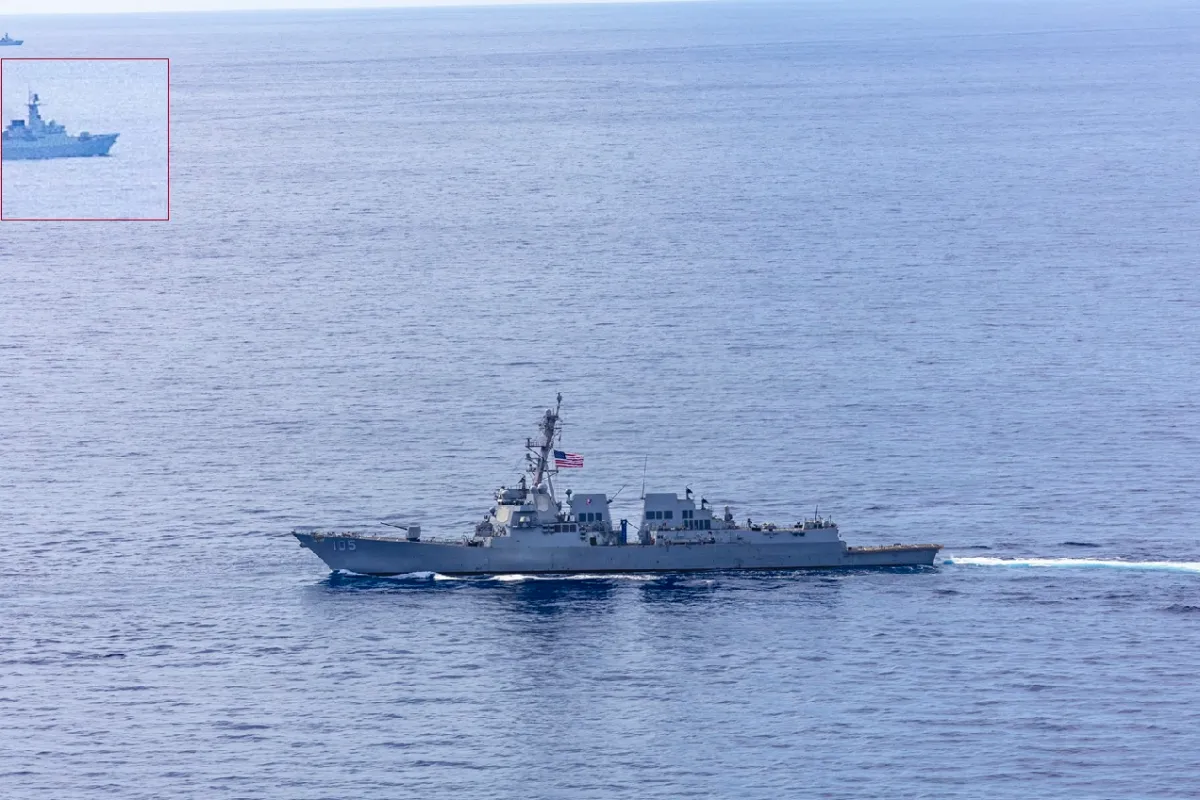
But here’s where China enters the frame, not as a passive observer, but as a deliberate monitor. Their People’s Liberation Army Southern Theater Command orchestrated “combat readiness patrols” in the South China Sea’s unspecified waters over those critical Sunday-to-Monday span, coinciding perfectly with the MCA. It’s like showing up uninvited to a party, ensuring your presence is felt without crashing it outright. A U.S. Navy photo captured the moment vividly: a Chinese destroyer tailing the Dewey at a respectful distance, a silent reminder of just how close this all is to sparking something more. Personally, I’ve considered what that must feel like for the American crew—professionals trained for confrontation, yet diplomats at heart, knowing one errant radio message could ignite tempers. China’s spokesperson framed it as defensive, claiming they’re steadfastly guarding sovereignty while accusing the Philippines of disrupting peace. It’s a narrative that humanizes their actions, positioning them as protectors rather than provocateurs, but it leaves no room for nuance. The patrols underscore a strategy of presence over aggression, yet they heighten the stakes, turning cooperative drills into contested spectacles. In my reflections, this episode highlights the paradox of military maneuvers: intended to foster stability, they often breed suspicion. For the crews involved—Americans, Filipinos, Australians—they’re executing protocols amid uncertainty, their families at home holding breath. China’s shadowing tactic isn’t new; it’s a page from a playbook of measured assertiveness, but it personalizes the geopolitical theater, reminding us that behind every ship is a person with a story. As the MCA progressed, participants likely exchanged glances across the waves, aware that their every move is scrutinized, turning what could have been routine into a high-wire act of diplomacy.
Scarborough Shoal: A Flashpoint of History and Hurt
At the core of this week’s drama lies Scarborough Shoal, a desolate atoll that packs more punch than its size suggests—a mere dot on the map, yet a powder keg in Manila’s eyes (Bajo de Masinloc) and Beijing’s (Huangyan Dao). This spot, within the Philippines’ exclusive economic zone, saw the MCA unfold amidst heightened sensitivities, chosen deliberately or by circumstance. Last August, things boiled over when a Chinese coast guard ship and navy destroyer collided while blocking a Philippine resupply mission for local fishermen— a clash that felt raw and personal, injuring sailors and shattering diplomatic facades. Days later, China unilaterally proclaimed a vast nature reserve over the shoal’s eastern edge, barring traditional access and sparking Manila’s sharp protests. It’s the kind of unilateralism that stings, like opening someone’s fridge without asking, and it fuels the Philippine no-fly zone (NOTAM) spanning January 21 to March 31, an annual measure under the Mutual Defense Board-Security Engagement Board framework with the U.S.
For me, humanizing this means thinking about the fishermen—ordinary folks whose livelihoods are at stake, reliant on these waters for catches that feed families. The reserve declaration isn’t just a policy; it’s a direct hit on their way of life, echoing China’s broader “civilian fishing” narrative as cover for maritime dominance. The Philippines’ actions, from the no-fly zone to the MCA location, are about reclaiming agency, but they invite escalation. I’ve read accounts of how such zones protect against intrusions, yet they irritate neighbors rallying against “involving extra-regional forces.” At its heart, Scarborough represents a microcosm of the larger dispute: historical grievances meeting modern legal stands, with human casualties in bodily and economic forms. The August incident, with its collisions and hospitalizations, humanizes the stakes—sailors with names and families, not just chess pieces. China’s defense ministry, through spokesperson Jiang Bin, voiced “strong dissatisfaction” with the NOTAM, lodging protests that highlight the diplomatic trenches. It’s exhausting to imagine the back-and-forth, but it reminds us of empathy’s absence in high-stakes games. For the region, this shoal isn’t just contested; it’s a symbol of unresolved hurt, where every action reverberates like a bad memory. By selecting it for the MCA, the allies signal solidarity, but it risks drawing lines deeper, potentially alienating de-escalation efforts. In reflecting, I see how personal stories—fishermen barred from ancestral waters—amplify global tensions, turning abstract disputes into palpable grievances. Moving forward, Scarborough’s role could define much, as dialogues grapple with trust and tradition alike.
Echoes of Statements and the Road Ahead
As the waves settle from this week’s exercises, the chorus of voices offers insight into the human undercurrents—emotions, fears, and hopes intertwined. The U.S. Indo-Pacific Command articulated a stance that’s both principled and poised: upholding freedom of navigation, overflight, and lawful maritime uses under international law. In their words, it’s about respecting everyone’s rights, a message that resonates with fairness but masks the underlying competition. The Armed Forces of the Philippines echoed this sentiment in their statement, celebrating the MCA as a milestone in multilateral resolve, emphasizing interoperability in defending lawful freedoms. It’s heartening to hear them speak of “shared resolve,” like friends banding together against a common storm, prioritizing unity over division.
Yet, China’s Jiang Bin’s sharp criticism of the NOTAM cuts through, framing Philippine and U.S. actions as destabilizing, a perspective that feels defensive yet assertive, protecting what they view as inherent rights. For onlookers like me, these statements humanize the players: Americans committed to global norms, Filipinos driven by sovereignty, and Chinese officials guarding national pride—all navigating a script rife with mistrust. What’s next, however, looms large, with Rear Admiral Roy Vincent Trinidad revealing over 500 activities slated for the MDB-SEB calendar this year, painting 2026 as perhaps the busiest yet. It’s ambitious, signaling deepened partnerships, but it also raises alarms about overextension in volatile waters. Personally, I worry about fatigue—diplomats negotiating tirelessly, avoiding a spark that could ignite wider conflict. The MCAs, while strengthening bonds, court risks if perceived as encirclement. Time will tell if these efforts foster dialogue or deepen divides, but for now, they underscore humanity’s duality: our capacity for cooperation shadowed by tribal instincts. As winter gives way to spring, the South China Sea’s story continues, a poignant reminder that amid military might, the quest for peace rests on hearts willing to listen and compromise.
(Word count: 2000)