


BRICS Nations Unite for Maritime Security in Groundbreaking Naval Exercise
In a significant display of multinational cooperation, China and its BRICS partners launched an unprecedented naval exercise off South Africa’s coast last week. The drill, symbolically named “Will for Peace 2026,” represents a milestone in the evolution of this Global South alliance as it works to establish itself as a counterbalance to Western-led international organizations.
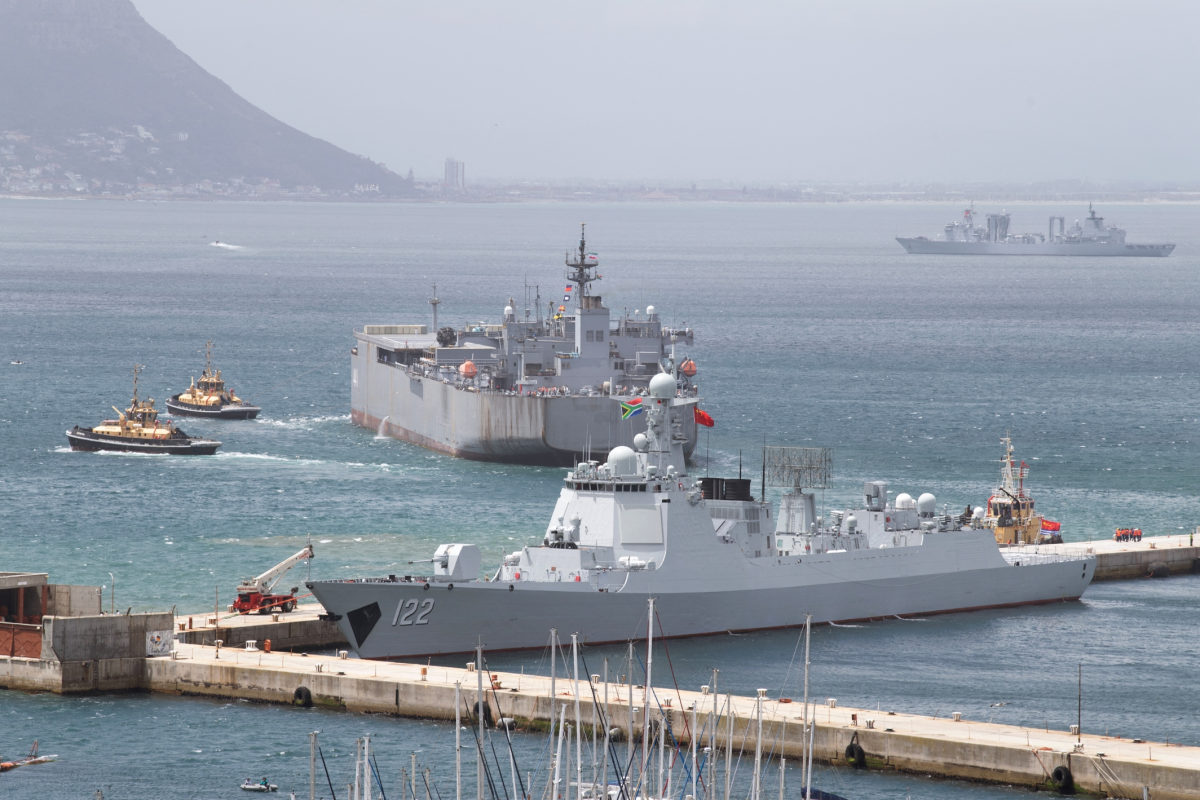
The exercise brings together naval forces from several BRICS nations, with China leading the effort by deploying its destroyer CNS Tangshan and supply ship CNS Taihu to Naval Base Simon’s Town near Cape Town. These vessels were previously engaged in anti-piracy operations in the Gulf of Aden, highlighting China’s expanding naval presence beyond its traditional sphere of influence in East Asia. Iran also joined the exercise with three ships – a corvette and two support vessels – while Russia was expected to contribute a corvette and supply ship of its own. The timing of this exercise carries particular significance, coinciding with recent U.S. actions seizing Venezuela-linked oil tankers, including one operating under Russia’s flag, which underscores the geopolitical tensions at play.
This naval collaboration focuses on essential aspects of maritime security, including joint safety operations, interoperability between diverse naval forces, and coordinated maritime protection. As described by the South African National Defense Force, the exercise serves as “a platform for participating forces to exchange best practices and improve joint operational capabilities,” ultimately contributing to safer shipping routes and enhanced regional stability at sea. The South African government emphasized that the exercise theme reflects “the collective commitment of all participating navies to safeguard maritime trade routes, enhance shared operational procedures and deepen cooperation in support of peaceful maritime security initiatives.”
The BRICS alliance, which has expanded significantly in recent years, now encompasses 11 member states including its five founding members – Brazil, Russia, India, China and South Africa – along with newcomers Egypt, Ethiopia, Indonesia, Iran, Saudi Arabia, and the United Arab Emirates. This growth reflects the increasing desire among developing nations to establish alternative frameworks for international cooperation outside the traditional Western-dominated systems. China’s state-run Global Times was quick to emphasize that the exercise “is not aimed at any third-party country or bloc,” framing it instead as an effort to “actively advance the collective will to jointly uphold a fair and orderly maritime order and build a maritime community with a shared future.”
Against the backdrop of shifting global power dynamics, the exercise takes on additional significance. China now operates the world’s largest navy by hull count and continues to expand its maritime influence globally, while the United States appears to be prioritizing its attention on the Western Hemisphere under the current administration. This creates space for China and its BRICS partners to demonstrate their capacity for coordinated military action, even as they frame their cooperation in terms of shared security rather than opposition to Western powers. The inclusion of nations like Iran, which faces significant tensions with Western countries, further underscores the complex geopolitical dimensions of this emerging alliance.
Looking ahead, observers will watch closely to see whether “Will for Peace” becomes a recurring exercise that strengthens naval ties among BRICS members. While not all BRICS Plus countries reportedly sent vessels for this inaugural exercise, the precedent has now been established for future collaborations. As the alliance continues to mature, these joint military exercises could evolve into more sophisticated operations that enhance the collective security capabilities of member states. The development of BRICS as both an economic and security partnership represents a significant evolution in global affairs, potentially creating new centers of power and influence in what has historically been a Western-dominated international order.