






China’s JF-17 Thunder Fighter Gaining Global Traction as Affordable Alternative to Western Aircraft
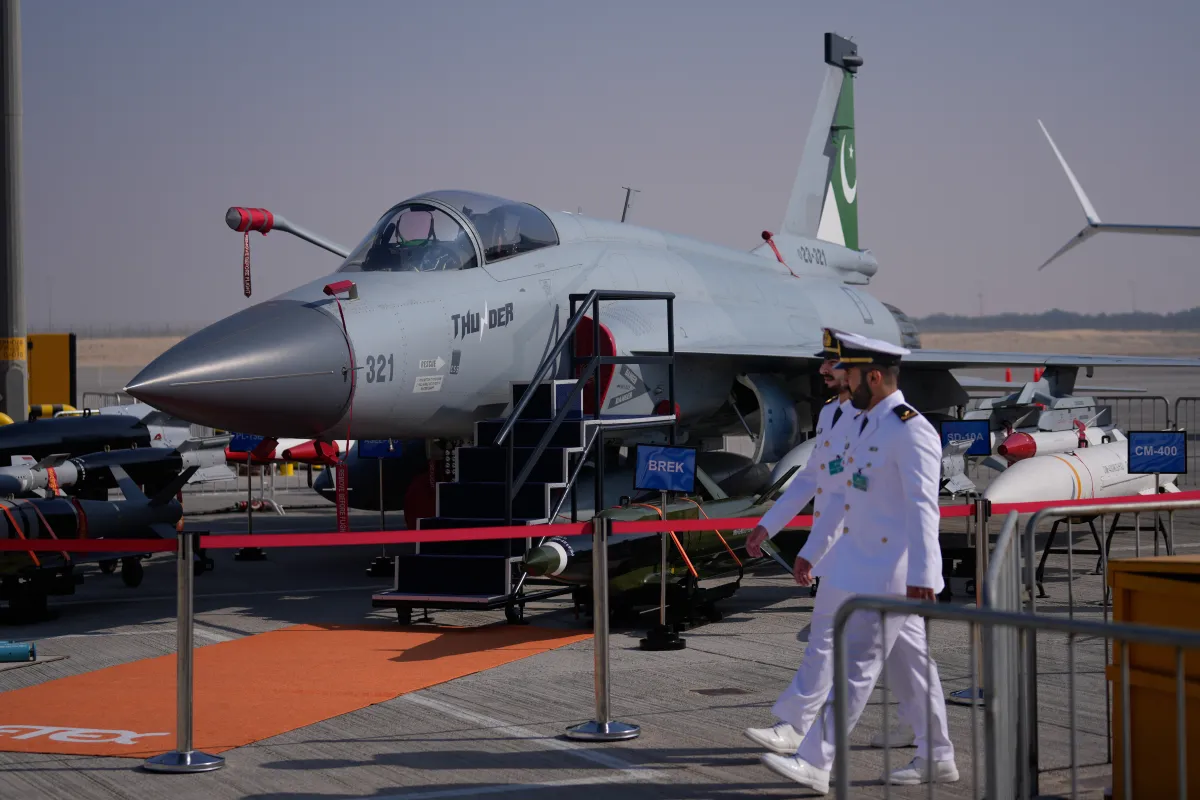
The JF-17 Thunder fighter jet, co-developed by China and Pakistan, is steadily expanding its international presence, marking significant export milestones in 2024. This lightweight, multirole combat aircraft has made impressive appearances at major international airshows, where its static and flying displays have attracted substantial attention from potential buyers. Pakistan has strategically positioned itself as a supplier of this affordable fighter jet, offering comprehensive packages that include the aircraft, training programs, and maintenance support—all operating independently from Western supply chains. This approach has proven particularly attractive to nations seeking military modernization without the political strings often attached to Western defense purchases.
China’s rapid ascent as a major arms exporter represents a significant shift in the global defense landscape. Now ranking as the world’s fourth-largest arms supplier according to the Stockholm International Peace Research Institute, China has leveraged its fast-growing defense industry to provide drones, fighter jets, and missiles to nearly 48 countries worldwide. The JF-17 Thunder exemplifies this trend as a capable, cost-effective alternative to more expensive Western options. The fighter jet’s development history dates back to 1999, when Pakistan and China formally agreed to collaborate on the project. Following its induction into the Pakistan Air Force in 2010, Pakistan has built up a fleet of approximately 156 JF-17s, reportedly deploying them alongside more advanced J-10C fighters during recent border tensions with India.
Recent developments suggest the JF-17’s international appeal is growing stronger. In a significant move reported by Reuters, Pakistan has reached a $4 billion military export deal with the Libyan National Army in Benghazi, expected to include more than a dozen JF-17 fighters—despite an existing United Nations weapons embargo on Libya. This follows Pakistan’s announcement in November at the Dubai Airshow that an unspecified “friendly country” had signed a memorandum of understanding to acquire the aircraft. These latest developments build upon earlier export successes: Myanmar became the first international customer around 2015 with an order for 16 Block-2 jets, followed by Nigeria’s purchase of three Block-2 aircraft that were formally inducted in May 2021. More recently, Azerbaijan has emerged as a major customer, signing a $1.6 billion agreement for Block-III aircraft in early 2024, later expanded into a comprehensive package for 40 jets valued at approximately $4.6 billion.
The technological evolution of the JF-17 has played a crucial role in its growing market appeal. The latest Block-III variant, specifically designed for export markets, features significant upgrades to its avionics and sensor systems. Douglas Barrie, Senior Fellow for Military Aerospace at the International Institute for Strategic Studies, highlighted a key improvement in January 2024: “The Block III replaces the JF-17’s mechanically scanned radar with an active electronically scanned array (AESA) to improve targeting capabilities.” Additionally, Pakistan is implementing a twin-rack-launcher option for both the JF-17 Block III and J-10C fighters, increasing the number of active radar-guided air-to-air missiles each aircraft can carry. As Barrie noted, “Increasing the number of missiles provides, all things being equal, an aircraft with greater combat persistence.” These enhancements make the JF-17 increasingly competitive against more expensive Western alternatives, particularly for nations with limited defense budgets but growing security concerns.
Pakistan’s defense establishment has been vocal about the international interest in the JF-17. In a press release on November 20, Pakistan’s Inter-Services Public Relations stated: “Demonstrating increasing international confidence in Pakistan’s aviation industry, several countries expressed interest in acquiring the JF-17 Thunder. In a noteworthy development, an MoU was signed with a friendly country for the procurement of the JF-17 Thunder, marking another significant milestone in Pakistan’s expanding defence and industrial partnerships.” This statement underscores Pakistan’s ambition to establish itself not just as a user but as a significant exporter of advanced military hardware. The joint development arrangement with China represents a model of international defense cooperation that both countries are keen to showcase as successful—combining Chinese technology with Pakistani manufacturing capabilities to create an export-oriented product.
Looking ahead, the market prospects for the JF-17 appear promising. Reports indicate growing interest from countries including Iraq and Bangladesh, suggesting that the fighter jet’s global footprint may continue to expand in the coming years. This trajectory aligns with Pakistan’s broader ambitions to advance its defense export capabilities while simultaneously strengthening its strategic partnership with China. For potential customers, the JF-17 represents an opportunity to modernize air forces with fourth-generation capabilities at a fraction of the cost of Western alternatives like the F-16 or Eurofighter Typhoon. The success of the JF-17 export program also reflects a broader geopolitical shift, as China’s growing influence in the international arms market challenges the traditional dominance of Western suppliers and potentially reshapes military alliances across Asia, Africa, and the Middle East. As more nations seek to diversify their military procurement sources, the JF-17’s combination of affordability, respectable capabilities, and freedom from Western political constraints positions it as an increasingly attractive option in the global fighter market.