



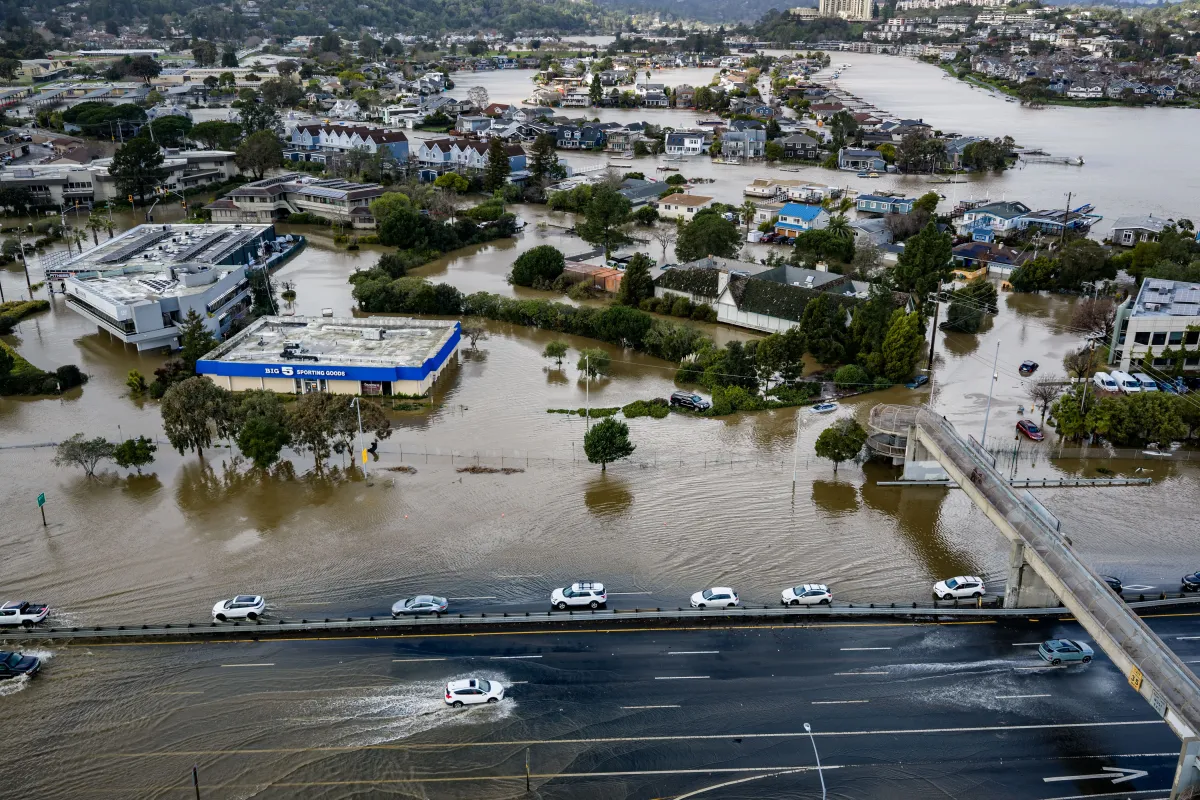
Record-Breaking King Tides Sweep Across California Coast
California’s coastal communities experienced extraordinary king tides over the weekend, breaking several records and prompting flood alerts across the region. The National Weather Service (NWS) issued warnings as unusually high tides threatened widespread coastal flooding, particularly around the San Francisco Bay Area. Several locations shattered previous high-water marks, with Redwood City recording 2.7 feet, Richmond reaching 2.67 feet, and Martinez measuring 2.46 feet. San Francisco itself saw tides of 2.56 feet—the highest since 1998 and the fourth highest in recorded history. Point Reyes experienced similar dramatic conditions with tides reaching 2.73 feet, marking its highest level since 1998 and third highest ever recorded. These exceptional measurements highlight the significant impact of this tidal event on California’s coastline.
The remarkable king tide phenomenon occurred due to a perfect alignment of natural forces, according to AccuWeather meteorologist Brandon Buckingham. “Higher astronomical tides were already forecast for the region, and persistent strong winds helped push water farther inland, contributing to water levels that broke local records,” Buckingham explained. This natural event results from the combined gravitational pull of the moon and sun when they align at maximum strength—typically occurring in early January when Earth is closest to the sun. These astronomical conditions naturally elevate tidal extremes, but when they coincide with stormy weather and wind-driven surge, as happened this weekend, sea levels can rise dramatically beyond initial forecasts. The result is precisely what California witnessed: flooding and record-breaking tide measurements across multiple coastal areas.
The impacts were particularly severe around Humboldt Bay, where communities faced exceptionally high water levels. The combination of predicted astronomical high tides and weather influences created perfect conditions for coastal flooding. While king tides themselves are not unusual for California—they typically occur twice annually with winter peaks—the magnitude of this particular event stands out for its record-breaking measurements. The persistence of strong winds pushing water inland exacerbated conditions beyond normal king tide levels, creating a situation where multiple measurement stations recorded historic water heights. For residents and businesses in low-lying coastal areas, this translated to real concerns about property damage and transportation disruptions.
By Monday morning, coastal flood advisories remained in effect until 3 p.m. PST for parts of San Francisco adjacent to the Bay, as well as other areas along San Francisco and San Pablo Bays. The National Weather Service cautioned that flooding of lots, parks, and roads was expected to continue through the afternoon. In particularly vulnerable low-lying areas near shorelines and tidal waterways, inundation up to 1.2 feet above ground level remained possible. Official advisories urged residents to take necessary precautions: “If travel is required, allow extra time as some roads may be closed. Do not drive around barricades or through water of unknown depth.” Additionally, property owners in flood-prone areas were advised to take protective measures against potential water damage as the high tides persisted.
Northern California faced additional challenges, with a separate coastal flood advisory issued for the northern Humboldt Coast from 10 a.m. to 2 p.m. PST Monday. The NWS specifically warned that high astronomical tides would likely cause minor flooding in low-lying areas surrounding Humboldt Bay. This regional variation in impact demonstrates how the king tide event affected different coastal areas with varying intensity, depending on local geography and exposure to tidal forces. While the San Francisco Bay Area experienced record-breaking measurements, Humboldt Bay dealt with its own flooding challenges as the astronomical high tides continued to influence water levels along the entire California coastline.
Despite their dramatic appearance and record-breaking measurements, king tides themselves are part of California’s natural coastal cycle. The National Ocean Service describes king tides as “a popular, non-scientific term people often used to describe exceptionally high tides,” and AccuWeather meteorologist Kai Kerkow notes that they typically occur twice yearly in California, peaking during winter months. What made this particular king tide event noteworthy was the convergence of perfect astronomical conditions with weather patterns that amplified the effect. As climate experts continue to monitor sea level rise and coastal vulnerability, events like this weekend’s record tides provide valuable data points for understanding how California’s coastline may respond to future environmental changes. For residents of coastal communities, these king tides serve as powerful reminders of nature’s force and the importance of resilient coastal planning.