






Caleb Williams Reflects on Bears’ Defeat as Playoffs Loom
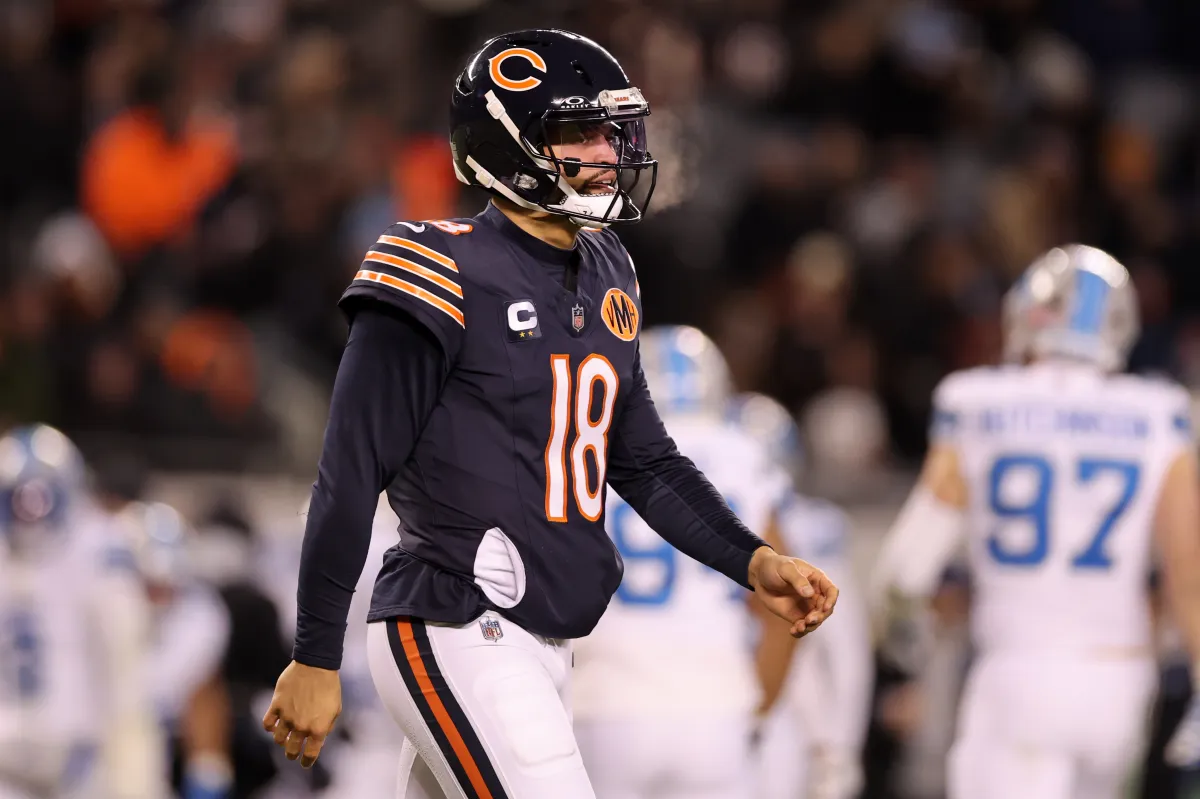
The atmosphere was electric at Soldier Field this Sunday as the Chicago Bears hosted their division rivals, the Detroit Lions, in what promised to be a momentum-building game ahead of the playoffs. Instead, Bears fans witnessed a frustrating performance that ended in a heartbreaking 16-13 defeat, with the Lions clinching victory on a walk-off field goal. The loss exposed weaknesses in the Bears’ execution that rookie quarterback Caleb Williams addressed with remarkable candor in his post-game comments. “Not good enough. Not good enough to win this game. Not good enough to win the upcoming games,” Williams told reporters, his frustration evident but controlled. “We gotta get better on all sides of the ball.” His words reflected the reality of a team that had struggled mightily in the first half, failing to put points on the board while falling behind 16-0.
The game itself told a tale of two halves for Chicago. The Bears’ offense appeared stagnant and disconnected throughout the first two quarters, unable to establish rhythm or convert critical opportunities. The running game provided little support, with D’Andre Swift and Kyle Monangai managing a combined 54 yards and no touchdowns—hardly the ground attack needed against a formidable Lions defense. Williams himself finished with respectable numbers—212 passing yards and two touchdowns—but also threw an interception and took a costly seven-yard sack. Perhaps most telling was the disparity in possession time, with Detroit controlling the ball for nearly 36 minutes compared to Chicago’s 24 minutes, a statistic that highlighted the Bears’ inability to sustain drives when they needed them most.
Despite the first-half struggles, the Bears showed remarkable resilience after halftime. The team orchestrated an impressive comeback, scoring two touchdowns with successful two-point conversions to tie the game at 16-16. This second-half surge demonstrated the potential that has made Chicago a playoff team, but ultimately fell short as Detroit’s final drive positioned them for the game-winning field goal. Williams’ post-game analysis focused on execution failures across multiple facets of offensive play. “We gotta execute whether that’s me getting the guys at the huddle, getting at the line, making checks. Whether that’s protection, whether that’s running the ball, whether that’s catching the ball, not getting penalties,” he explained, showing a veteran-like understanding of the team’s shortcomings despite his rookie status. “It’s us playing the ball that we need in those crucial moments we’ve been better throughout the season, and we gotta get back to that.”
Looking ahead to the playoffs, Williams embraced coach Ben Johnson’s perspective that the postseason represents a “new season”—a fresh opportunity to reset and recapture their winning formula. “You can’t dwell on the past, but you gotta find ways to correct what you did in the past and through the losses,” Williams remarked, exhibiting the short memory and forward-thinking mentality essential for playoff success. The young quarterback expressed confidence that the team would approach the playoffs with the right mindset after reviewing game film, receiving treatment, and preparing thoroughly for the challenges ahead. His comments reflected a maturity beyond his years—acknowledging disappointment while maintaining belief in the team’s ability to improve quickly.
Sunday’s results brought an unexpected silver lining for Chicago. Despite their loss, the Philadelphia Eagles also faltered, allowing the Bears to secure the No. 2 seed in the NFL Playoffs. This positioning sets up an intriguing first-round matchup against another division rival, the Green Bay Packers, scheduled for Saturday night. The playoff rematch against the Packers offers immediate redemption for Williams and the Bears—a chance to demonstrate that they’ve learned from their mistakes and can elevate their performance when it matters most. The quick turnaround between games means Chicago must rapidly address the execution issues Williams highlighted, particularly their slow starts and inconsistent offensive production.
As the Bears prepare for their playoff journey, Williams’ honest assessment serves as both a warning and a rallying cry for a team at a crossroads. The potential is clearly there—as demonstrated by their second-half performance against Detroit—but so too are the concerning lapses that could derail their championship aspirations. Williams seems to understand that playoff football demands a higher level of execution and focus than what his team displayed on Sunday. With their No. 2 seed secured and a home playoff game ahead, the Bears have an opportunity to prove their rookie quarterback right—that they can learn from defeat, make the necessary adjustments, and emerge as the formidable team their talent suggests they can be. For Bears fans, the hope is that Williams’ candid critique will spark the transformation needed to turn playoff qualification into a deep postseason run.