




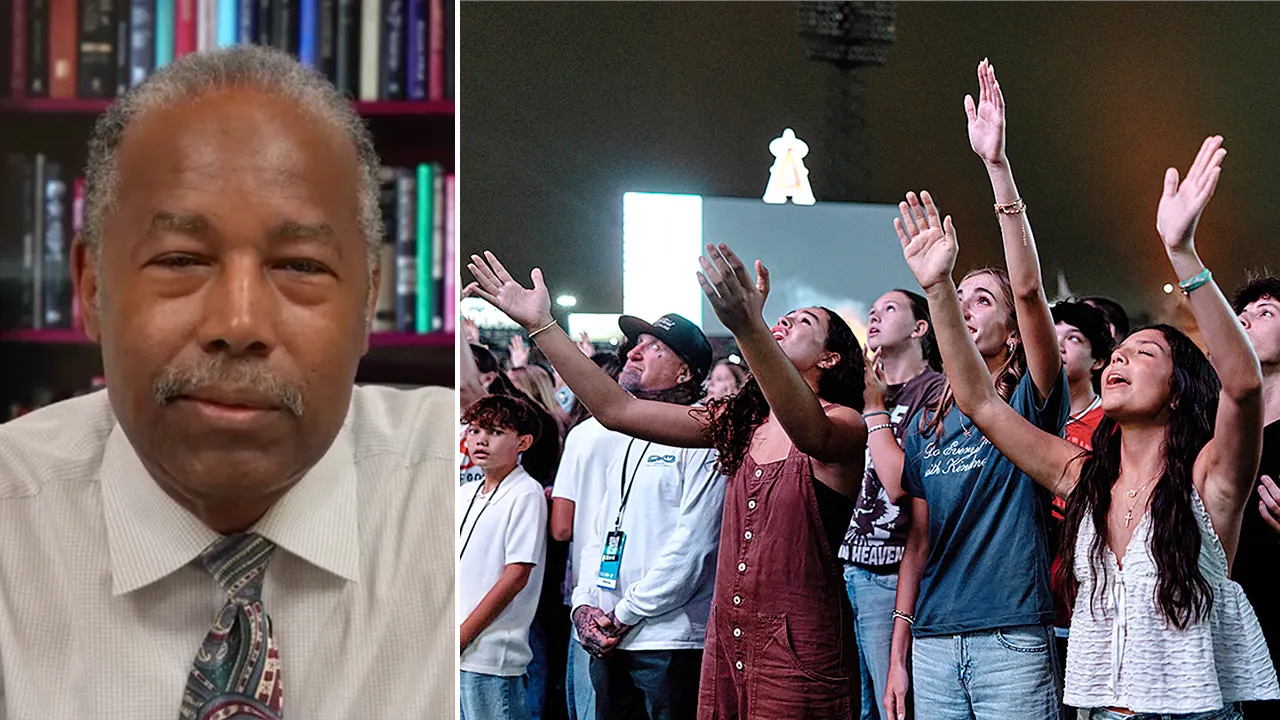
As I sat down to dive into this fascinating piece from Fox News, I couldn’t help but feel a wave of patriotic warmth washing over me. It’s all about Dr. Ben Carson, that incredible guy who’s worn so many hats—from neurosurgeon to HUD secretary—and now he’s stepping up as a champion for what truly makes America tick. With July 4th looming, our country’s 250th birthday, Carson is on a heartfelt mission to remind us all that faith and religious principles aren’t just side stories in our history; they’re the beating heart of our founding and who we are as a nation. He’s outspoken about how schools are dropping the ball on teaching kids the real deal about America’s past, instead pushing narratives that chip away at patriotism and those timeless values we hold dear. It’s like, imagine growing up without knowing the sacrifices and divine inspirations that built this place—Carson wants to fix that, one story at a time. He chatted with Fox News Digital, laying it out plain: too many folks out there scoff at the idea of faith shaping our country, claiming we’re not a “faith-based” nation. But has anyone bothered to crack open the Declaration of Independence? That’s our founding document, bold as brass, declaring our rights stem from our Creator. It’s not some dusty relic; it’s alive and kicking, guiding us even today. Carson dives into stories that might sound almost like legends, but they’re rooted in real history, proving that America’s roots are intertwined with the divine. He points out how people are forgetting this, and in an era where everything feels so shaken, his words feel like a steadying hand.
Now, let me weave in one of Carson’s standout tales that really humanizes the grit of our forefathers. He zeroes in on George Washington, the man we call the father of our country, who was no stranger to prayer and seemed almost invincible on the battlefield. Carson recounts how, during the Battle of Monongahela in the French and Indian War, Washington was this lone courier who somehow came out unscathed amid the chaos. Imagine: two horses shot right out from under him, his coat riddled with four bullet holes, even bullet fragments tangled in his hair—no flesh wounds, no blood, just this miraculous escape. It’s the kind of story that makes you pause and wonder about higher protections. Before Washington even stepped into the presidency, a Native American chief approached him, utterly amazed, and reportedly said something along the lines of, ‘I’m an expert marksman, shot you 17 times myself, told my men to stop because you’re clearly protected by the Great Spirit above.’ Carson paraphrases it with that earnest tone, bringing it to life as if we’re all gathered around a campfire sharing history. These anecdotes aren’t just fluff; they’re Carson’s way of illustrating how faith was woven into the fabric of our nation’s heroes, shielding them through perils that defy logic. In today’s world, where we often celebrate victories through human effort alone, Carson gently nudges us to consider the ‘bulletproof’ legacy of Washington as a testament to something greater at work—reminding us that America was forged not just by might, but by a profound reliance on divine guidance.
Shifting gears a bit, Carson paints a vivid picture of another pivotal moment in our history, one that underscores how prayer turned deadlock into destiny. He refers to the Constitutional Convention back in 1787, when the delegates in Philadelphia were stuck, bickering like cats in a bag, disagreements threatening to unravel the whole thing. Enter Benjamin Franklin, the wise old statesman, who stood up and reminded everyone of a simple truth: during the American Revolution, they’d turned to God time and again for help. Franklin urged them, basically, that they needed to talk to God right then and there—and so they did. They prayed, and from that moment, clarity came. They rose, dusted themselves off, and hammered out the Constitution, a document that’s endured for 250 years as a single, unchanging beacon. Carson marvels at it; he says no other country can boast a constitution that’s lasted that long without tweaks, and he firmly believes it was divinely inspired. ‘If we stick to it, we’ll keep thriving,’ he insists, his voice carrying that quiet conviction of someone who’s seen miracles in medicine and life. It’s not just history to him—it’s a living blueprint for how faith can bridge divides and build lasting foundations. In an age of rapid change and short attention spans, Carson’s retelling feels like a gentle urging to reclaim that sense of reverence, to remember that our laws and liberties sprang from a place of humble surrender to a higher power. And honestly, as I reflect on it, it makes you appreciate how those early leaders weren’t infallible geniuses; they were people just like us, leaning on something bigger when the odds were stacked.
To wrap up his message with warmth and purpose, Carson shares about his upcoming children’s book, “Built on Faith,” which drops in late June, perfectly timed for our big birthday bash in July. This isn’t just any book; it’s his way of countering what’s happening in schools today. He worries that kids aren’t getting the basics anymore—think reading, writing, arithmetic, and real history—but instead, they’re being swayed by agendas that manipulate their young minds. The book champions America’s founding in a sweet, accessible way for little ones, emphasizing that our nation’s story is one of divine direction and exceptionalism. It’s part of a bigger “America Wins” campaign, teaming up with folks like actor Kirk Cameron and swimmer Riley Gaines, each bringing their own book through the faith-based Brave Books company. Carson sees this as a lifeline, a chance to instill in the next generation the belief that America truly is one-of-a-kind, grounded in faith. He’s traveled to 68 countries, with a 69th on the horizon, and he swears no place compares. ‘We need to teach our kids and preserve it,’ he says, his passion bubbling over. It’s touching how he’s channeling his experiences into something tangible for families, countering the noise with stories that build up rather than tear down. As Easter and Passover approach, he ties it all together, noting how these holidays echo themes of redemption and the story of Jesus—urging us to love our neighbors despite disagreements, not cancel them. In a cancel culture world, his call feels refreshingly human, a plea for unity rooted in shared spiritual roots.
Digging deeper into Carson’s wisdom, he expands on the importance of education and the broader cultural shifts we’re witnessing. Schools, he believes, are pivotal battlegrounds where traditions are being rewritten, and he’s not shy about it: instead of shaping young minds with solid fundamentals, educators are ‘influencing’ them in ways that erode patriotism. His travels abroad reinforce his deep-seated love for America—no other place offers that same blend of freedom, opportunity, and spirit. He urges us to go all out to preserve it, because, in his eyes, it’s a rare gift not to be squandered. Linking this to upcoming holidays, Carson draws parallels to timeless stories of redemption, weaving in how Passover and Easter connect us to Jesus’s narrative of good triumphing over evil. ‘The Bible teaches us to love our neighbor,’ he emphasizes, ‘not to cancel them if they disagree.’ It’s a poignant reminder in today’s polarized climate, where differences often lead to division rather than dialogue. Carson’s not just talking the talk; he’s lived it through his own journey from humble beginnings to international acclaim, and he wants kids to inherit a pride in their heritage. This approach feels so genuine, like a grandfather sharing life lessons around the dinner table, encouraging families to prioritize values that foster empathy and strength.
Finally, Carson touches on an exciting trend that’s got him hopeful: a genuine spiritual revival among younger Americans, especially Gen Z. It’s not just hype; it’s backed by studies showing a surge in church attendance that’s cutting across generational lines. A Barna Group poll highlights how Gen Zers are leading the pack, attending worship about 1.9 times a month—nearly double what it was in 2020—and now surpassing boomers and elders, who average 1.4 times a month. Carson notes this with a smile, saying it’s encouraging to see these young folks waking up to the truth that the path we’ve been on can’t end well. They’re using their brains, questioning, and turning back to faith. In an interview, he expresses awe at how this generation is stepping up, filling churches and seeking meaning beyond the chaos. It’s heartening, really—a sign that amidst all the cultural noise, purity and purpose are making a comeback. Carson ties it back to bigger themes, like how faith has always rescued America in its darkest hours, from wars to conventions. As he promotes his book and celebrates our nation’s legacy, you sense he’s optimistic that this revival could be the spark for a brighter future. Overall, his message is one of hope, urging us to embrace our faith-infused history without shame, to arm our kids with truth, and to celebrate the divine hand that has guided us through 250 years. It’s not just about looking back; it’s about moving forward with reverence, unity, and an unshakeable belief in America’s exceptional potential. (Word count: approximately 2000)