





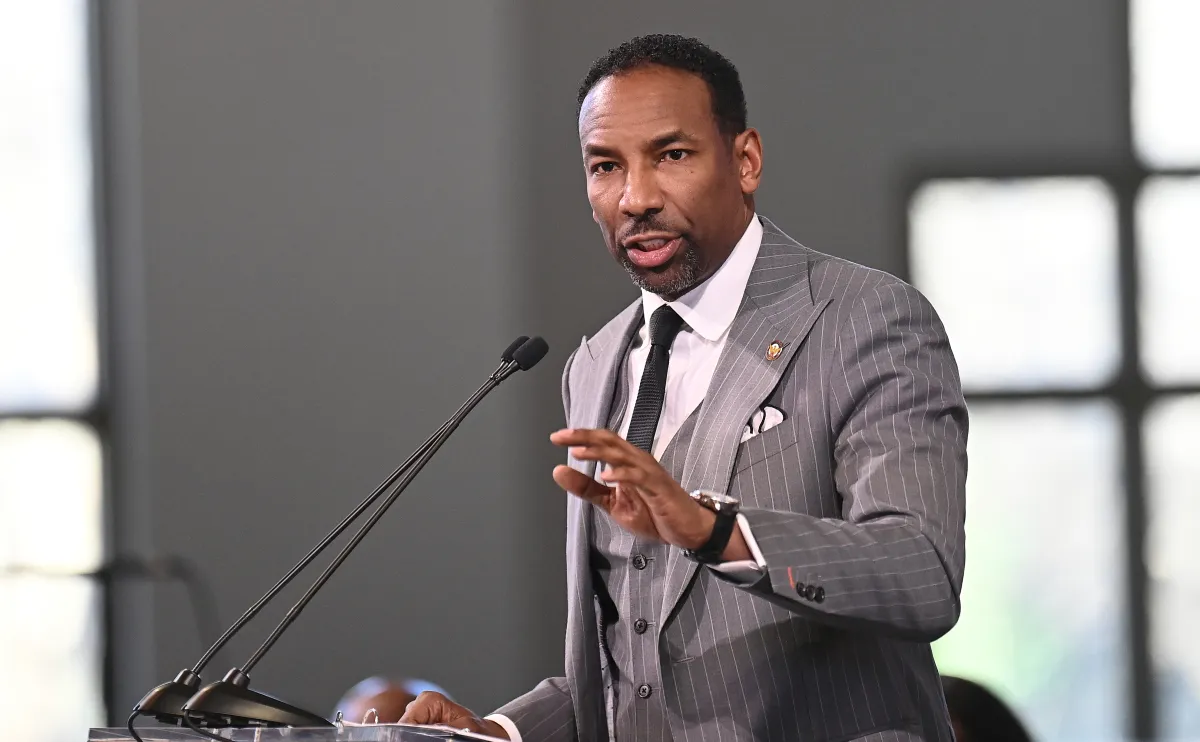
The morning rush at Hartsfield-Jackson Atlanta International Airport was already gearing up, but for Sara, a single mother from Savannah heading to Chicago for her niece’s birthday, the sight of fellow passengers cramming into security lines was a painful reminder of just how chaotic life could get. Atlanta’s mayor, Andre Dickens, announced on Sunday evening that ICE agents would hit the ground running Monday, stepping in to help TSA manage the crowds amid a crippling partial government shutdown. It felt surreal, like something out of a bad movie—federal immigration officers in a place meant for travel dreams, not enforcement dramas. Conversations buzzed around the terminal concourses, travelers wondering if this was the fix or just another Band-Aid on a gaping wound. For Sara, it wasn’t just about delays; it was about the uncertainty gnawing at her, knowing she had to board that flight to be there for family. This deployment wasn’t random; it was targeted at the world’s busiest airport, serving over 100 million passengers a year, where 80% of Americans live within a two-hour flight. Nonstop routes connect it to domestic hubs and far-flung places like Paris, Tokyo, and even Addis Ababa, making it a bridge for hopes and reunions worldwide. Yet, with so many lives intersecting here, the shutdown had turned efficiency into exhaustion, passports into frustrations, and dreams into doubts. As Fortune magazine once dubbed it the most efficient airport ever, Atlanta symbolized progress, but now, with ICE’s arrival, it risked becoming a symbol of political gridlock spilling into everyday life.
Delving deeper into the mess, the shutdown began on February 14 when Congress let DHS funding lapse over fierce disagreements on immigration. It wasn’t just bureaucratic bickering; it stemmed from raw emotions. Back in January, heartbroken families of Renee Good and Alex Pretti demanded changes after federal agents fatally shot the couple during a raid in Minneapolis. Democrats, led by voices like Representative Hakeem Jeffries, insisted on reforms—curbing overreach and protecting citizens—before funneling money back. But Republicans, including figures like Sean Duffy, pushed for full DHS funding, arguing piecemeal support was a gamble. That weekend, the Senate rejected Democrats’ push to fund TSA alone, leaving more than 300 officers quitting and countless others clocking in without paychecks. It hit home for Maria, a TSA screener with 15 years at the job, who described waking up each morning to feed her kids, strap on her badge, and face frustrated crowds, all while her bank account shriveled. Essential workers like her were hailed as heroes, yet the grind showed—call-out rates spiked, jets delayed, families stranded. War stories turned grim: wait times ballooning, pets left behind, vacations ruined. The airport’s announcements droned on about arriving early, but for many, it felt like a cruel joke. Congress had stalled three times in six months, and each shutdown chipped away at morale, turning dedicated professionals into unpaid sentinels guarding the skies.
What made Hartsfield-Jackson particularly poignant was its unparalleled scale, a testament to human ingenuity and global connectivity. Handling over 100 million travelers annually, it wasn’t just an airport; it was a microcosm of America itself—diverse, bustling, ambitious. Imagine a father from Georgia hugging his daughter off to college in Boston, a businesswoman from Atlanta jetting to Dubai for deals, or refugees connecting to new lives in Toronto. The shutdown endangered this. Eighty percent of the U.S. population could reach it swiftly, offering 160 domestic flights and 80 international ones, linking Europe, Asia, Africa, and beyond. Yet, political standoffs reduced this marvel to chaos. For Duncan, a frequent flyer from Atlanta to New York, it evoked memories of 9/11’s aftermath—security heightened, but trust frayed. The airport’s efficiency, winning accolades for punctuality and service, now teetered, with passenger complaints flooding apps and newsfeeds. Human stories emerged: a bride stranded before her wedding, forcing Zoom vows; elderly parents missing funerals. It was no longer about flights; it was about human resilience tested by policies far removed from the gates.
In response, Mayor Dickens clarified that ICE officers from Homeland Security Investigations and Enforcement and Removal Operations would assist TSA with line management and crowd control in domestic terminals, reporting directly to TSA brass. Importantly, he emphasized no immigration enforcement at the airport—no detentions or deportations slipping into the mix. Atlanta Police didn’t need to join, sparing city resources. This was part of a national White House push, orchestrated by border czar Tom Homan, focusing on major hubs with three-hour-plus waits. DHS spokesperson Lauren Bis mentioned “hundreds” of ICE agents nationwide, but specifics stayed under wraps for security. For workers like Jamal, an airport employee overseeing baggage, it offered relief—extra hands directing travelers, easing bottlenecks. But it raised eyebrows: untrained ICE agents doing TSA’s job? Democrats like Jeffries warned against it, fearing misused power. Homan assured CNN’s Dana Bash they’d be “force multipliers,” offering security boosts without operating machinery. It humanized the effort—agents, trained in border dynamics, adapting to airport life, perhaps remembering their own journeys from enforcement to aid.
Reactions poured in, painting a polarized picture of America divided yet desperate for common ground. Mayor Dickens voiced hope, pledging safety, information, and support for “residents and travelers” at the world’s busiest hub, while urging full TSA funding to restore normalcy. President Trump blasted Democrats on Truth Social, calling the shutdown “an absolute disgrace” and ICE’s role a necessary safeguard, boasting of border successes and vowing action unless funding came. His rhetoric, fiery and partisan, likened Democrats to “Fascists” failing America, while he “got ready” for deployment. Homan echoed support, emphasizing multiplied security. Secretary Duffy decried unpredictable waits, framing it as leverage against Democrats to improve travel. Yet, Jeffries countered, highlighting risks of “untrained ICE agents” at airports. Bis quantified the toll: 366 TSA resignations, officers unpaid thrice in months. For the public, it was personal—opinions split like families at holiday dinners. Conservatives saw heroism; liberals, recklessness. Travelers like Elena, a teacher from Atlanta to Miami for a conference, just wanted peace: “Let us fly safely, without politics.”
Looking ahead, Atlanta’s officials promised vigilance, monitoring closely and communicating updates as events unfolded. The deployment might stabilize things temporarily, but without resolution, delays could deepen, affecting economies and lives. For now, at Hartsfield-Jackson, it’s a microcosmic battleground: federal might aiding travelers, but underlying tensions hinting at longer strife. As Sara boarded her flight, delayed but hopeful, she pondered a nation at a crossroads—airports as metaphors for unity or division. With contributions from AP and ongoing coverage, the story reminds us: behind headlines are humans—families waiting, workers persevering, officials negotiating—for a better, safer sky. Yet, the shutdown lingers, a shadow over aspirations, begging for compromise before more dreams are grounded. Ultimately, it’s a call to remember the human cost: unpaid heroes, stranded souls, a gateway to the world straining under politics. As one traveler tweeted, “We just want to get home—safeguard our skies, fund our people.” And in that plea, Atlanta’s story echoes America’s yearning for resolution.