





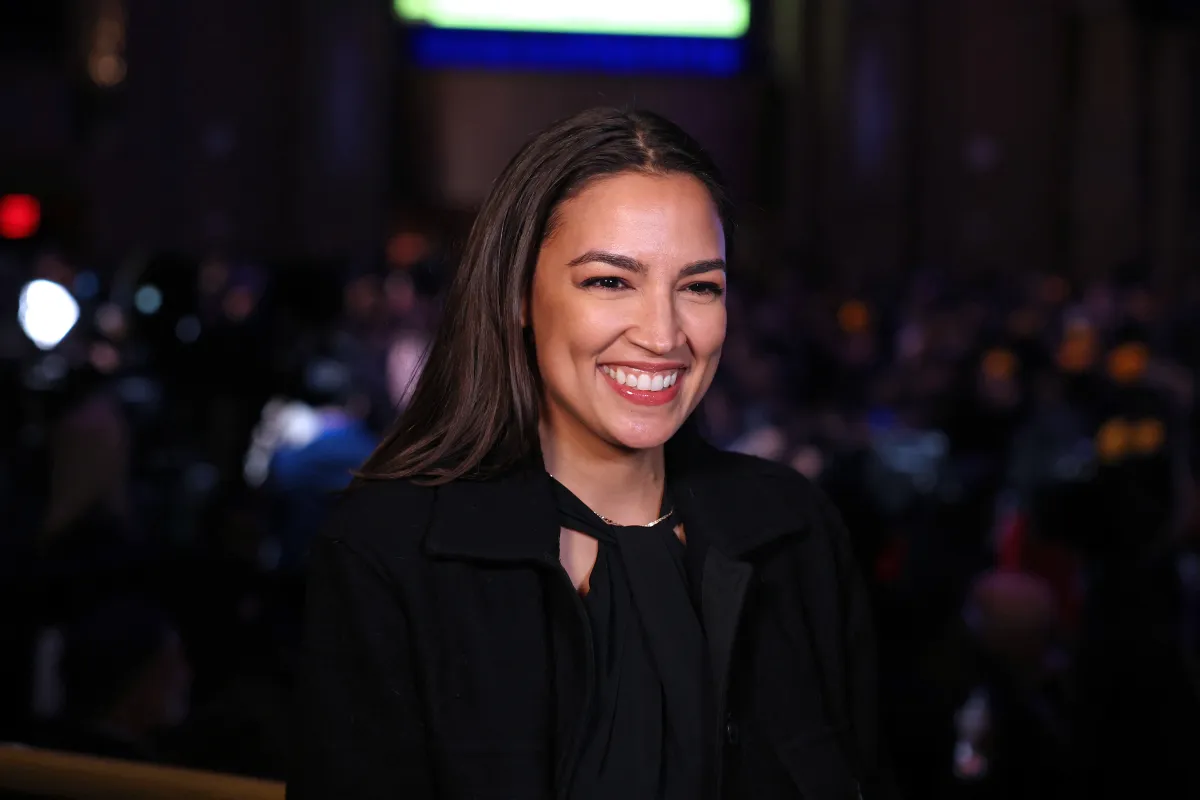
AOC and Vance: A Glimpse into a Possible 2028 Presidential Matchup
In a moment that captured both political insight and personal candor, Representative Alexandria Ocasio-Cortez responded with characteristic humor when asked about a recent poll showing her with a slight edge over Vice President JD Vance in a hypothetical 2028 presidential race. “You know, these polls three years out…they are what they are,” she remarked with a casual shrug before adding with laughter, “But let the record show, I will stomp him.” This brief exchange, while lighthearted, offers a fascinating window into what might become one of the most compelling political rivalries of the next presidential cycle, pitting two figures who represent dramatically different visions for America’s future against each other.
The poll in question, conducted by The Argument/Verasight between December 5-11 among 1,521 registered voters, showed Ocasio-Cortez with a razor-thin advantage of 51 percent to Vance’s 49 percent. However, with a margin of error of 2.7 percentage points, the result effectively places the two in a statistical tie, suggesting that if such a matchup were to materialize, Americans could witness one of the most competitive presidential contests in recent history. The demographic breakdown reveals fascinating fault lines in American politics: Vance performed significantly better among white voters (57 percent compared to AOC’s 43 percent), while Ocasio-Cortez commanded overwhelming support among Black voters (79 percent) and strong backing from Hispanic communities (64 percent). The gender divide was equally telling, with 54 percent of men favoring Vance while 56 percent of women supported Ocasio-Cortez – patterns that reflect broader trends in contemporary American voting behavior.
What makes this hypothetical matchup particularly intriguing is how it would represent a stark ideological choice for voters. Ocasio-Cortez, a progressive Democrat who rose to prominence as part of “The Squad” and has championed policies like the Green New Deal and Medicare for All, stands in sharp contrast to Vance, who has emerged as a standard-bearer for the Republican Party’s evolving populist wing. Their potential face-off would represent more than just a partisan contest; it would embody fundamentally different approaches to addressing America’s challenges – from climate change and healthcare to immigration and economic policy. The poll’s results suggest that despite the polarization in American politics, progressive Democrats remain viable on the national stage, contradicting notions that the party must pivot to centrism to compete effectively.
It’s worth noting that while this matchup makes for compelling speculation, both figures face significant hurdles before any such contest could materialize. Within the Democratic Party, other polls indicate Ocasio-Cortez would likely trail more established figures like former Vice President Kamala Harris and former Transport Secretary Pete Buttigieg in a primary contest. A separate poll testing hypothetical races between California Governor Gavin Newsom, Vance, and Ocasio-Cortez showed Newsom leading with 36 percent while Vance and AOC tied at 34 percent each. These figures suggest the path to nomination would be challenging for both potential candidates, with primary voters possibly gravitating toward more experienced or moderate alternatives. When asked about his own presidential ambitions, Vice President Vance has been cautiously forward-looking, telling Fox News’ Sean Hannity that while he has “thought about what that moment might look like after the midterm elections,” he remains focused on his current responsibilities.
The timing of this polling and speculation is particularly interesting given where we stand in the political calendar. With the 2024 presidential contest still unfolding and the 2026 midterms on the horizon, discussions about 2028 candidates might seem premature. Yet these early indicators help shape perceptions, fundraising potential, and strategic positioning years before formal campaigns launch. Political observers generally expect that serious contenders for 2028 will hold their announcements until after the 2026 midterm elections, giving them clearer insight into the national political landscape and allowing them to build campaign infrastructure without prematurely becoming targets. This extended timeline doesn’t diminish the significance of current polling; rather, it establishes baseline expectations that will evolve as both figures continue to define themselves on the national stage.
Whether or not Ocasio-Cortez and Vance ultimately face each other in 2028, their emergence as plausible presidential contenders reflects deeper currents in American political life. Both represent generational change – younger voices with distinct perspectives shaped by experiences fundamentally different from those of current leadership in both parties. Their potential candidacies suggest an appetite among voters for leaders who can speak authentically to the challenges of the modern era, whether through Ocasio-Cortez’s progressive vision or Vance’s populist conservatism. The statistical tie between them in this early polling hints at an America still wrestling with its political identity, divided almost perfectly between competing visions for the nation’s future. As we move toward 2028, their evolving political personas and policy positions will offer valuable insights into not just who might lead America, but what kind of America voters wish to create.