






Redefining U.S. Foreign Aid Strategy in the Indo-Pacific Under Trump
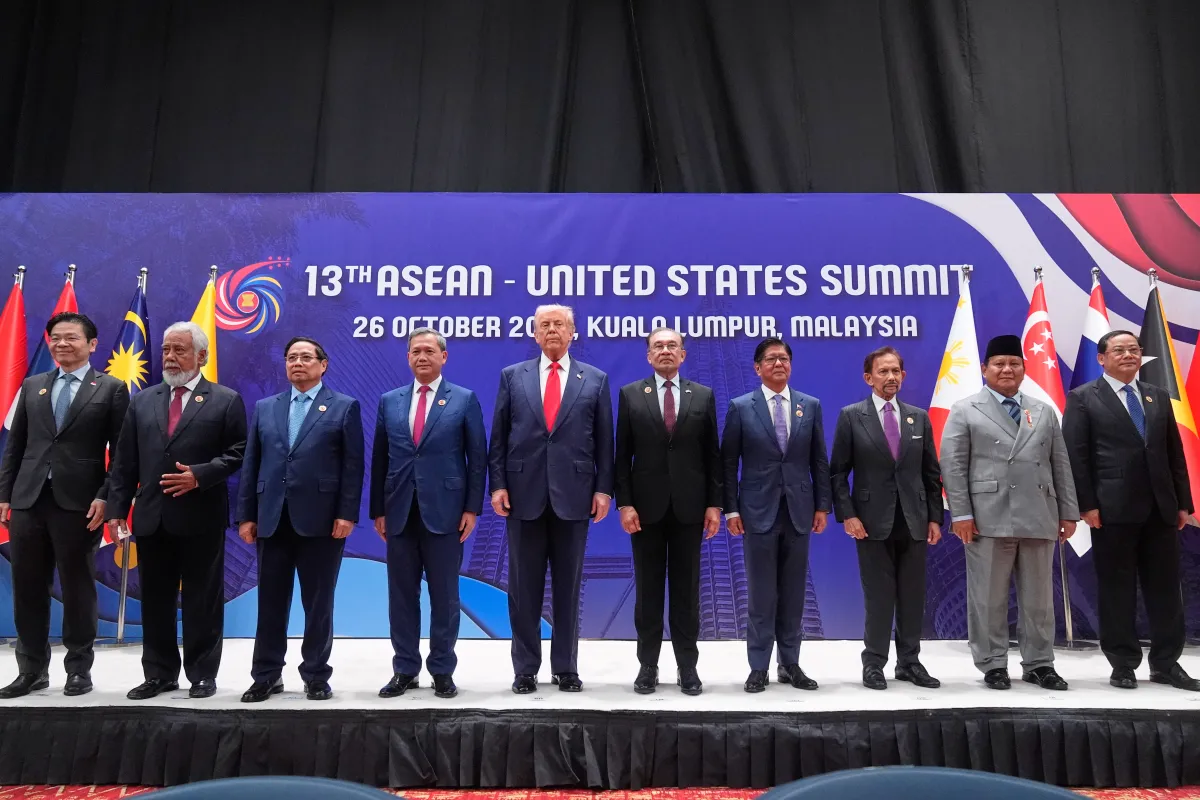
The U.S. State Department has unveiled a significant shift in foreign assistance priorities across the Indo-Pacific region, marking a strategic realignment in America’s approach to countering China’s growing influence. This policy transformation reflects the Trump administration’s “America First” doctrine, replacing decades of traditional aid distribution through USAID with targeted investments designed to advance specific U.S. geopolitical and economic interests. The administration has frozen billions in previous assistance programs, citing concerns about waste and misalignment with national priorities, while critics worry this abrupt change may damage long-standing relationships and humanitarian efforts.
The revamped strategy explicitly connects foreign assistance to clearly defined policy objectives that benefit American interests. Assistant Secretary of State Michael George DeSombre emphasized that this assistance will support strategic themes outlined in the National Security Strategy, with particular focus on strengthening alliances, expanding U.S. commercial engagement, and fighting transnational crime across the Indo-Pacific. Rather than providing unconditional aid, the approach now centers on creating mutually beneficial partnerships that leverage key regional allies while advancing American economic and security interests. This represents a fundamental philosophical shift in how the United States views the purpose of its international assistance – from humanitarian generosity to strategic investment with expected returns.
In the Philippines, a key regional ally, the U.S. is investing in connecting major economic hubs like Subic Bay, Batangas, Clark, and Manila to enhance trade flows and stimulate growth that benefits both nations. The administration has placed special emphasis on industries where America competes directly with China, such as artificial intelligence. New programs aim to accelerate deployment of U.S.-developed AI applications throughout APEC economies, creating technological dependencies that favor American innovation. In Sri Lanka, U.S. assistance now focuses on enhancing maritime security and hydrographic mapping capabilities, with parallel initiatives to attract private investment and commercial shipping – strategic moves in a region where China has made significant infrastructure investments.
The administration’s Pacific strategy extends to smaller but geopolitically significant nations. In Palau, the State Department is collaborating with the U.S. Trade and Development Agency to stimulate private investment in airport infrastructure at Koror International Airport. Meanwhile, U.S. cooperation with Taiwan to rebuild the Marshall Islands parliament building demonstrates America’s commitment to democratic allies in contrast to China’s regional ambitions. Economic support across Pacific Island nations now enables U.S.-flagged vessels to fish in these countries’ exclusive economic zones – an arrangement the State Department highlights as generating “hundreds of millions of dollars per year in gross revenue for the U.S. economy” while creating jobs across both the United States and the Pacific region.
Security initiatives have been similarly refocused to counter China’s regional influence. In October, the U.S. launched a joint project with “Quad” partners Australia, Japan, and India to improve port infrastructure throughout the Indo-Pacific. This coordination among democratic powers represents a direct response to China’s Belt and Road Initiative. The administration has placed particular emphasis on law enforcement cooperation, including joint U.S.-Australian efforts to enhance cargo inspection capabilities in Papua New Guinea and broader regional initiatives to “disrupt transnational criminal activity.” These security-focused investments reflect the administration’s view that combating corruption and criminal networks is essential to preventing Chinese exploitation of governance vulnerabilities throughout the region.
Despite criticism that the administration has abandoned traditional foreign aid commitments, officials insist this represents not a retreat but a strategic reallocation. “We are going to spend much more in the Indo-Pacific over the coming years than we ever have before. And we’re going to spend it in different ways,” said Jeremy Lewin, under secretary for foreign assistance. Analysts note that while some programs represent continuity with previous commitments, the new approach fundamentally recasts foreign assistance as transactional rather than philanthropic. As Derek Grossman of the Center for a New American Security observed, “Trump only gives if he receives,” whether in the form of critical minerals or other resources. This pragmatic approach aims to directly counter China’s growing influence while delivering tangible benefits to American businesses and strategic interests, reflecting the administration’s belief that effective competition with Beijing requires leveraging every element of American power toward specific, measurable objectives that strengthen the U.S. position in this vital region.