



Alabama’s Challenging Path to College Football Glory
In the heart of the college football season, the Alabama Crimson Tide find themselves in a familiar yet precarious position as they prepare to face the Indiana Hoosiers in the College Football Playoff on New Year’s Day. Despite their storied football tradition, Alabama enters this matchup as underdogs against the top-seeded Hoosiers, a position that has become uncomfortably familiar for a program accustomed to dominance. The road to this point hasn’t been smooth for the Crimson Tide, who demonstrated remarkable resilience in their previous playoff game against Oklahoma, overcoming a daunting 17-0 deficit to secure a hard-fought 34-24 victory. That comeback showed the team’s fighting spirit, but experts remain skeptical about their chances against Indiana’s high-powered offense led by Heisman Trophy winner Fernando Mendoza.
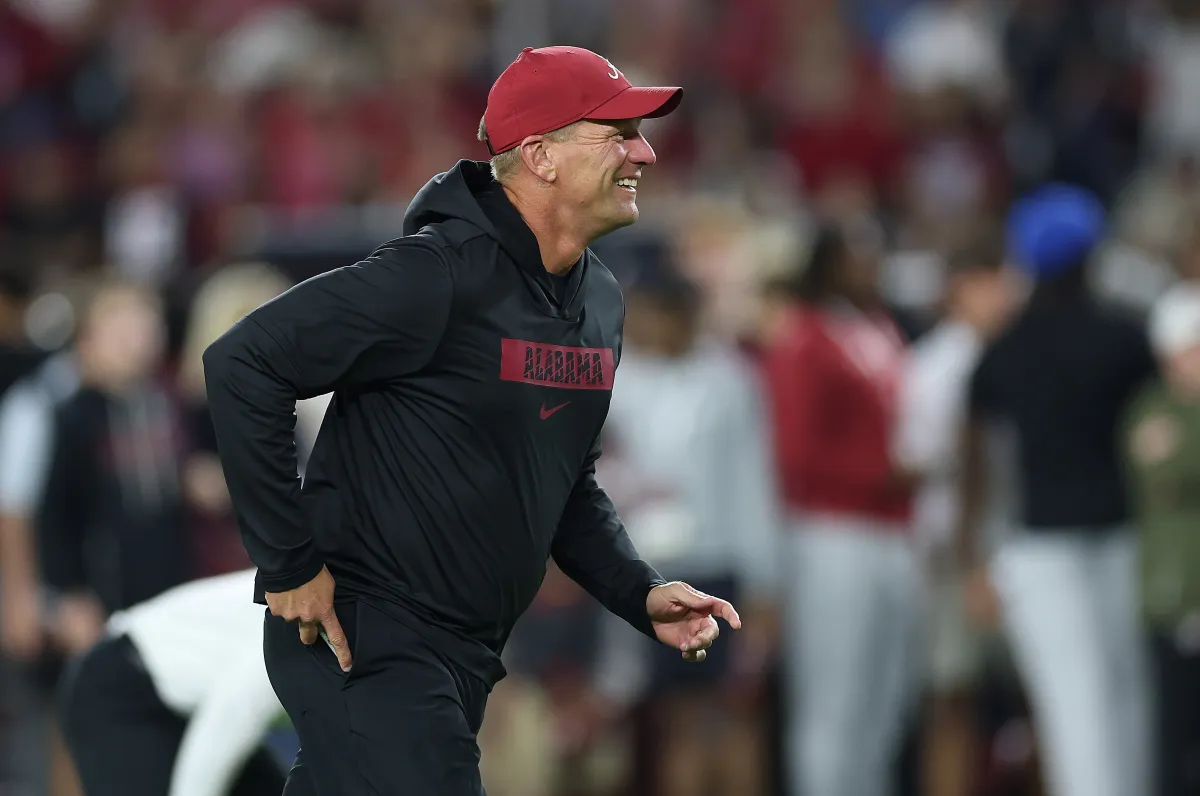
The spotlight on this New Year’s Day showdown intensifies as Indiana, riding high on their exceptional season, faces an Alabama team trying to recapture championship glory under coach Kalen DeBoer. The Hoosiers have transformed from historical football afterthoughts into legitimate national title contenders, largely thanks to Mendoza’s brilliance. The quarterback’s stellar season statistics tell the story of his dominance – a 71.5% completion rate, 2,980 passing yards, 33 touchdowns through the air, and just six interceptions. Adding to his offensive arsenal, Mendoza has demonstrated dual-threat capabilities with 240 rushing yards and six ground scores. His performance hasn’t just earned him college football’s most prestigious individual award; it’s positioned him as the projected top pick in the 2026 NFL Draft and made Indiana’s offense one of the most feared in the nation.
Football analysts have identified a critical weakness that could determine Alabama’s fate in this high-stakes matchup – their inconsistent pass rush. Fox Sports commentator Geoff Schwartz delivered a stark warning about this vulnerability, stating bluntly that “Bama can’t rush the passer. It’s a big problem. They can’t hit the passer.” This defensive deficiency looms particularly large against Indiana’s sophisticated offensive scheme, which blends run-pass options and play-action passes to create opportunities for their talented receiving corps. Schwartz’s assessment carries a clear implication: if the Crimson Tide can’t generate pressure on Mendoza, they risk watching Indiana’s offense operate at peak efficiency, potentially turning the contest into a one-sided affair that Alabama’s own offense, regardless of its capabilities, might struggle to match.
The strategic challenge facing Alabama’s defensive coordinators couldn’t be clearer – they must find ways to disrupt Mendoza’s timing and comfort in the pocket despite season-long struggles in this area. For a program that built much of its championship pedigree on dominant defensive play, particularly in the trenches, this represents both a tactical puzzle and a matter of pride. The Crimson Tide’s defensive front will need to summon their best performance of the season, employing creative blitz packages, stunts, and coverage schemes to compensate for their pass-rushing limitations. Meanwhile, Alabama’s secondary faces the daunting task of maintaining coverage against Indiana’s receivers without the benefit of consistent pressure on the quarterback – a challenge that has proven difficult for even the most talented defensive backfields throughout college football.
Beyond the X’s and O’s, this matchup represents a fascinating study in program trajectories. Indiana embodies the new era of college football mobility, where traditional power dynamics can shift rapidly through strategic coaching hires, transfer portal acquisitions, and NIL opportunities. The Hoosiers have capitalized on all these elements to build a championship-caliber team in what many would have considered record time. Alabama, conversely, symbolizes established football royalty working to maintain its place atop the sport’s hierarchy amid these changing dynamics. The contrast creates a compelling narrative backdrop to the on-field competition – a traditional power looking to remind the college football world of its continued relevance against an emerging program eager to announce its arrival on the sport’s biggest stage.
As the 4:00 p.m. ET kickoff on New Year’s Day approaches, both teams prepare for what could be a defining moment in their respective program histories. For Indiana, a victory would represent the culmination of their meteoric rise and position them just one win away from an improbable national championship. For Alabama, pulling off what many would consider a significant upset would reaffirm the program’s championship DNA and resilience during a transitional period. The Crimson Tide’s ability – or inability – to generate pressure on Fernando Mendoza will likely tell much of the story when the final whistle blows. Football fans across the country will be watching intently to see if Alabama can solve their pass-rushing problems when it matters most, or if Indiana’s dream season will continue its magical run toward a potential national title.