





Mike Tomlin’s Departure and the Steelers’ New Direction
In a stunning turn of events, the Pittsburgh Steelers found themselves at a crossroads when longtime head coach Mike Tomlin unexpectedly stepped down following the team’s first-round playoff exit. After nearly two decades of stability under Tomlin’s leadership, the organization faced the daunting task of finding a worthy successor. Their search led them to Mike McCarthy, a well-established NFL figure with impressive credentials from his time with the Green Bay Packers and Dallas Cowboys. McCarthy’s appointment marks a significant shift for a franchise that has prided itself on consistency and continuity, having had only three head coaches since 1969. The decision to bring in McCarthy represents both a nod to traditional NFL coaching values and an acknowledgment that fresh leadership might help the Steelers break through their recent playoff ceiling.
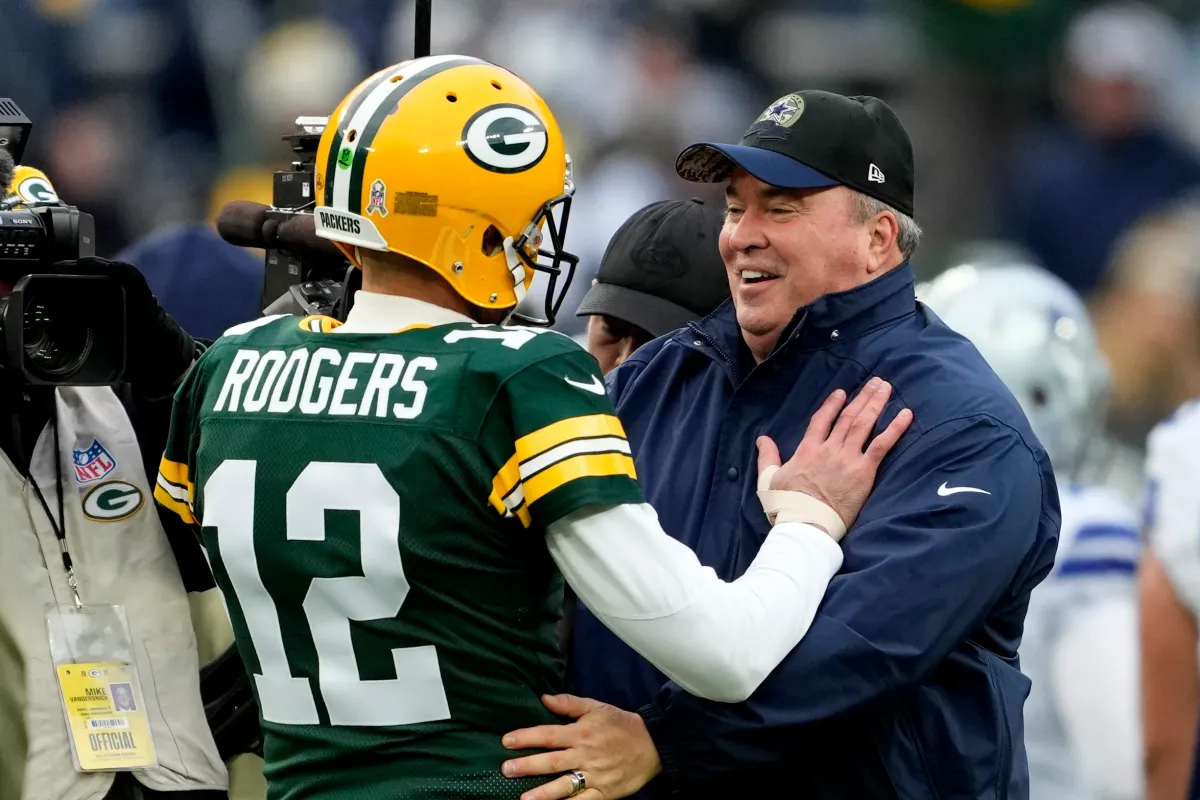
The McCarthy hiring creates an intriguing subplot regarding veteran quarterback Aaron Rodgers, who joined the Steelers last season on a one-year deal. Many expected Rodgers might retire after the season, but his strong performance demonstrated he still has considerable talent to offer at the NFL level. Now at a career crossroads, Rodgers faces an important decision about his future. As an unrestricted free agent, he would need to negotiate a new contract with Pittsburgh should he wish to continue his career there. The quarterback’s deliberation takes on additional complexity with McCarthy’s arrival, as their history together in Green Bay spans over a decade and includes numerous accomplishments, most notably a Super Bowl victory in 2011. This potential reunion adds a fascinating dimension to both men’s careers.
The relationship between Rodgers and McCarthy has been the subject of much discussion over the years, with varying reports about tension between the two strong personalities. However, Rodgers’ own comments paint a more nuanced picture than simple antagonism. “I can’t complain a whole lot about Mike because I had so much freedom at the line,” Rodgers once told Ian O’Connor of The Athletic. “We butted heads from time to time, but I can’t complain about the freedom I had — and we lit it up for a lot of years.” This statement reveals a professional relationship characterized by mutual respect alongside occasional conflict, which is hardly unusual for two competitive individuals working in high-pressure environments. The quarterback’s acknowledgment of McCarthy’s willingness to grant him substantial control at the line of scrimmage suggests a coach who recognized and trusted his quarterback’s football intelligence.
McCarthy’s coaching journey reflects the volatile nature of NFL careers, even for those who achieve substantial success. After 13 seasons in Green Bay beginning in 2006, during which he helped develop Rodgers into one of the league’s premier quarterbacks following the Brett Favre era, McCarthy was dismissed during the 2018 season as the Packers sought new direction. He subsequently found a second head coaching opportunity with the Dallas Cowboys in 2020, where despite regular season success, postseason disappointments ultimately led to his termination after the 2024 season. His hiring by Pittsburgh represents a third act in a coaching career that has seen tremendous highs and challenging lows, a pattern not uncommon among long-tenured NFL coaches who often find themselves judged primarily on playoff achievements rather than overall winning percentages.
For the Steelers organization, bringing McCarthy aboard signals a commitment to experienced leadership rather than gambling on an unproven coordinator or college coach. With McCarthy’s 11 playoff appearances across his tenures in Green Bay and Dallas, Pittsburgh gains a coach intimately familiar with the pressures and demands of January football. The decision also demonstrates the organization’s desire to maintain its identity as a traditional, stability-focused franchise while still making necessary changes to advance beyond recent postseason disappointments. McCarthy inherits a team with solid defensive foundations and several promising offensive pieces, though quarterback remains a critical question mark pending Rodgers’ decision and the development of younger options on the roster.
The potential Rodgers-McCarthy reunion in Pittsburgh would represent one of the more compelling narratives in recent NFL history. Their time together in Green Bay produced consistent excellence, including eight playoff appearances and that memorable Super Bowl triumph. While their professional relationship eventually ran its course in Green Bay, the opportunity to collaborate again years later, both men now possessing added perspective and experience, could yield fascinating results. For Rodgers, it would mean continuing his career with a coach who understands his strengths and preferences. For McCarthy, it would provide a chance to work again with an elite quarterback who can execute his offensive vision at the highest level. For the Steelers and their fans, such a partnership could offer the ideal bridge to the franchise’s next era while maintaining legitimate championship aspirations in the present. As the offseason unfolds, few storylines will command more attention than this potential reunion of two NFL luminaries under the banner of one of the league’s most storied franchises.