





USC’s Five-Star Freshman Quarterback Shakes Up the College Football Landscape
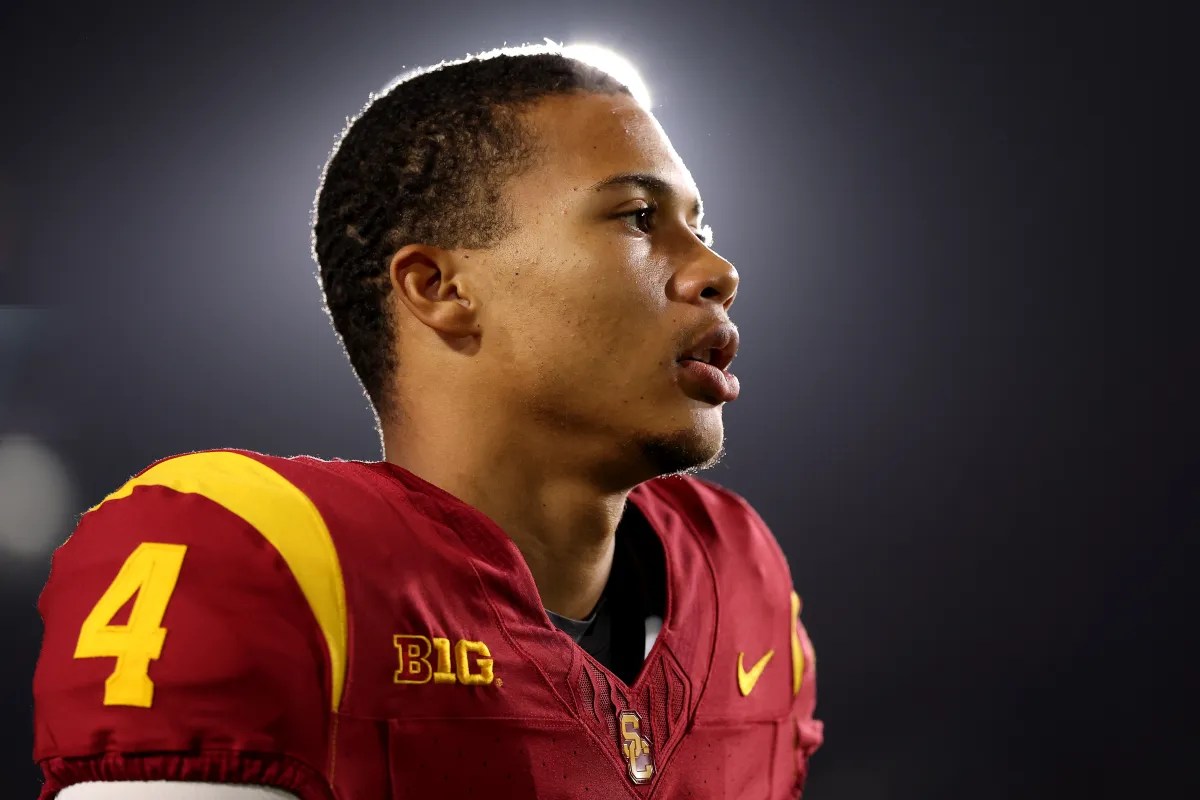
In the midst of the College Football Playoff semifinals in Glendale, Arizona, where Ole Miss and Miami battled for a spot in the national championship, a seismic shift occurred in the college football landscape. USC’s five-star freshman quarterback Husan Longstreet announced his decision to enter the transfer portal, sending shockwaves through the collegiate ranks. This surprising development came shortly after USC’s starting quarterback Jayden Maiava committed to returning for the 2026 season, effectively relegating the talented Longstreet to backup duties for another year. The young quarterback’s decision highlights the ever-evolving nature of college athletics, where player mobility and career advancement have become paramount concerns for even the most promising young talents.
Longstreet’s departure from USC’s quarterback factory represents a significant loss for Lincoln Riley’s program, which has built a reputation for developing elite signal-callers. During his limited playing time as a freshman, Longstreet displayed remarkable dual-threat capabilities, showcasing both elite running ability and impressive arm talent that had many observers pegging him as one of college football’s most exciting young prospects. His transfer announcement follows closely on the heels of his brother Kevin’s decision to leave USC as well, suggesting possible family considerations in this career move. For a program that prides itself on quarterback development, losing a five-star talent like Longstreet represents not just an immediate depth chart concern but potentially a broader recruiting challenge as high-profile prospects evaluate how USC manages its quarterback room.
The timing of Longstreet’s announcement has created intriguing ripples across the college football landscape, particularly as it coincided with Washington quarterback Demond Williams withdrawing his name from the transfer portal after briefly being linked to Lane Kiffin’s LSU program. This carousel of quarterback movement illustrates the complex chess match that college football has become in the portal era, with coaches and players alike making strategic decisions based on both immediate opportunities and long-term development paths. With the transfer portal closing on January 16, 2026, programs across the country are scrambling to secure quarterback talent, creating a frenetic market where relationships, playing time promises, and developmental track records all factor into these consequential decisions.
Lane Kiffin, whose LSU program appears to be actively seeking quarterback talent, now emerges as a potential landing spot for Longstreet following unsuccessful pursuits of Texas Tech’s Brendan Sorsby and Washington’s Williams. Kiffin’s reputation as an offensive innovator and his program’s high profile could make LSU an attractive destination for a quarterback of Longstreet’s caliber seeking immediate playing time and national visibility. The connection becomes even more interesting considering the subtle shots Kiffin reportedly took at Pete Golding ahead of the Ole Miss-Miami College Football Playoff matchup, demonstrating the competitive fire that might appeal to a talented young quarterback looking for a coach who can maximize his abilities and provide a platform for future NFL aspirations.
For Longstreet, the decision represents a pivotal career crossroads that could dramatically alter his trajectory as a college athlete and NFL prospect. Despite USC’s storied history of quarterback development, the prospect of sitting behind Maiava for another season clearly outweighed the benefits of remaining in Riley’s system. This calculation reflects the reality of modern college athletics, where players increasingly view their college careers through a professional lens, prioritizing playing time and development opportunities that can best position them for the NFL draft. Longstreet, with potentially three years of eligibility remaining, has placed himself in a position to reshape his college career at a program where he can immediately showcase his talents rather than waiting for his turn in Los Angeles.
The broader significance of Longstreet’s transfer extends beyond USC, reflecting the fundamental changes reshaping college football in the transfer portal era. High-profile quarterback moves have become almost commonplace, yet they continue to drive headlines and reshape program trajectories in ways that were unimaginable before the portal’s creation. For coaches, roster management has evolved into a year-round challenge where the traditional development model has been replaced by a complex balance of recruiting high school talent while continually scanning the portal for immediate contributors. For fans, these movements create both excitement and anxiety as program fortunes can change overnight based on portal decisions. As Longstreet prepares to make his choice among what will likely be numerous suitors, his decision will not only impact his career but will represent another chapter in college football’s ongoing transformation into a more fluid, professionally-oriented enterprise where player movement and immediate opportunity increasingly define the competitive landscape.