






World’s Longest Flight Marks New Era in Ultra-Long-Haul Travel
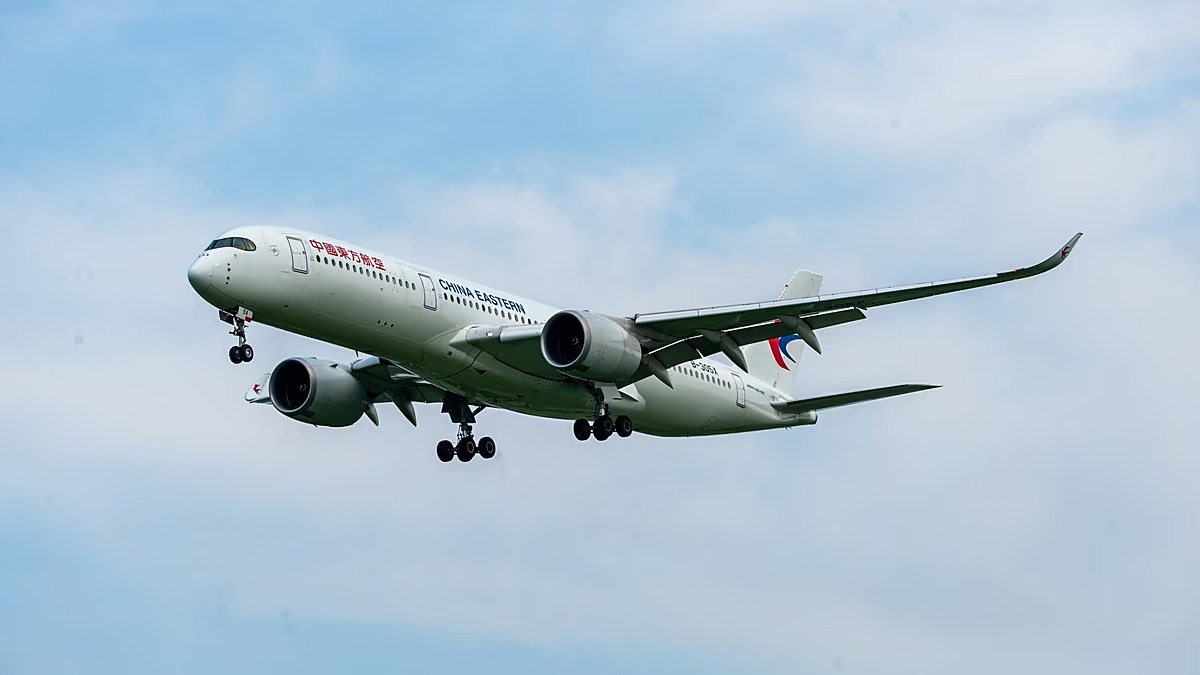
In a remarkable achievement for modern aviation, China Eastern Airlines has launched what is now the world’s longest flight – an extraordinary 29-hour journey connecting Shanghai and Buenos Aires with a brief stopover in Auckland. The inaugural service, which departed Shanghai Pudong International Airport on December 4, 2025, represents a significant milestone in ultra-long-haul air travel. The southbound journey takes just over 25 hours, while the return flight to China stretches to approximately 29 hours due to prevailing winds. Using a Boeing 777-300ER with 316 seats, this twice-weekly service covers an astonishing 20,700 kilometers before touching down at Ezeiza International Airport outside Argentina’s capital. The airline has dubbed this new route an “Air Silk Road,” creating a vital connection between Asia, Oceania, and South America. With approximately 55,000 Chinese nationals residing in Argentina, the route serves an important market while offering travelers options ranging from €1,320 to €1,950 for economy tickets and around €4,200 for business class seats.
This marathon flight joins a growing category of ultra-long-haul routes that are transforming international travel. Until now, Singapore Airlines held the record for the longest non-stop service with its Singapore to New York JFK route, which takes approximately 18 hours each way using the ultra-long-range Airbus A350 – an aircraft capable of remaining airborne for nearly 18,000 kilometers. Other notable extended journeys include Qatar Airways’ Doha-Auckland route and Qantas’ connections between Perth and London Heathrow, and Melbourne and Dallas Fort Worth. All these flights fall within the ultra-long-haul category, which is defined as journeys lasting 16 hours or more. What makes these routes possible is the technological advancement in aircraft design, with lighter airframes and improved fuel efficiency allowing airlines to establish direct links between increasingly distant destinations that previously required multiple stops.
The horizon for ultra-long-haul travel continues to expand, with Qantas planning to introduce its ambitious ‘Project Sunrise’ routes either in late 2026 or early 2027. This initiative will use specially configured Airbus A350-1000s equipped with additional fuel tanks to offer non-stop flights from Sydney to London and Sydney to New York, with journey times expected to range between 19 and 22 hours. The aircraft are scheduled for delivery in October 2026, with the Sydney-London route likely to be inaugurated first. These developments reflect the aviation industry’s determination to push boundaries and meet consumer demand for direct connections, regardless of the distances involved. For passengers willing to endure such extended periods in the air, these flights offer unprecedented convenience, eliminating connecting flights and reducing overall travel time despite the length of the single journey.
Beyond these headline-grabbing ultra-long-haul routes, several other significant long-distance connections are planned for 2026. Etihad Airways will introduce a new service between Abu Dhabi and Charlotte in May, adding nearly 15-hour flights to its expanding U.S. network. Delta Air Lines is set to launch its first nonstop route between Atlanta and Riyadh in late 2026, further strengthening connections between the United States and the Middle East. Meanwhile, Ireland’s Aer Lingus will grow its transatlantic network with a new Dublin-Raleigh Durham route, and British Airways is increasing its flight frequency to Miami and Bangkok while also reopening seasonal connections to Jamaica. These developments illustrate how major carriers worldwide are embracing longer routes to offer passengers more direct travel options, reducing the inconvenience of layovers and connections.
While this trend toward ultra-long-haul flights may excite aviation enthusiasts and frequent travelers seeking convenience, it raises significant environmental concerns. The carbon footprint of these marathon journeys is substantial – taking just one long-haul flight generates more carbon emissions than many people around the world produce in an entire year. According to the campaign group Stay Grounded, such flights produce more emissions than an average European generates through heating their home and eating over the course of a year. This environmental impact poses a challenging question for the aviation industry, which must balance consumer demand for convenient direct connections with growing pressure to reduce its carbon footprint. As airlines continue to push the boundaries of what’s possible in terms of flight duration, the environmental consequences become increasingly difficult to ignore.
For environmentally conscious travelers, alternatives to long-haul flights are worth considering. Train travel, for instance, can emit as much as 70 times fewer emissions than a flight covering similar distances. Within Europe and other regions with developed rail networks, choosing ground transportation over air travel represents a significant opportunity to reduce one’s carbon footprint. While the record-breaking China Eastern route and other planned ultra-long-haul services demonstrate impressive technological achievements and meet certain market demands, they also highlight the tension between aviation innovation and environmental sustainability. As we marvel at these feats of modern air travel, we must also consider their broader implications and whether such convenience justifies the environmental cost. The future of ultra-long-haul travel may ultimately depend on how the industry addresses these concerns through technological innovation, carbon offset programs, and potentially revolutionary sustainable aviation fuels.