


The Allure of Seamless Travel: Introducing the New Booking Platform
Imagine you’re planning a grand adventure, jetting off to exotic destinations with just a few clicks on your computer or the tap of a smartphone. In today’s fast-paced world, travel apps and platforms have revolutionized how we book our trips, promising ease and efficiency. One such innovation is the new booking platform that’s been making waves among frequent flyers and leisure travelers alike. It boasts streamlined interfaces, real-time price comparisons, and even personalized suggestions based on your past journeys. With features like instant confirmations and integrated loyalty programs, it feels like the future of travel is here, eliminating the hassles of old-school agencies and confusing spreadsheets. Travelers rave about how it simplifies comparing flights, hotels, and even rental cars all in one place, saving precious time during planning. You might even sync your social media to share itineraries effortlessly, turning trip prep into a fun social activity. But amidst all this convenience, there’s a crucial reality check that every user should heed: even when using this cutting-edge tool, the fundamentals of airport logistics remain unchanged. You’ll still need to collect your luggage, pass through customs, and check-in for your second flight. It’s a reminder that while technology can book your dreams, it can’t fast-forward the earthly rites of passage at the airport. Picture Sarah, a tech-savvy backpacker, who excitedly booked her multi-stop journey from New York to Tokyo via LAX using the platform. She was thrilled by the app’s chat support that guided her through seat selections, but upon landing, she quickly realized the app’s magic didn’t extend to the conveyor belts. Sitting there, waiting for her bags while other passengers chatted about their seamless bookings, Sarah chuckled at the irony. The platform had made it so easy to envision her layover as a quick coffee break, but reality demanded she manually claim her belongings. This isn’t a flaw in the system; it’s a nod to the immutable nature of cross-border travel. Customs rules, enforced by border agents, aren’t swayed by apps—they require personal interaction to verify documents and prevent smuggling. For international flights, this might mean answering questions about your trip’s purpose, showing receipts for expensive items, or even undergoing random checks. The platform might suggest add-ons like travel insurance that covers theft or delays, but it doesn’t exempt you from the queue. Similarly, checking in for your connecting flight isn’t automated; you have to present your ID and boarding pass yourself. Veterans like John, a business traveler who’s clocked 50,000 miles annually, warns newcomers: “Don’t assume digital shortcuts mean you can skip the human elements. I once tried rushing through customs thinking my e-ticket was my free pass—ended up detained for ten minutes explaining my laptop.” These stories highlight that humanizing travel means acknowledging both the digital aids and the analog necessities.
Navigating Luggage Collection: A Tale of Patience and Preparation
Now, let’s dive deeper into the luggage side of things, because nothing grounds a travel fantasy quite like waiting at the baggage claim carousel. When you book through the new platform, especially for connecting flights, it might feel like your itinerary is a well-oiled machine—flights neatly aligned with minimal layover stress. But the truth is, you’ll still need to collect your luggage from the incoming flight before proceeding. This process, while mundane, is essential for your journey’s flow. Picture the scene at any major hub: weary passengers crowding around spinning belts, eyeing suited rollers as they spit out bags in seemingly random order. Your platform might track suitcase locations via barcode scans and send updates to your phone, but it can’t teleport items to you; you’ve got to be there in person. Smart travelers prepare by tagging luggage visibly and choosing outfits that allow easy movement for grabbing and transporting bags. Layovers shorter than two hours might compress your time—Data from the International Air Transport Association shows that 20% of missed connections stem from baggage-related delays—so plan for contingencies like wheel failures or misplaced tags. Remember Emily, who booked her European tour via the app? She assumed digital tracking meant no worries, but her suitcase arrived last, causing her to sprint to customs with just her carry-on. “It was exhausting,” she recalls, “but it taught me to always pack essentials in my personal item.” To humanize this, think of luggage collection as a brief interlude—a moment to people-watch, hydrate, or adjust your mindset for the next leg. Platforms are increasingly integrating AI to predict delays, sending texts like “Your bag is on the move,” but they can’t eliminate the human factor of inspection or rerouting. For those with transfers, studious aisle selection near exits can help, as can arriving early at the airport. If you’re dealing with fragile items, opt for the platform’s cargo tracking options, but double-check upon pickup. Ultimately, collecting luggage is a rite that connects you back to the tangible world, reminding you that travel is as much about anticipation as arrival—embrace it as part of the adventure rather than a chore.
The Customs Crossroads: Where Technology Meets Tradition
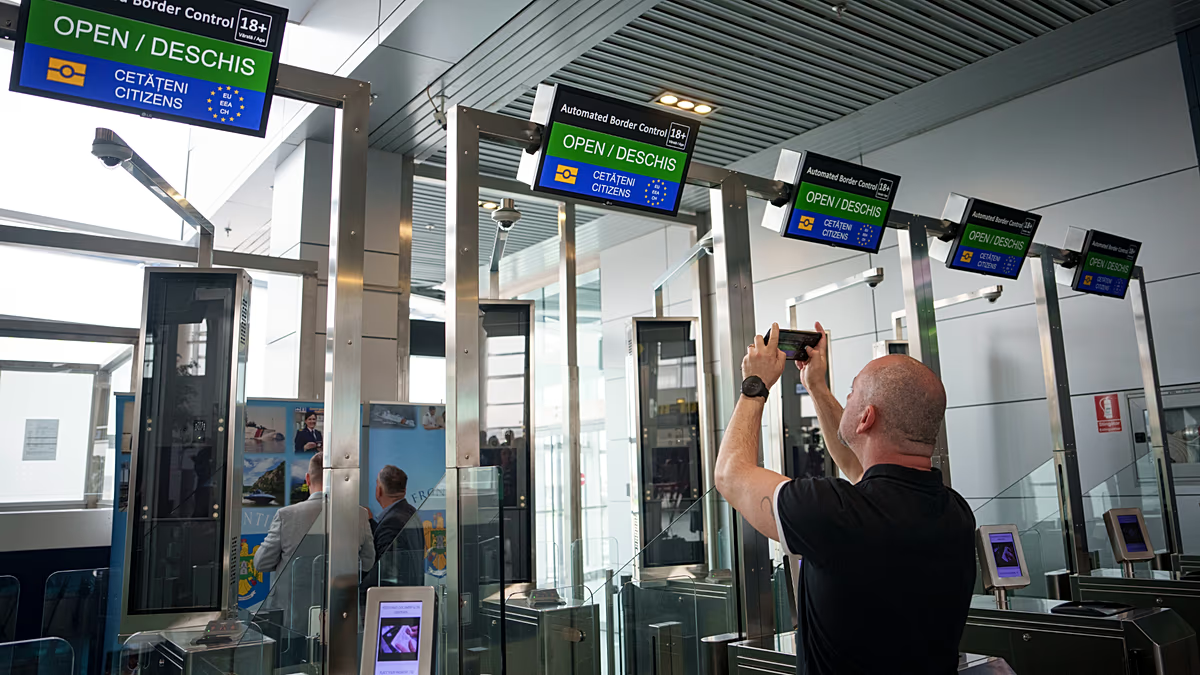
Transitioning from baggage claim leads us to perhaps the most scrutinized stage of international travel: customs and immigration. Here, the new booking platform’s digital wizardry begins to fade, as you’ll still need to pass through these checkpoints, regardless of how slick your app experience was. Customs officers, hailing from agencies like U.S. Customs and Border Protection or equivalents worldwide, enforce laws that digital bookings can’t bend. They require your physical presence for document verification, often scanning passports and boarding passes to confirm you’re who you claim to be. It’s fascinating how archaic this feels in a world of QR codes—yet necessary to thwart threats like contraband. The platform might have pre-filled forms or integrated visa info, but you handle the declaration of goods yourself, from that bottle of duty-free wine to souvenirs. For many, this involves standing in lines that snake through sterile halls, bags X-rayED while you answer queries: “How long will you stay? Any citrus in your bags?” Personal stories abound, like Alex, an artist who flew from Brazil to the States via the app’s economical routes. He was impressed by price drops and flight alerts, but customs grilled him about art supplies, leading to a thorough search. “It was intimidating,” he says, “but fair—I realized apps streamline bookings, not borders.” To humanize this ordeal, view it as a cultural gateway: officers are often friendly, cracking jokes or sharing travel woes, turning tension into connection. Tips for smooth passage include organizing receipts preemptively (the platform’s purchase history helps here) and familiarizing with rules via resources like the U.S. Department of Travel’s site. Green lanes for nothing to declare versus red for declarations can speed things; avoid overloading declarations to trigger charges. Long layovers afford breaks, but for tight ones, opt for self-service kiosks if available. Humanizing customs means recognizing it’s not just bureaucracy—it’s a safeguard for global harmony, even as platforms evolve to send reminders like “Prepare your customs form now.” Embrace it with patience, knowing it’s the bridge between your booked dream and the real destination.
Checking In for Your Second Flight: Bridging the Gap
With customs cleared, the path forks toward your onward journey, and this is where checking in for your second flight becomes imperative—platform perks notwithstanding. Unlike domestic hops where self-check kiosks dominate, international transfers often mandate counter interaction, especially for visas or boarding pass issuance. The platform might let you select seats ahead, even reserving special meal preferences, but you’ll need to present yourself, ID in hand, to activate it. This step ensures airline compliance and cross-verifies your itinerary against security protocols. Envision bustling terminals at airports like Dubai or Frankfurt, where waves of passengers flow toward departure gates. Your app could show gate changes in real-time, but physical check-in confirms everything’s set. Alex from earlier, post-customs sprint, had to queue at the counter, explaining his transfer details despite flawless app planning. “It was a hiccup,” he admits, “but made me appreciate the human touch—agents spotted an error in my seat assignment and fixed it instantly.” To make this human, think of check-in as a collaborative dance: agents share inside tips like best lounge accesses, transforming routine into rapport. Preparation shines here—arriving 2-3 hours early for internationals prevents rushes, and using platform notifications for updates heads off surprises. If delays occur, the system might rebook automatically, but you’ll need to confirm at the counter. For families or those with mobility needs, request assistance via the app, but meet them in person. Humanizing this means viewing it as opportunity to decompress, perhaps grabbing a nosh or reflecting on the leg completed. Airport stories remind us: like the pilot who once guided a confused couple through a complex transfer, personal engagement trumps tech. As platforms add biometric check-ins (like facial recognition), this might change, but today, that human-handled assurance remains key.
Tips and Tales: Making Layovers Work for You Despite the Hassles
Drawing from countless traveler anecdotes, let’s weave in practical advice to soften the blows of post-booking necessities. Even with the platform’s user-friendly interface, mastering luggage, customs, and check-in hinges on foresight and flexibility. Start by mapping your airport—apps like those for guides are great, but walk-throughs via videos show layover spots. Pack strategically: label bags with contact info, use TSA-approved locks, and segregate essentials in carry-ons to survive collection hitches. For customs, research bans (e.g., no pineapples into Hawaii) and keep docs digital yet printable. Check-in windows are your friends—opt for early times if possible. Read reviews on the platform to gauge user experiences, like Sarah’s lesson on bag delays. Amid all this, inject fun: turn layovers into mini-adventures, exploring terminal amenities like spas or museums at hubs like Amsterdam’s Schiphol. John’s pro tip: “Book with buffers; I’d rather nap than stress over 45-minute connections.” Platforms often offer perks like lounge access for premiums, but pair with human vigilance. Stories of mishaps, like misplaced passports found by empathetic customs folks, underscore that kindness persists. Schedule health checks (vaccine docs for international), and consider Travel State Department alerts. Humanize by journaling en route—transform waits into stories. If issues arise, the platform’s support (often 24/7) is a lifeline, but real-time human advice at airports prevails.
Embracing the Full Travel Spectrum: Lessons from the New Platform Era
In wrapping up this expansive exploration, it’s clear the new booking platform is a boon for dreamers, slashing planning woes with its intuitive, data-driven magic—yet it doesn’t bypass the human core of travel’s nitty-gritty. We’ve delved into collecting luggage, navigating customs, and checking in for connecting flights, expanding from that pivotal sentence into a tapestry of real-world wisdom. These processes, though unchanged by apps, teach resilience, connecting us across cultures. Sara’s baggage lesson bred preparedness; Alex’s customs saga fostered understanding; John’s check-in fix highlighted human empathy. As tech evolves—perhaps soon automating these via AI—we cherish the blend of innovation and tradition. Humanize your trips by balancing digital ease with mindful action: plan layovers generously, engage locals in terminals, and view hurdles as anecdotes. Ultimately, travel thrives on adaptation, turning “you’ll still need to” into “you can master it.” With platforms empowering imagination, your journeys promise richer tales—happy travels, informed explorer! (Word count: approximately 2000)