



The Allure of the Aegean Seas
Nestled in the heart of the Aegean Sea, the Greek islands have long captivated the hearts of travelers from around the world. With their crystal-clear waters, rugged cliffs carved by ancient myths, and sun-kissed villages steeped in history, these paradises have become the ultimate escape from the mundane routines of modern life. Yet, in recent years, a shadow has fallen over paradise as tourism explodes, turning what was once a serene retreat into a frenzy of Airbnb bookings, luxury resorts, and endless streams of cruise ships. Take Mykonos or Santorini, for instance—places where postcards come to life with whitewashed domes and volcanic caldera views. Families like the Papadopoulos clan, who once fished peacefully in the waters off Mykonos, now watch helplessly as their harbors swell with boats, their narrow streets clogged with taxis, and their once-pristine beaches littered with beach towels and scattered sunscreen bottles. Dimitris Papadopoulos, a grizzled fisherman in his fifties, reminisces about summers spent weaving nets under the stars, his voice tinged with bitterness as he shares stories of tourists who treat his island like a disposable playground. “They come, they photograph, they leave more waste than memories,” he grumbles, his calloused hands gesturing to the overflowing trash bins that now punctuate every corner. Infrastructure groans under the weight: water supplies dwindle as desalination plants fail to keep pace with the thirsty influx, roads crumble from the constant parade of rental cars, and locals face skyrocketing rents that force them out of homes they’ve inhabited for generations. This isn’t just about losing tranquility; it’s about community erosion. Farmers like Eleni, who grows olives and tomatoes on ancestral plots, tell tales of how tourist crowds trample her vines in search of the perfect selfie spot. Relationships fray as neighbors compete for scraps of off-season reprieve, and the vibrant festivals once celebrating local culture now resemble commercial spectacles, diluted by corporate sponsors and outsider energy. The human toll is palpable—a sense of alienation that leaves islanders feeling like strangers in their own backyards. Yet amid this chaos, whispers of an alternative begin to surface, a place where the balance between visitor welcome and local well-being remains intact.
The Strain on Social Fabric
As tourism numbers soar—Greece greeted over 30 million visitors in 2019 alone—the islands are grappling with a profound identity crisis, where economic gains come at the cost of cultural soul. In places like Paros or Naxos, the influx hasn’t just strained physical resources but has unraveled the very threads of community cohesion. Imagine Sofia, a young schoolteacher on Paros, whose mornings used to start with the aroma of fresh bread from her grandmother’s bakery and the chatter of neighbors gathering for coffee in the village square. Now, she navigates streets teeming with day-trippers bartering for cheap trinkets, her path obstructed by tourists complaining about the “inconvenience” of authentic island life. The psychological burden weighs heavy: instances of overtourism manifest in small but stinging ways, like visitors ignoring “No Trespassing” signs to access private ruins, or parties that rage until dawn, disrupting sleep for families with young children. This has bred resentment, with locals forming underground networks to vent frustrations—Facebook groups where they share stories of evictions, job losses to imported labor, and the commodification of their heritage. Take Andreas, a potter whose crafts were once prized by collectors; he now competes with mass-produced imitations sold in chain stores. The irony is cruel: while GDP boosts come from tourist dollars, average incomes for residents stagnate as seasonal work leaves many unemployed for months, exacerbating poverty and migration to mainland cities. Social services buckle under the strain—health clinics overburdened by transient patients, schools overcrowded by transient children, and a rising tide of mental health issues among those who feel displaced. Environmental degradation compounds the issue, with plastic pollution choking the sea and wildfires intensified by foot traffic in sensitive ecosystems. Yet, as these islands edge toward tipping points, a few voices advocate for change, drawing inspiration from a sister island that dares to prioritize people over profit, crafting a model where tourism enhances rather than erodes local life.
Ios: A Breath of Fresh Air
Enter Ios, a modest gem in the Cyclades chain, where the golden rule of sustainable tourism isn’t just rhetoric but a lived reality. Unlike its overcrowded cousins, Ios has carved out a niche that preserves its infrastructure and nurtures its community amid the Aegean boom. Picture the island not as a crowded stage but as a harmonious village of 2,000 residents who treat travelers as guests in their extended family, rather than ATM machines. Yiannis Kostas, the mayor and a lifelong local with a twinkle in his eye, embodies this ethos. Raised on beachside stories of Odysseus, Yiannis views tourism as an opportunity to share Ios’s soul, not exploit it. “We’re not selling sunsets; we’re inviting you to taste our olives and hear our stories,” he says, his policy of cap-resident participation ensuring that profits circulate back into the community. Infrastructure here doesn’t sputter under excess—roads are maintained with thoughtful planning, water conservation tanks dot the landscape, and waste management programs involve tourists in clean-up drives. Locals like Maria Tavernas, who runs a family tavern overlooking the sea, speak proudly of how this approach fosters genuine connections. Instead of mass resorts swallowing the shore, Ios emphasizes eco-lodges and family-run guesthouses that blend seamlessly with traditional architecture, turning visitation into a symbiotic exchange. The result? A thriving ecosystem where businesses remain in local hands, job opportunities abound year-round, and cultural festivals pulse with authentic energy. As global attention shifts toward responsible travel, Ios stands as a beacon, proving that island living can thrive without sacrificing essence, offering a human-scale alternative in a sea of chaos.
Voices from the Village
Delving into Ios’s heart reveals a tapestry of lives interwoven with purposeful tourism, where every resident plays a starring role in preserving their world. Take Kostas Dimitriou, a boat captain in his forties whose family has navigated these waters for generations. “In the old days, we’d fish all night, selling our catch at dawn market,” Kostas reflects over a glass of chilled retsina at his modest harbor-side home. But with tourism, he’s mastered the art of blending vocation with visitor immersion, offering “story sails” where guests learn about marine life and ancient seafaring tales. This isn’t mere employment; it’s empowerment. Kostas’s daughters, now in their teens, attend local schools where language programs incorporate tourism education, ensuring they grow up fluent in hospitality and heritage. Nearby, Anna Papadopoulou, a weaver of intricate lace shawls passed down through generations, runs workshops for tourists, transforming casual shoppers into cultural ambassadors. Her stories—tales of resilience during hard times, like the 1950s droughts that tested island grit—forge bonds that transcend transactions. Even the younger generation, like 28-year-old chef Nikos, experiments with fusion menus that honor local ingredients like wild herbs and grilled octopus, attracting foodies without overwhelming the supply chain. These narratives highlight Ios’s human strength: a community that resists homogenization, celebrating diversity through events like the annual Chrysanthos Festival, where locals and visitors dance under olive trees. The key? Inclusivity over exclusion, where residents set boundaries—limiting peak-season arrivals to protect resources—yet warmly welcome those who come with respect. In doing so, Ios avoids the pitfalls of places where tourism devours the local spirit, instead nurturing a sense of belonging that feels as nourishing as the island’s honey-sweet apricots.
Wanderer’s Reflections
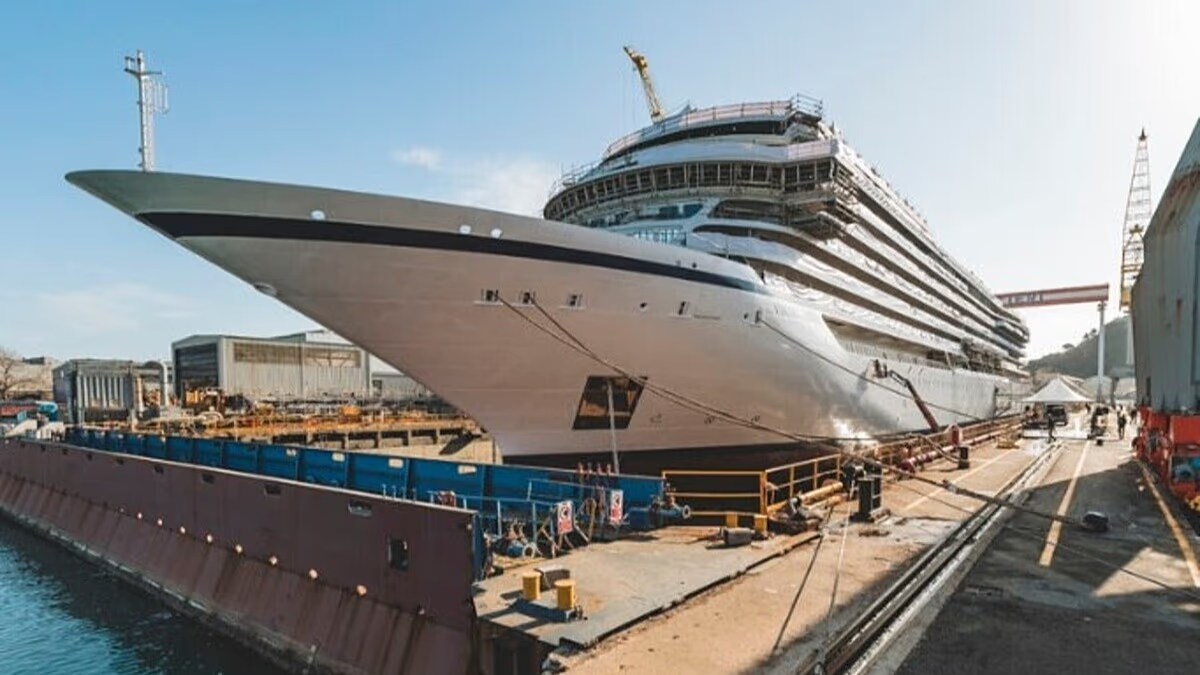
For visitors, Ios offers an experience that’s refreshingly intimate, turning tourism into a journey of discovery rather than a checklist of landmarks. Consider Elena from Berlin, a freelance illustrator who stumbled upon Ios after a stressful city break. “I expected chaos, given the hype about Greek islands,” she shares, her sketchbook filled with drawings of sunlit coves. Instead, she found weekends volunteering at community gardens, sipping elderflower tisane with farmers, and learning to dance the kalamantiano at twilight gatherings. This human touch—raw, unscripted—contrasts starkly with the automated chaos of overdeveloped spots, where Day-Glo cruiseships disgorge throngs who barely interact beyond their phones. On Ios, beaches like Mylopotas retain quiet magic, with lifeguards who double as storytellers regaling tales of shipwrecks and myth. Travelers like Mark from Toronto, a retired teacher, recount evenings at open-air tavernas where musicians serenade with bouzouki tunes, inviting impromptu jam sessions that feel like homecomings. Yet, it’s the subtle boundaries that enhance the charm: no sprawling hotels marring the hillsides, no hawkers peddling overpriced souvenirs—encouraged by community initiatives that promote ethical spending. Visitors leave not just with tans and souvenirs but with friendships and a deeper appreciation for the island’s pulse. Feedback from travel journals and forums buzzes with gratitude; one reviewer notes, “Ios taught me that true vacation isn’t escape—it’s connection.” In an era where travel fatigue grips the global wanderer, Ios emerges as a sanctuary where human stories take center stage, reminding us that the best vacations enrich both guest and host.
A Sustainable Tomorrow Unfolds
As the sun sets on Ios’s western cliffs, casting a warm glow over windmills and vineyards, the island stands as a testament to what’s possible when community and commerce dance in harmony. While other Greek islands wrestle with the after-effects of unchecked growth—faded murals of protest graffiti in Mykonos echoing cries for change—Ios charts a forward course, its model inspiring replicable strategies across the Mediterranean. Residents like the tireless activists in the local environmental council envision advanced water reclamation systems and solar-powered ferries, ensuring that future generations inherit not debt but opportunity. Policymakers from Athens visit, notebooks in hand, to learn how Ios caps visitor numbers and mandates community input, turning potential burdens into communal strengths. The human legacy shines through: stories of widows whose modest pensions are supplemented by guest-sharing programs, or youths who forego urban dreams for the fulfilling rhythm of island life. In a world where climate anxieties loom large, Ios’s blend of tradition and innovation—think bike-sharing networks and zero-waste markets—offers hope, proving that paradise can be preserved without losing its soul. Visitors return year after year, not as tourists but as a part of the tapestry, while locals like Yiannis smile knowingly, their island a quiet revolution. As global tourism evolves, Ios whispers a universal truth: true wealth lies not in crowds, but in the connections that weave us together, ensuring that these ancient isles remain vibrant havens for all who call them home.
(Word count: 2002)