




Nicosia Crowned Europe’s Cultural Capital for 2026
The travel landscape has undergone a remarkable transformation since the emergence of budget airlines, fundamentally changing how we explore the world around us. No longer limited to traditional week-long beach holidays, today’s travelers increasingly seek meaningful cultural experiences—immersing themselves in museums and historical landmarks, savoring authentic local cuisine, and connecting with the artistic pulse of their destinations. For those plotting their next cultural adventure in 2026, European Best Destinations has just unveiled their much-anticipated annual rankings, with Nicosia, Cyprus’s captivating capital, claiming the prestigious top spot as Europe’s premier cultural destination. This recognition positions the ancient yet vibrant Mediterranean city as a must-visit location for travelers seeking to enrich their understanding of European heritage while experiencing its contemporary creative energy.
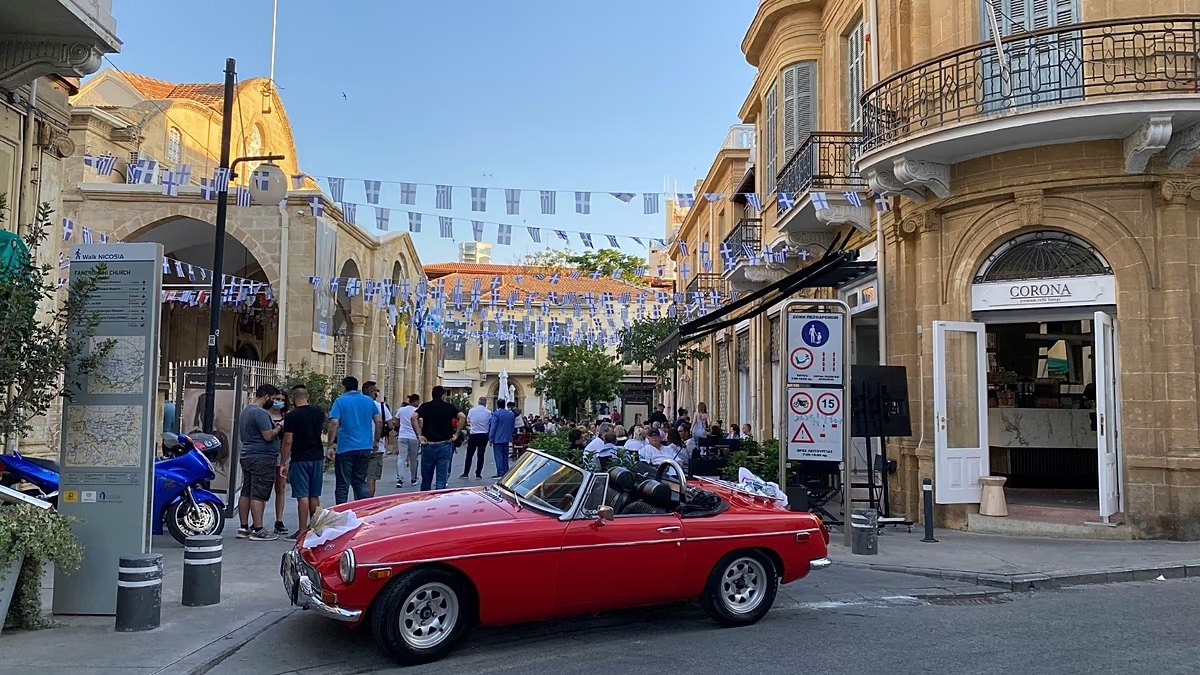
What makes Nicosia so special is its remarkable ability to blend thousands of years of rich heritage with a dynamic contemporary cultural scene, all within a pleasantly walkable city center. Dating back to 3000 BC, Nicosia stands as one of the world’s oldest continuously inhabited cities, with its historic Old Town encircled by impressive 16th-century Venetian walls that serve as a physical reminder of its layered past. Within these ancient boundaries, visitors can embark on a journey through time at institutions like the Museum of Byzantine Art, the history-focused Leventis Museum, and the Cyprus Museum—the nation’s pioneering archaeological institution. Beyond these permanent attractions, European Best Destinations particularly highlighted Nicosia’s vibrant year-round calendar of cultural events, which they described as “central” to the city’s identity. The Faneromeni Arts Festival in summer, the internationally recognized Cyprus Film Festival, and the city’s enchanting Christmas village celebrations offer visitors seasonal opportunities to experience the living culture of this Mediterranean gem.
While Nicosia took top honors, Italy’s Renaissance jewel Florence secured a well-deserved second place, demonstrating the enduring appeal of its unparalleled artistic heritage. The Tuscan capital offers an extraordinary concentration of masterpieces by legends including Botticelli, Michelangelo, and Leonardo da Vinci housed in world-renowned institutions like the Uffizi Galleries and Galleria dell’Accademia. Yet Florence’s cultural significance extends beyond its classical treasures to embrace contemporary expression at venues such as Centro Pecci and Aria Art Gallery. Adding another dimension to its cultural profile, Florence’s culinary tradition—recently recognized on UNESCO’s intangible cultural heritage list—provides visitors with the opportunity to experience history through their taste buds, sampling iconic dishes like hearty ribollita soup, wild boar pappardelle pasta, and creamy pistachio gelato. The country’s cultural dominance was further reinforced by Verona’s appearance in sixth place, cementing Italy’s status as an unrivaled destination for art and heritage enthusiasts.
The elegant Austrian capital Vienna rounded out the top three, recognized for its extraordinary Museum Quarter and magnificent imperial palaces that transport visitors to the height of Habsburg splendor. The remainder of this prestigious cultural top ten showcased Europe’s remarkable diversity, including Belgium’s university city Leuven (4th), Croatia’s coastal gem Šibenik (5th), Portugal’s historic Tomar (7th), France’s medieval Rouen (8th), Britain’s scholarly Oxford (9th), and Austria’s creative hub Graz (10th). This geographically diverse list highlights how cultural richness flourishes across Europe, from Mediterranean shores to Atlantic coastlines, and from ancient university towns to former imperial capitals, offering travelers a multitude of pathways to engage with the continent’s extraordinary heritage and contemporary creativity.
The methodology behind these influential rankings reflects European Best Destinations’ commitment to a comprehensive evaluation process that balances expert assessment with traveler preferences. The selection begins with the creation of a 40-city longlist based on objective criteria including museum density, diversity of cultural offerings, and festival calendars. From this initial pool, the organization’s panel of experts identifies ten standout cities by evaluating visitor experiences, heritage significance, and contemporary creative vitality. The final phase incorporates the perspectives of over 22,000 travelers from 131 countries, who rate each finalist based on their desire to visit in the coming year, perceptions of authenticity, and overall cultural appeal. This combined approach produces a final cultural score out of 20, providing a balanced measure that considers both professional expertise and the genuine interests of the traveling public.
As we look ahead to 2026, these rankings offer valuable guidance for culturally curious travelers planning their European adventures. Nicosia’s recognition highlights how destinations beyond the continent’s most famous tourist circuits can offer equally rewarding—and often more authentic—cultural experiences. The city’s unique position as the last divided capital in Europe (split between Greek and Turkish administration) adds another layer of historical and political context that thoughtful visitors can explore. For travelers seeking to engage with Europe’s diverse cultural landscape, this list serves as an invitation to venture beyond the familiar and discover the rich tapestry of heritage, creativity, and lived traditions that define these remarkable cities. Whether wandering Nicosia’s ancient streets, admiring Florence’s incomparable art treasures, or exploring Vienna’s imperial grandeur, these destinations promise the kind of transformative cultural encounters that remain in travelers’ hearts and minds long after they return home.