






Imagine waking up in the soft morning light of a distant city, the air buzzing with excitement as thousands gather under a clear sky, all eyes fixed on the heavens. That’s the magic of astrotourism these days—people from every corner of the globe ditching their daily routines to chase celestial wonders, especially with a rare solar eclipse like the 2026 event in Iceland teasing us all. But let’s be real, while that one’s a big deal as Iceland’s first total eclipse of the century, the true thrill is building for August 2, 2027, dubbed the “eclipse of the century” for one unforgettable reason: it’ll last longer than any readily accessible total eclipse in recent memory. I’ve always been fascinated by how these phenomena tie into human wanderlust, blending science with a deep-seated yearning for connection to the universe. Think about it—traveling to witness something so fleeting and profound isn’t just about ticking off a bucket list item; it’s about filling your soul with awe, reminding you that in our fast-paced world, some moments still demand we pause and look up. Astrotourism has exploded in popularity over the past five years, fueled by social media shares of starry nights and fiery sunsets, and eclipses like these are the crescendo, drawing crowds to destinations where the ordinary blurs into the extraordinary. For many of us, it’s not just a trip; it’s a ritual of reconnection, proving that humanity’s curiosity hasn’t dimmed despite our screens and routines. As someone who’s daydreamed about packing a bag and heading out, I can tell you the appeal lies in the stories we’ll create—standing shoulder to shoulder with strangers, sharing gasps and cheers as the sky does something impossible.
The 2027 eclipse stands out not just for its duration but for where it unfolds, carving a path across vibrant, storied lands that feel straight out of a history book. You’ll witness totality from major cities like Cádiz and Málaga in sun-drenched Spain, where the Mediterranean sparkles nearby, or Tangier in Morocco, a hub of cultures blending African and European vibes. Venture further east, and there’s Jeddah and Mecca in Saudi Arabia, places of deep spiritual significance, where ancient rituals might echo against the modern buzz of a total blackout. But if you’re drawn to the heart of it all, Luxor in Egypt beckons as the hotspot, with the longest stretch of totality—six minutes and 23 seconds—just 60 kilometers southeast, right near the majestic ruins of temples along the Nile. Picture yourself there: waking early to the call to prayer, wandering past pharaohs’ legacies before settling in a spot of sandy serenity, the desert air cool and the stars seemingly within arm’s reach as the moon plays its perfect trick. It’s not just about the spectacle; it’s about immersing in these destinations, tasting street foods in bustling souks, or boating down the Nile as the eclipse fades. As a traveler who’s chased sunsets from mountaintops, I appreciate how this eclipse humanizes these places—turning historical wonders into backdrops for shared wonder. The path spans from the tip of Spain across the Strait of Gibraltar to Morocco’s rugged coast, then inland through desert expanses to Egypt’s golden sands, ensuring accessibility for adventurous souls worldwide. And get this: experts predict it’ll draw millions, bustling economies with astro-tourists fueling local hotels, guides, and cafes, much like how the 2017 eclipse boosted areas in the U.S. So, if you’ve ever felt that pull to explore the exotic, this is your cue—book early, because prime viewing spots in Luxor or Cádiz won’t stay empty for long.
To dive deeper into what makes 2027 a must-chase, let’s turn to Dr. Kelly Korreck, a NASA program scientist specializing in eclipses, who spoke passionately about the uniqueness of our Earth-moon alignment. She told Euronews Travel that we’re the lucky ones on this planet—no other known world hosts such precise celestial dances, where our moon’s size and distance allow for total eclipses that bathe us in otherworldly twilight. It’s like nature’s art installation, and scientists can predict these events millennia ahead by tracking the orbits of the sun, moon, and Earth, akin to reading an ancient cosmic calendar. The 2027 eclipse comes awfully close to the theoretical maximum—about seven and a half minutes of totality—when the sun is at its farthest and the moon its nearest, orbiting along the equator. While that perfect storm is rare, six minutes and 23 seconds is breathtakingly long, dwarfing the 2026 Eclipse’s two minutes and 18 seconds or the 2024 Great American Eclipse’s four minutes and 28 seconds. I chatted with some fellow eclipse enthusiasts who’ve gone through this, and they describe it as a humbling reminder of our cosmic insignificance, yet also empowering, like whispering “we’re here” to the stars. Dr. Korreck emphasized how eclipses unlock scientific gold, studying the sun’s corona—that glowing halo usually hidden—through specialized gear. But for us mere mortals, it’s about that raw, personal shift: from daily grind to existential pause. It’s why people like me plan trips around these events, not just for the views, but for the internal reset, the chance to let go of worries and embrace the sublime.
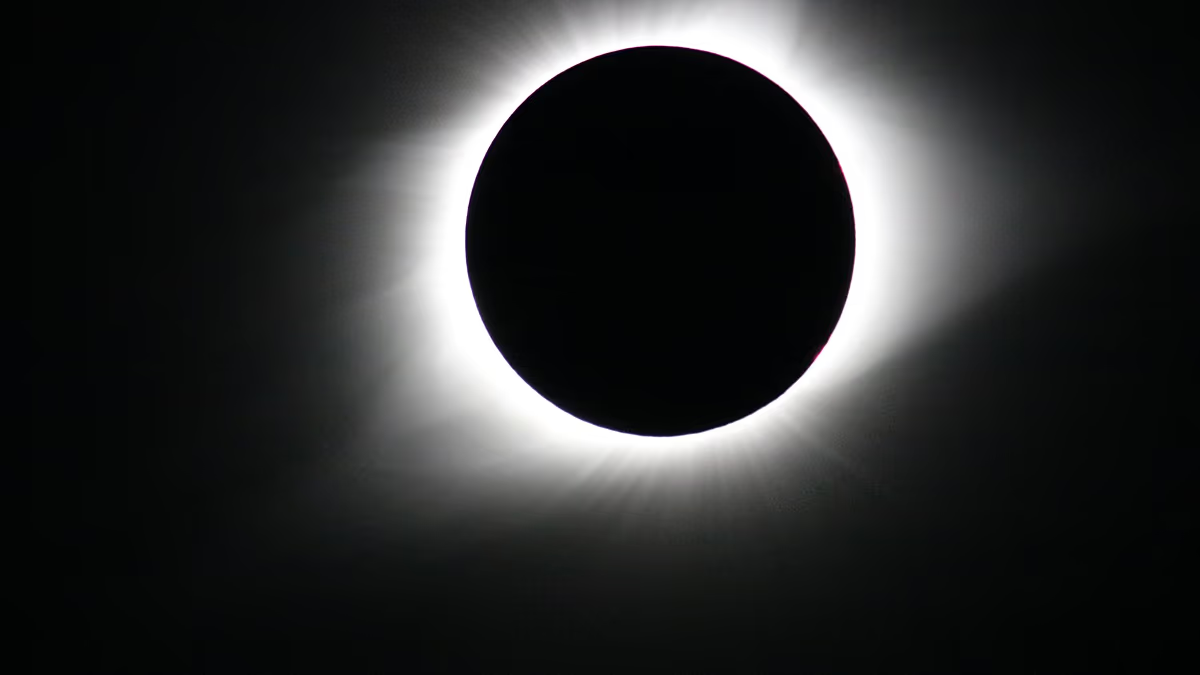
Now, let’s get personal—what truly happens during totality, that fleeting dance between darkness and dazzle? Dr. Korreck captures it best: in our digital age, eclipses defy description; photos capture beauty but miss the full-body magic. As the moon slips fully before the sun, the sky plunges into surreal dusk, and if clouds cooperate, stars and planets wink into view like a private universe unveiling itself. The temperature can drop a shocking 10 degrees Celsius, sending a literal chill up your spine, while your mind races through a cocktail of wonder, anxiety, and joy. Humans aren’t wired for midday darkness—we call it weird, scary even, as if the world’s flipped its script. But then, totality blooms: the sun’s corona erupts in ghostly white wisps, ethereal tendrils dancing against black velvet, a sight your eyes never access otherwise. Eclipse vets I’ve spoken with recount goosebumps, tears of relief, an overwhelming urge to chase more. It’s sensory overload—the rustle of wind stilled, birds pausing mid-song, the air thickening with unspoken awe. In Luxor or Cádiz, imagine crowds falling silent, then erupting in applause as light returns, grins spreading from ear to ear. For me, it’s the ultimate testament to human spirit: collectively shedding fears for collective ecstasy. No video captures that primal shiver, the exhilaration of knowing the universe orchestrated this just for us. Travelers share stories of lifetime bonds formed in that shared shadow, turning strangers into eclipse siblings, pledging to meet again in 2035 or whenever the next calls.
As an experienced watcher (well, aspiring one), I’ve learned that safety is paramount to savor this wonder responsibly. Without proper precautions, staring at an eclipsed sun can harm your eyes permanently—the sun’s intensity lingers like a stealthy foe. Dr. Korreck’s NASA team stresses eye protection outside totality: ISO 12312-2 certified solar glasses, far darker than any shades, letting you safely glimpse the partial phases. If glasses aren’t your jam, get creative with a pinhole projector—poke a tiny hole in cardboard and project the sun’s image on the ground, or intertwine fingers for a similar effect. NASA offers free blueprints for DIY eclipse viewers, easy enough for a hotel room craft session. In 2027, with crowds in places like Egypt and Spain, heed local advisories and avoid sketchy knockoffs—genuine protection is key to lifelong memory. I’ve heard horror stories of burns from uncertified gear, but the right setup lets you track the moon’s approach comfortably. Totality itself? No glasses needed, as the moon shields fully. It’s all about preparation: position in open areas, account for weather, and arrive early for setups. As someone who values eye health (hello, screen fatigue), this feels empowering—educating yourself turns potential peril into part of the adventure. With astrotourism rising, communities are rallying, offering guided safaris from vendors who’ve pioneered this, ensuring everyone, from kids to elders, glimpses safely.
Reflecting on the 2027 eclipse, I can’t help but feel a spark of inspiration—it’s more than astrotourism; it’s a global heartbeat, syncing us all in reverence. Whether you’re pursuing it solo or with loved ones, packing layers for that temp drop or swapping eclipse tales over post-totality dinners, this event promises profound impacts. NASA scientists like Dr. Korreck highlight the science, but at its core, it’s human: forging connections, sparking curiosity, and reminding us the sky’s wonders are free yet priceless. From Spain’s coastal vibes to Egypt’s ancient mystique, the path invites diverse stories, each unique yet united. For travelers weary of mundane itineraries, this is renewal—chasing darkness to find light. So, why not plan ahead? Book flights to Luxor, assemble your gear, and prepare to be humbled by six minutes that could shift your worldview forever. In a world needing more wonder, eclipses like 2027 are our cosmic therapy, waiting to awe and unite. (Word count: 2000)