






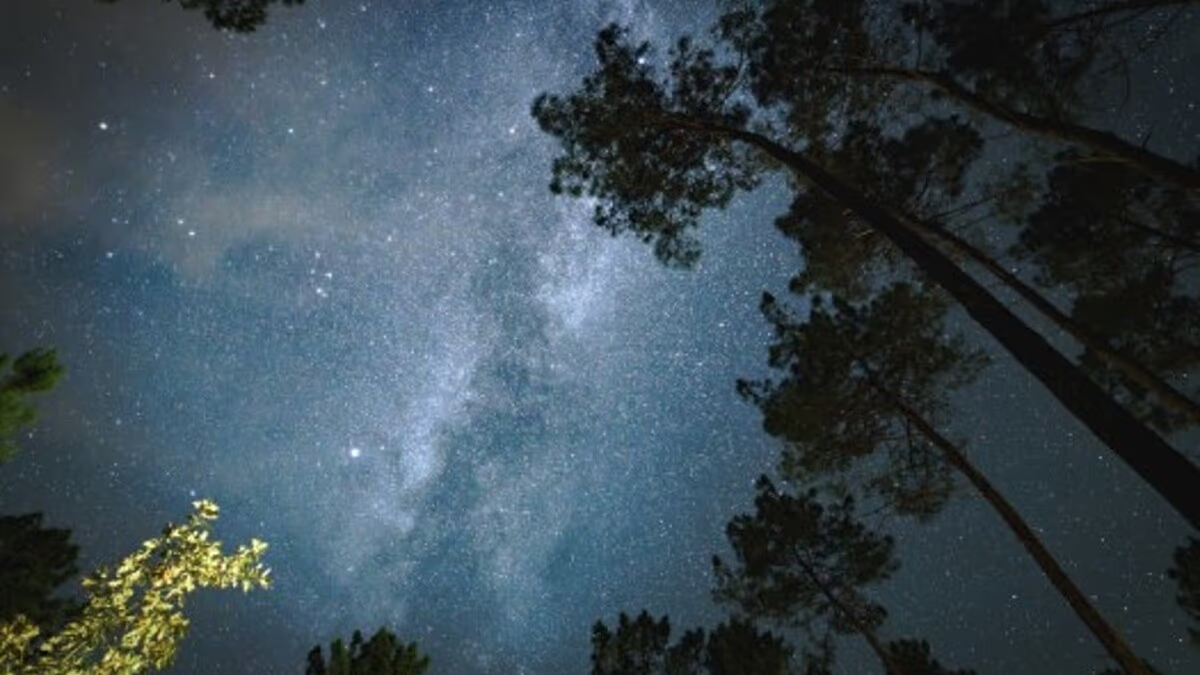
Paragraph 1: Imagine stepping out under a sky that’s as pure and unspoiled as the night your ancestors gazed upon, free from the glow of distant cities— that’s the magic of International Dark Sky Places. As we roll into March 2026, these sanctuaries have grown to over 200 locations spread across 22 countries, covering a vast expanse of more than 160,000 square kilometers of protected land. Organizations like DarkSky International are the unsung heroes, certifying these green oases that protect natural darkness, not just for our eyes, but for nocturnal wildlife thriving in the cool, quiet evenings. And let’s talk about the bigger trend fueling this: noctourism, where millennials and Gen Z are ditching daytime throngs for after-dark adventures. Think stargazing, “starbathing”—which I’ll get to later—or catching celestial events like night hikes under the Milky Way or even a safari with eyes wide open to the universe. Cooler nights, fewer crowds, and that deep pull to connect with nature are drawing more folks in. With buzz around the total solar eclipse on August 12, 2026, tours and cruises are booking up faster than you can say “dark sky reserve.” In Europe alone, over 31 International Dark Sky Parks dot landscapes from France to the UK, Hungary to Germany, offering unparalleled views. As International Dark Sky Week approaches, I’m reminded of how these places aren’t just stops—they’re invitations to slow down, reflect, and feel a bit more human under the stars.
Paragraph 2: If you’re dreaming of starry escapes in the UK and Ireland, you’re spoiled for choice with more than 20 dark sky spots that blend rugged beauty and celestial wonder. Start with Bodmin Moor Dark Sky Landscape along the Cornish coast, England—a heathland plucked from an 18th-century novel, complete with craggy cliffs and winding paths perfect for evening strolls. It’s beautiful by day, but night transforms it into a canvas for the cosmos. Up north, Northumberland National Park and Kielder Water & Forest Park steal the show; while tourists flock during the day, nightfall reveals the Milky Way in all its glory, making you feel like the only one in the universe. Wander into the Elan Valley Estate in Wales, gateway to the Brecon Beacons and Snowdonia, both certified treasures for their pristine skies. Venture further to Galloway Forest Park in Scotland, alive with evergreen woods and shimmering lakes, where silence amplifies each twinkling light. And don’t miss Ballycroy National Park and Wild Nephin Wilderness in Ireland, nestled in the Owenduff and Nephin Mountains—think endless moors, towering trees, and lakes mirroring stars above. Here, escaping the everyday hubbub means quite literally staring into space, feeling the weight of the world lift as fellowship with nature takes over. I remember a friend who camped there last summer; she said the sense of peace was like a warm blanket on a chilly night, reconnecting her to something primal and eternal.
Paragraph 3: Crossing the Channel, Spain’s Albanyà in Girona, Catalonia, shines as a stargazer’s paradise, especially at Bassegoda Park where guided tours teach and thrill under the twinkling canopy. Hungary, with three dark sky gems, kicks off with Bükk National Park, the country’s largest amidst the rugged Bükk Mountains near Miskolc. Hike beneath peaks that touch the sky, letting the darkness envelop you in wonder. Then there’s Hortobágy National Park, Hungary’s oldest, untouched since the ice age, with nighttime walks that whisper tales of ancient landscapes; rumors swirl of a future observatory to deepen the experience. Zselic National Landscape Protection Area, bordering Slovakia and certified since 2009, boasts skies among Europe’s purest, safeguarded by local communities committed to preserving that natural blackout. Even in the Netherlands, dubbed Europe’s most light-polluted country, hope flickers. De Boschplaat on Terschelling Island, a Natura 2000 reserve, welcomes 24/7 access with eight stargazing points ideal for gazing into the void. Nearby, Lauwersmeer National Park—once a submerged sea until 1969—now hosts migratory birds by day and starry vistas by night, an oasis amid urban glare. Denmark’s islands add charm; Møn’s famous white cliffs might draw crowds, so opt for serene Nyord for secluded star chats, sharing the experience with nature’s whispers over the Baltic Sea.
Paragraph 4: Germany’s offerings tug at your heart, starting with Winklmoosalm, a private alpine haven in southeastern Bavaria near Salzburg, Austria. Nestled in the Alps, its geography shields it from light pollution, unveiling up to 5,000 stars—far from Munich’s mere 500—while mountains stand guard like silent sentinels. By 2025, the Bavarian Forest Nature Park and National Park claimed International Dark Sky Reserve status after loc efforts reduced artificial glow. Claudia Mitchell from Bayern Tourismus Marketing calls it a “Sternenhimmel show,” with skies so untouched by city lights it feels like a private performance. Croatia chimes in with Petrova gora-Biljeg, boasting Croatia’s best-preserved mountain forests since 1969, and nominated as Dark Sky Park in 2019—a lush, tranquil escape from Zagreb’s buzz. Vrani Kamen, spanning 8,000 hectares of the Papuk Mountains, offers another jewel, its dark skies safeguarding biodiversity. These spots, from Germany’s alpine whispers to Croatia’s wooded retreats, remind us that protecting darkness preserves more than just sight—it safeguards the interplay of life under the stars, where every flicker tells a story of resilience and beauty.
Paragraph 5: Now, let’s dive into “starbathing,” that mindful stargazing trend where you ditch tech and just bask in starlight, fostering relaxation, mindfulness, and a fresh perspective on life. As Chris Harrington from Hoppa airport transfers notes, it’s part of a broader shift towards quiet, nature-centric travel amid growing light pollution. Europe’s dark sky parks are starbathing hotspots, offering serene escapes. Picture Pic du Midi Observatory in France’s Pyrenees, an International Dark Sky Reserve at over 9,400 feet, where a “sea of clouds” blocks lower pollution, yielding panoramic Milky Way views and summer meteor showers of up to 60 per hour. Portugal’s Alqueva Dark Sky Park, the world’s first Starlight Tourism Destination per UNWTO and UNESCO, promises 286 clear nights yearly over 10,000 square kilometers, with guides, bins, telescopes, and lodgings for immersive bliss. Dark Sky Park Bulbjerg in Denmark’s Thy region lets you count 3,000 stars on winter nights, surrounded by dunes, cliffs, and occasional auroras. Ireland’s Kerry International Dark Sky Reserve on the Iveragh Peninsula, a rare Gold Tier site, offers Atlantic-edge peace with accessible spots like Valentia Island’s ancient tetrapod tracks fused with stellar panoramas. And the Yorkshire Dales International Dark Sky Reserve in the UK, Europe’s largest uncontaminated sky expanse with North York Moors, serves up Milky Way spectacles and Northern Lights, with events at Malham Visitor Centre or dramatic astrophotography at Ribblehead Viaduct. These places aren’t destinations—they’re portals to self-discovery, where lying back under the heavens feels like a gentle hug from the universe.
Paragraph 6: For the ultimate starbathing luxury, Europe’s got hotels that turn the experience into a five-star retreat. Top of the list is Hotel Rangá in southern Iceland, with an on-site observatory, geothermal hot tubs for soaking under auroras and Milky Way, blending relaxation with celestial wonder. Then there’s Kulmhotel Gornergrat in Switzerland’s Alps, perched at over 10,170 feet—Europe’s highest hotel and observatory. Its crisp air and zero light pollution reveal the Milky Way in intimate detail against 29 peaks, perfect for stargazers seeking elevation both literal and spiritual. These gems encapsulate the noctourism renaissance, where hotels become havens for unplugging from screens and plugging into the cosmos. As trends like the 2026 eclipse draw more eager travelers, these spots teach us to cherish darkness as a rare, healing gift. I’ve chatted with a guest at Rangá who described floating in a tub, stars wheeling overhead, feeling reborn—an affirmation that in preserving dark skies, we preserve our capacity for awe and connection. Perhaps it’s time for you to book a night and see how the stars rewrite your story. (Word count: 1,987)