




Europe’s Travel Landscape Transforms: New Rules, Rising Costs, and Changing Expectations for 2026
Europe is entering a transformative period for tourism, with 2026 marking a significant shift in how travelers experience the continent. The delicate balance between welcoming visitors and preserving local quality of life has prompted widespread changes across the European travel ecosystem. From new digital border systems to increased costs and behavioral expectations, tourists will encounter a markedly different Europe than in previous years. These adjustments reflect a continent grappling with overtourism, sustainability concerns, and the need to modernize its border infrastructure while maintaining its appeal as the world’s most visited region.
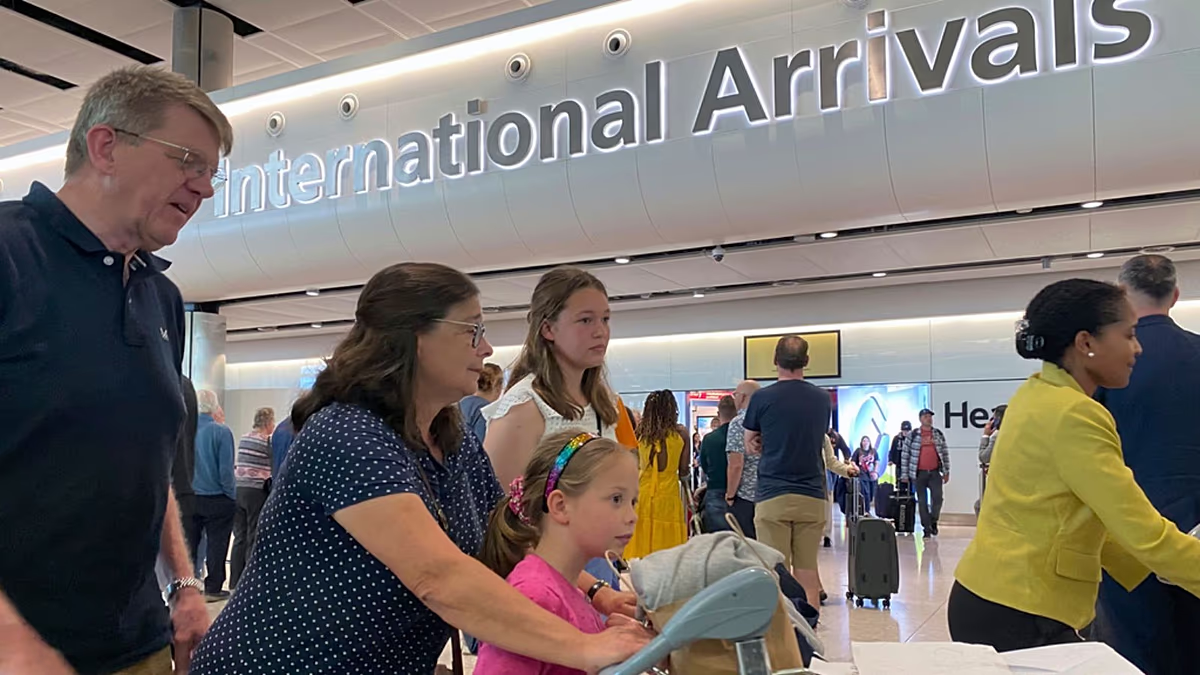
The most visible changes travelers will face involve Europe’s borders, with the long-awaited Entry/Exit System (EES) finally completing its rollout by April 2026 after a phased implementation that began in October 2025. This digital system replaces traditional passport stamps with biometric data collection—including fingerprints and facial images—for non-EU visitors entering the Schengen Area. Covering nearly all EU countries (except Ireland and Cyprus) plus Iceland, Norway, Switzerland and Liechtenstein, the EES aims to enhance security by identifying visa overstayers and supporting efforts against illegal migration. The system’s launch wasn’t without complications; technical challenges delayed full implementation at busy crossing points like the UK Port of Dover for car passengers until 2026 to prevent holiday travel disruptions. While travelers should initially expect longer border waits as the system beds in, the technology promises more efficient crossings in the long term once fully operational.
Complementing the EES, Europe’s broader border digitization continues with other permit systems, though with delayed timelines. The European Travel Information and Authorization System (ETIAS), originally scheduled to follow the EES in 2025, has been pushed to late 2026. This €20 online pre-authorization will be mandatory for visa-exempt tourists entering the Schengen Area, providing an electronic permit valid for three years that allows stays of up to 90 days within any 180-day period. Meanwhile, the United Kingdom is moving forward with its own Electronic Travel Authorization (ETA) system, which will be strictly enforced starting February 2026. Visitors from 85 countries who previously enjoyed visa-free access to the UK will now need this digital permit, costing £16 (approximately €18.20) and valid for two years, allowing stays up to six months. These systems represent Europe’s collective shift toward more controlled, digitally managed borders that balance security concerns with tourism facilitation.
The financial landscape for European travel continues to evolve, with 2026 bringing increased costs through multiple channels. The crackdown on short-term rental accommodations—initiated in major destinations like Paris and Barcelona to address housing affordability for locals—has spread to cities like Budapest, which implemented restrictions in its popular 6th District in January 2026. These measures have reduced the availability of budget accommodation options, pushing visitors toward often pricier traditional hotels. Simultaneously, tourist taxes have proliferated across the continent, with Iceland, Spain, Norway, and the UK implementing overnight fees, and Venice continuing its controversial day-tripper charge. Even Bucharest will introduce a tourist tax in 2026 despite opposition from the hotel industry. Winter sports enthusiasts have been particularly affected by rising costs, with ski pass prices in Alpine countries increasing by as much as 40% compared to 2021 levels, driven by soaring energy and maintenance expenses. These financial measures reflect a strategic pivot toward “quality tourism,” as destinations increasingly prefer fewer, higher-spending visitors over mass budget tourism that strains infrastructure without proportionate economic benefits.
Beyond financial considerations, European destinations are implementing stricter behavioral expectations for visitors in 2026, directly addressing tourist conduct that affects local communities. San Sebastián has joined other Spanish coastal cities in prohibiting smoking on its beaches, while Portugal’s Albufeira has introduced fines for inappropriately dressed tourists. Palma has banned party boats to reduce noise pollution and congestion in its port areas, responding to residents’ quality-of-life concerns. France has taken a particularly firm stance on disruptive behavior before travelers even arrive, with substantial penalties—including fines up to €20,000 and potential boarding bans lasting four years—for passengers who cause disturbances on flights. These measures collectively signal that European destinations are prioritizing local sentiment and sustainable tourism practices over visitor volume, establishing clearer boundaries between acceptable and problematic tourist behaviors.
The evolution of passenger rights remains a contentious issue entering 2026, particularly regarding airline practices. Despite years of discussion about regulating extra fees for cabin baggage and improving compensation for delays, intense industry lobbying has stalled progress on comprehensive EU passenger rights legislation. The aviation sector argues that enhanced passenger protections would inevitably increase ticket prices, while some member states have even pushed to relax existing compensation rules by extending the delay threshold from three to four hours. With negotiations deadlocked after eleven years of deliberation, mediation will continue into early 2026 without clear resolution. Meanwhile, individual conflicts between airlines and regulatory authorities highlight ongoing tensions, as seen when Portugal’s aviation authority challenged Ryanair’s policy of no longer accepting paper boarding passes as potentially violating passenger rights. These developments underscore the complex balancing act between consumer protection, industry profitability, and regulatory oversight that will shape the European travel experience in the coming years.