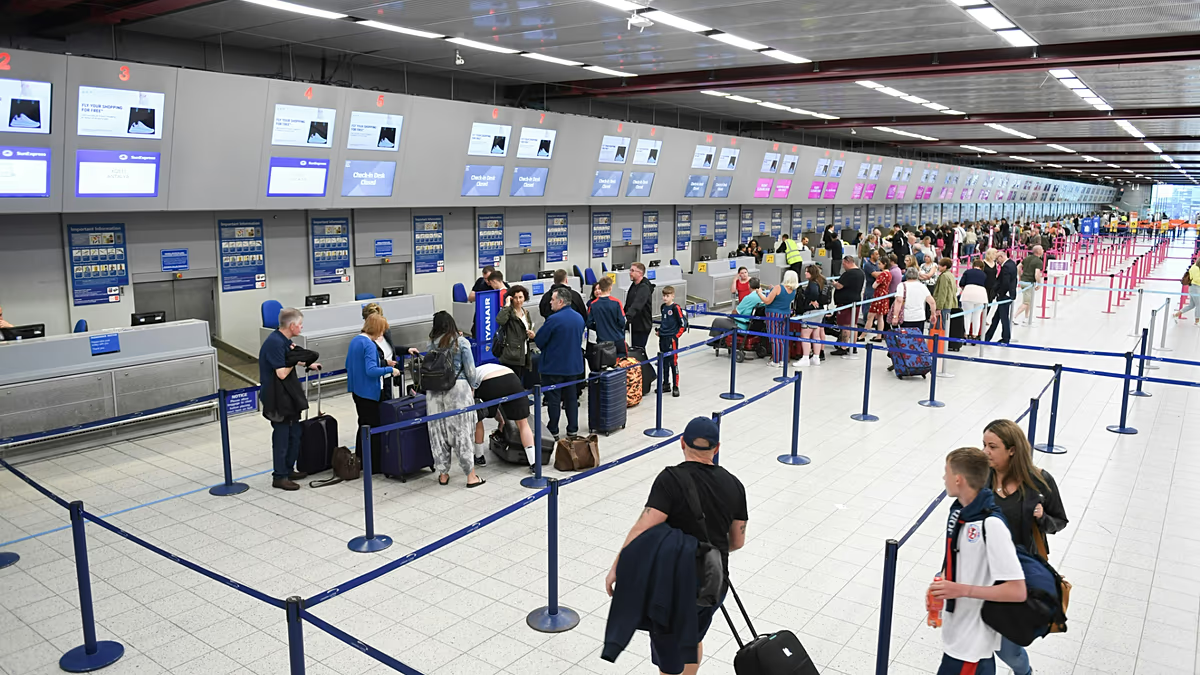






The recent escalation of tensions between the United States, Israel, and Iran has struck a heavy blow to the vibrant tourism industry in the Middle East and the Gulf region. Imagine waking up to the news that entire countries you were planning to explore are suddenly deemed off-limits by your government. Travelers who had booked dream vacations to glittering destinations like Dubai and Doha now find themselves in a panicked scramble, juggling cancelled flights and urgent calls to family back home. Governments from around the world, including the US and UK, have issued stern ‘no-go’ warnings, advising against all but the most essential travel to places like Israel, the UAE, and Qatar. Meanwhile, a vast corridor of airspace has been sealed shut, grounding countless planes and leaving thousands stranded in airports that once buzzed with excitement and opportunity. On rescue flights operated sporadically, you can picture the exhausted tourists—families with young children clutching stuffed animals, businessmen in rumpled suits, and adventurous backpackers exchanging stories of near-misses—finally boarding aircraft that feel more like lifelines than holiday charters. President Trump himself hinted that this wasn’t a quick skirmish, predicting it could drag on for months beyond the initial four or five weeks, casting a long shadow over the region’s sunny beaches and ancient landmarks. For the tourism sector, this turmoil isn’t just a hiccup; it’s a full-blown crisis, with experts warning of plunging visitor numbers that could reverberate through economies reliant on these fleeting moments of joy and discovery.
Before this conflict erupted, the Middle East had been riding a wave of tourism renaissance, drawing crowds hungry for culture, luxury, and adventure. Ibrahim Khaled, the head of marketing for the Middle East Travel Alliance, shares a palpable excitement when he talks about the region’s growth. Working closely with international tour operators and travel agents, he’s witnessed firsthand how places like Saudi Arabia have transformed from elusive destinations into must-visit hotspots. Since opening its borders to leisure tourism in 2019, Saudi Arabia has seen visitor numbers surge at about 10% annually, with gleaming new resorts, cultural festivals, and adventure parks popping up to entice global travelers. Khaled reminisces about the buzz: families from Europe joining desert safaris, influencers posting from opulent Dubai malls, and business travelers discovering the thrill of Doha’s waterfront promenades. It was a promise of luxury meets tradition, with investment pouring into hotels, airports, and experiences that made the region feel like the next big frontier for wanderers everywhere. But the weekend’s events—retaliatory strikes and airstrikes—have slammed the brakes on this momentum. Cancellations are pouring in like a flood, with trips to no-go destinations shelved indefinitely. Flights are chaotic, with passengers trading whispers of rerouted plans and refunds that seem perpetually delayed. Khaled’s voice carries a mix of frustration and resolve; he’s seen crises before, but this one feels personal, disrupting not just bookings but the dreams of those who choose the Middle East as a gateway to wonder.
Delving deeper into the fallout, a comprehensive report from Tourism Economics paints a stark picture of what’s ahead for 2026. Directors Helen McDermott and Jessie Smith outline projections that could see inbound arrivals to the Middle East plummet by 11% to 27% compared to the year before, a far cry from the 13% growth forecasted just months ago. In raw numbers, that translates to a staggering 23 to 38 million fewer international visitors, translating to losses of $34 billion to $56 billion in tourist spending—that’s the equivalent of euros vanishing from hotels, restaurants, and souvenir shops that once thrived on global curiosity. This isn’t just about missed vacations; it’s about livelihoods, from the smiling guides who once led camel treks to the artisans crafting intricate jewelry for eager buyers. The report notes that this impact dwarfs the effects of last year’s conflict, thanks in large part to Iran’s retaliatory strikes targeting neighboring Gulf states, those established havens of sun-soaked escapes. Widespread airspace closures have compounded the issue, grounding not just regional flights but the very freedom to explore that defines tourism. For families who had saved for years to discover the magic of the Arabian Nights, this means postponed reunions and bittersweet checks on weather-delayed dreams. Experts like McDermott and Smith emphasize how sentiment plays a cruel role here—once bitten by fear, travelers become twice shy, opting for safer shores even as stability returns.
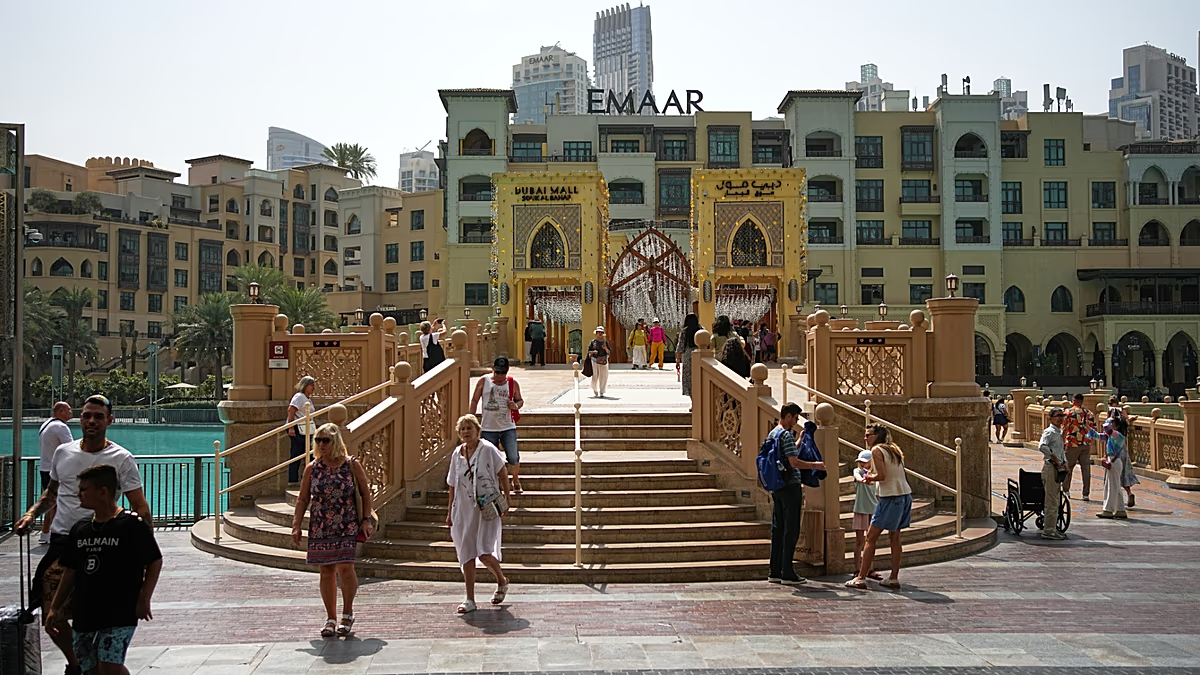
Zooming in on the hardest hit, the Gulf Cooperation Council (GCC) countries are bracing for what could be their toughest challenge yet. With UAE and Saudi Arabia leading the pack in international arrivals, their heavy dependence on air travel makes them sitting ducks for prolonged disruptions. Dubai’s towering skyscrapers and Riyadh’s bustling markets, once magnets for millions, now risk emptying out as flight schedules dwindle. In contrast, places like Qatar and Bahrain fare slightly better, where land borders allow 32% and 74% of arrivals respectively, offering some buffer against the aerial chaos. Tourism Economics highlights how perceptions of safety and stability—built painstakingly over years—have been eroded by the weekend’s Iranian strikes, spreading unease across the Gulf’s glittering coastlines. Picture the hotel workers in Abu Dhabi wiping down empty conference halls, or the tour operators in Riyadh pausing their pitches mid-call. For UAE residents, who’ve seen their city evolve into a global crossroads, this feels like a personal setback, reminding everyone that tourism isn’t just dollars—it’s the stories of human connection that keep economies humming. The resilience of these destinations, once beacons of hospitality, is being tested in ways that resonate deeply with those who call the Gulf home, from chefs experimenting with fusion menus to event planners dreaming up grand spectacles.
Beyond the region’s borders, the Middle East’s status as a global transit hub amplifies the ripple effects, affecting travelers far and wide. Airports like those in Dubai and Doha handle a massive 14% of international transit traffic, acting as vital bridges between Europe, Asia, and Pacific routes. With airspace closures snarling this network, flights headed to Indonesia, India, or Australia find themselves rerouted through exhausting detours, turning what should be efficient journeys into endurance tests. Families on long-haul trips share anecdotes of extra layovers, missed connections, and the stress of recalculating itineraries on the fly, while business executives ponder the lost productivity from these delays. Tourism leaders warn that these knock-on effects could mean fewer global travelers altogether, as fears of instability deter even indirect paths through the hub. For Europeans planning stopovers in Doha or transit travelers eyeing quick Dubai layovers, the current mess feels like an unwelcome detour in their quest for seamless exploration. Experts describe it as a disruption that underscores the interconnectedness of world travel, where a storm in one corner sends waves across oceans, impacting not just wallets but the joy of discovery for millions.
Yet, amid the gloom, there’s a glimmer of hope rooted in the Middle East’s proven resilience. Ibrahim Khaled of the Middle East Travel Alliance remains steadfast, drawing from the region’s history of bouncing back from adversity. He recalls past disruptions—political shifts, health crises, economic hurdles—and how tourism always found its footing, with demand surging once calm returned. Gloria Guevara, President and CEO of the World Travel & Tourism Council, echoes this optimism in a reassuring statement, noting the sector’s knack for weathering global challenges through adaptation and understanding. She speaks of travel as a force for connection, a reminder that even in uncertainty, the human spirit seeks out new horizons. For travelers and industry players alike, stories of quick recoveries abound: post-9/11 visits to the region, or rebounds after uprisings, showing how destinations like Oman’s serene wadis or Jordan’s Petra ruins endure. Guevara emphasizes responsible responses, urging stakeholders to innovate with virtual experiences and localized adventures during lean times. In human terms, this means locals sharing their culture online, inviting virtual globetrotters into their world, while operators experiment with land-based tours that sidestep the skies. Khaled’s confidence is infectious; he talks of the region’s evolving allure—cutting-edge museums, eco-lodges, and culinary scenes that promise reinvention. For optimists, the current crisis isn’t an end, but a pause that could lead to stronger, more sustainable tourism, fostering empathy and economic ties that outlast the headlines. As governments and industry leaders collaborate on solutions, from enhanced security protocols to sentiment-rebuilding campaigns, the narrative shifts from turmoil to tenacity, proving that the Middle East’s spirit, much like its deserts, knows how to rise anew.