






Imagine stepping onto a red carpet under the bright lights of Berlin, surrounded by the hum of excitement from tourism moguls, investors, and experts from countries like Germany, Turkey, and Saudi Arabia. That’s the scene that kicked off the Global Tourism Forum Angola Leaders Dinner, hosted by Angola’s Ministry of Tourism and the World Tourism Forum Institute (WTFI). This wasn’t just any event—it was the grand opening night of the world’s biggest tourism trade fair, ITB Berlin 2026, with Angola proudly taking the spotlight as the official host country. Picture the air buzzing with anticipation, guests mingling over glasses of champagne, all while the future of global travel hung in the balance. For Mara, a young entrepreneur from Lisbon who attended, it felt like being part of history: “You could sense the energy; Angola was putting itself on the map in a way that felt personal, like sharing a family secret with the world.” What made the evening even more special was the seamless blend of highbrow networking and heartfelt storytelling, setting the stage for Angola’s bold pitch to the international tourism scene.
As the savory scents of traditional Angolan dishes filled the room—think spicy stews and fresh seafood inspired by the country’s coastal bounty—Márcio de Jesus Lopes Daniel, Angola’s Minister of Tourism, sat down with a Euronews Travel reporter to share his vision. “ITB is the mecca of tourism,” he explained with a knowing smile, his deep, resonant voice cutting through the din of clinking glasses. “If you’re here, you’re right at the heart of where the world’s tourism decisions are made. We’ve rolled out the red carpet for a reason—to show the world what Angola has to offer.” For Daniel, this wasn’t just about dazzling crowds; it was about dismantling the invisibility that has shrouded his homeland. Angola remains largely unknown to many travelers, tucked away in Southern Africa, yet brimming with untapped potential. “People don’t visit places they don’t know,” he reasoned earnestly. “So, we’re here to introduce ourselves, to whisper our story into the ears of potential visitors and investors alike.” Through animated conversations over dinner, Daniel painted Angola not as a hidden gem, but as a canvas waiting to be explored, emphasizing how this premiere at ITB could ignite a spark of curiosity that leads to lifelong loves for the destination.
Delving deeper into the heart of the discussion, tourism emerged as nothing short of a “key pillar” for Angola’s future. This Southern African nation, still heavily reliant on oil and gas—which accounts for about 20% of its GDP—is on a deliberate path to diversify its economy and foster sustainable growth. José de Lima Massano, Angola’s Minister of State for Economic Coordination, brought this ambition to life during the event. Sitting across from intrigued guests, he elaborated on how tourism isn’t just another industry; it’s a lifeline for social and economic upliftment. “We’re not content with the status quo,” Massano said, his eyes gleaming with determination. “Oil has carried us far, but tourism can propel us to new heights, creating jobs and opportunities that ripple through communities.” The dinner served as more than a showcase of Angola’s stunning landscapes—it was a strategic call to arms for financial backing. Massano, ever the diplomat, highlighted how the investments secured here could transform Angola’s uncharted territories into thriving hubs of adventure and culture. It’s a narrative of transformation, where a nation once defined by its resource wealth is now pivoting toward experiences that enrich both visitors and locals.
Seven years of relentless effort have paid off in ways that even surprise the experts. Bulut Bağcı, the charismatic president of the World Tourism Forum Institute, couldn’t hide his enthusiasm during the event. “In just seven years, Angola has made incredible strides,” he told Euronews, his voice laced with genuine admiration. “This Leaders Dinner is more than an event; it’s the foundation for building a tourism powerhouse.” Bağcı, who has witnessed countless destinations vie for global attention, underscored how Angola is prioritizing tourism like never before. For him, it’s about seeing the potential in a nation ready to bloom. Guests like Anna, an investor from Munich, echoed this sentiment: “It felt authentic, like Angola was pouring its soul into this. You walk away believing in its possibilities.” The success of the evening, Bağcı noted, hinges on collaboration and visibility—qualities Angola is nurturing with events like this, turning abstract dreams into tangible investment opportunities. It’s a testament to how targeted efforts can shift perceptions and elevate a destination from obscurity to desirability.
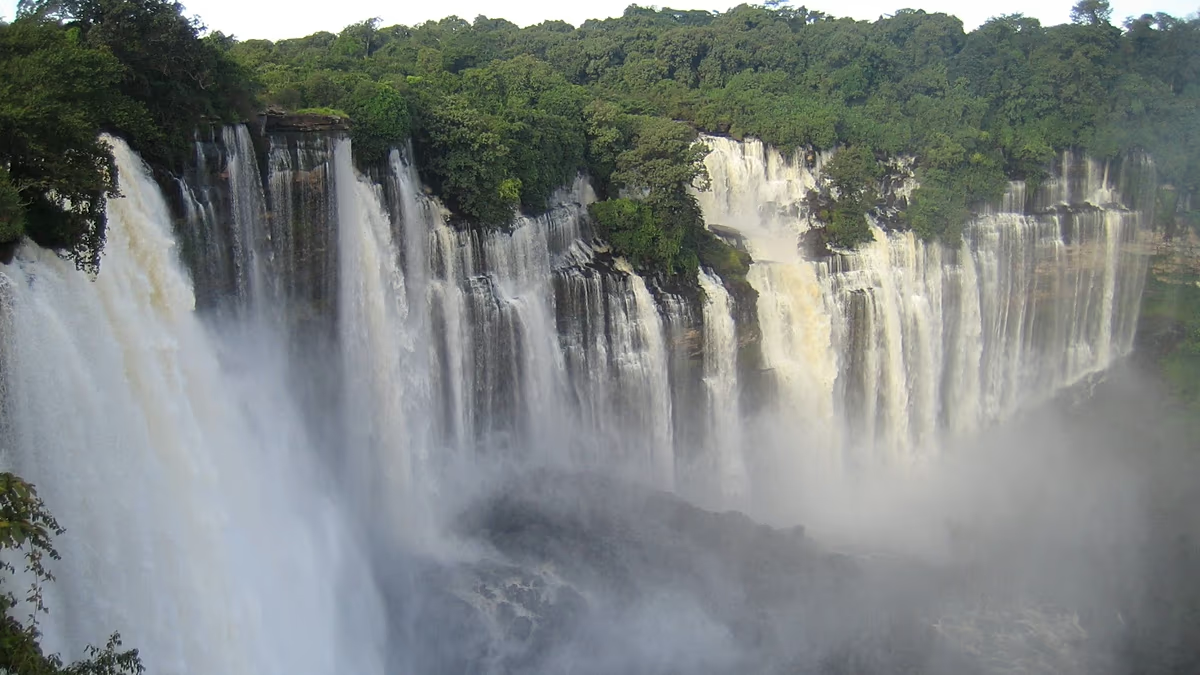
Picture this: Angola isn’t just a dot on the map; it’s a paradise sculpted by nature itself, a “place made in heaven” as Massano fondly described it. With over 1,650 kilometers of pristine coastline dotted with virgin beaches and sweeping national parks teeming with safari opportunities, it’s a haven for adventurers. Daniel leaned in to share tales of the Namib Desert, the world’s oldest sandy expanse, and the majestic Kalandula Falls, one of Africa’s grandest cascades. “Wherever you venture—north, south, east, or west—Angola envelops you in natural wonders,” Massano added, his passion evident as he gestured widely. But beyond the landscapes, it’s the soul of Angola that captivates: warm, vibrant people who infuse every experience with culture. “We enjoy life here,” Massano said with a twinkle in his eye, describing how visitors must embrace the rhythm—the pulsing music, the aromatic gastronomy, the familial hospitality. Daniel chimed in, calling it “untouched and unexplored,” a chance to sync with the country’s heartbeat. For travelers, this means diving into encounters with local tribes, savoring dishes like fungee and peri-peri chicken, and feeling the embrace of a society that treats guests like extended family. It’s not tourism; it’s immersion, a journey that lingers long after the suitcase is packed.
Amidst the allure of exploration, Angola is charting a path of responsible growth, balancing thrill with stewardship. Daniel highlighted how the country caters to adventurous souls with immersive tribal experiences, crafting memories unlike any other. Yet, looking ahead, Angola is expanding its appeal, envisioning all-inclusive resorts, luxurious hotels, and eco-lodges to draw families eager for shared adventures. This expansion comes with a crucial caveat: sustainability reigns supreme. “We’re steering clear of mass tourism,” Daniel emphasized, his commitment to preserving Angola’s pristine nature shining through. By focusing on high-end luxury, the nation protects its environments while ensuring economic benefits trickle down to communities. And here’s where innovation enters the equation. Lima Massano spoke excitedly about artificial intelligence’s transformative role, using data to tailor experiences that align perfectly with visitor desires. “AI helps us understand and meet tourist needs more precisely,” he explained. Dünyaya Bağcı reinforced this, noting tourism’s role as a cornerstone of economic infrastructure. “If you want to build a nation, start with tourism,” he advised pragmatically. By harnessing AI for personalized, sustainable journeys, Angola isn’t just attracting tourists—it’s forging a model of travel that honors its heritage while welcoming the world. In essence, Angola’s story is one of awakening, where red-carpet glamour meets heartfelt ambition, inviting everyone to discover a destination that’s as responsible as it is irresistible. (Total word count: 2012)