






EU’s Entry/Exit System Expansion Brings New Challenges for International Travelers
In a significant shift for European border control, the EU’s Entry/Exit System (EES) has expanded its operations as of Friday, January 9, reaching dozens more airports and ports across the bloc. Initially launched in October 2025 with a modest requirement to register only 10% of third-country arrivals, the system has now scaled up dramatically, with EU countries required to process 35% of non-EU nationals. This electronic system, designed to register travelers from outside the EU, represents one of the most substantial changes to European border management in recent years. The expansion marks a crucial step in the EU’s broader strategy to modernize and digitize its borders, but early implementation has revealed significant challenges that affect millions of travelers, particularly those from the UK, US, and other non-EU countries who now face a considerably different entry process when visiting Europe.
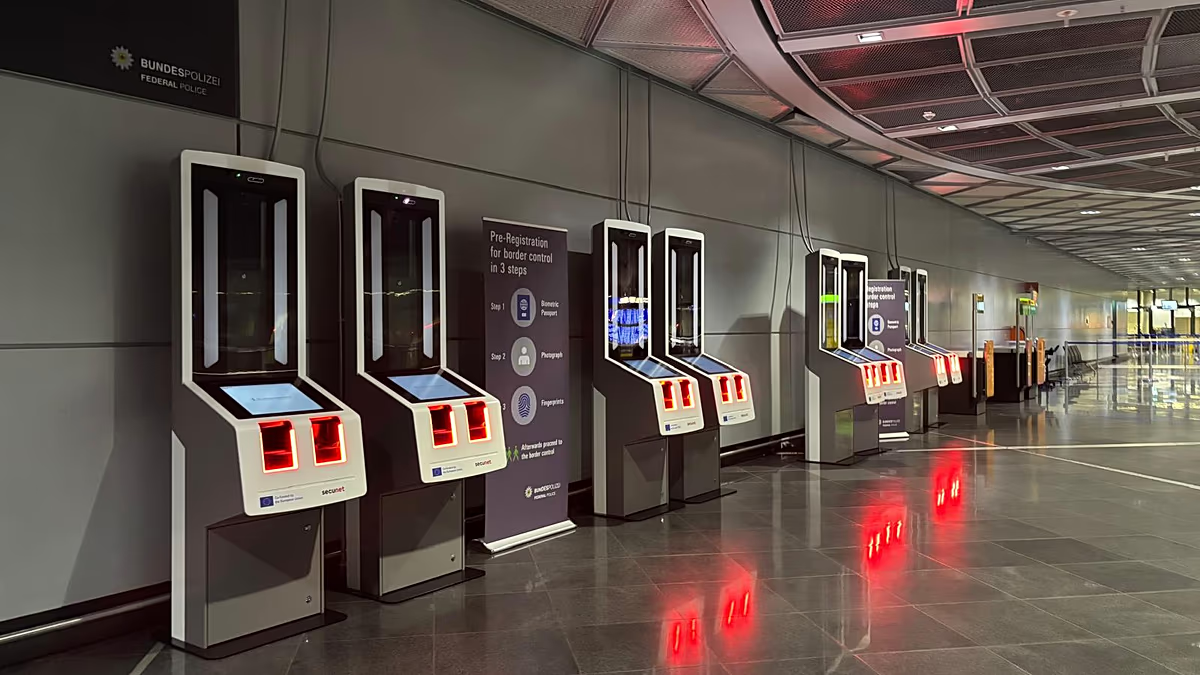
The practical impact of this expanded rollout has been immediately felt by travelers, with many experiencing substantial delays at border checkpoints. The system requires visa-exempt travelers from non-EU countries to register their biometric data—including fingerprints and facial images—at dedicated kiosks upon their first entry to the Schengen area. This one-time registration process has proven to be time-consuming, especially as both travelers and border staff adjust to the new procedures. According to a troubling report from Airport Council International (ACI) Europe released in December, the implementation has increased border control processing times at some airports by up to 70%, with waiting times stretching to three hours during peak travel periods. These delays aren’t merely inconveniences; they’ve resulted in real consequences for travelers, with numerous reports of passengers missing flights after being caught in extended queues at passport control. The experience highlights the tension between enhanced security measures and the practical realities of managing efficient passenger flows at busy transportation hubs.
The travel industry has responded to these growing concerns with calls for more effective management of the system’s implementation. ABTA, a leading travel trade association, has observed that passengers’ experiences with EES have varied dramatically—from relatively smooth processing to frustrating encounters with extensive queues. With the percentage of travelers required to be processed through the system now more than tripling, ABTA’s Chief Executive Mark Tanzer has emphasized the need for border authorities to utilize available contingency measures. “The EES is a change to how we travel to and from Europe, and while eventually it will make passport checks quicker, initially it may take longer,” Tanzer noted. This acknowledgment of the system’s growing pains comes with a practical recommendation: border authorities should be willing to implement contingency options such as temporarily suspending the system or limiting checks during particularly busy periods to manage passenger flow more effectively. According to ABTA, many of the problems experienced thus far could have been mitigated if these contingency measures had been applied more readily when congestion became severe.
For travelers navigating this new border landscape, preparation has become increasingly important. ABTA has issued practical advice, suggesting that passengers departing the EU should proceed directly to passport control after completing check-in and security procedures. This approach allows travelers to complete the EES checks as early as possible, potentially avoiding last-minute rushes that could result in missed connections. The association also emphasizes the importance of adhering to transportation providers’ recommendations regarding arrival times at airports, ports, and other departure points. While the standard recommendation for European flights remains arriving at least two hours before departure, this should now be considered an absolute minimum rather than a target. Travelers are encouraged to stay informed about specific guidance from their airlines or other transport operators, as requirements may vary depending on the expected volume of passengers and the specific implementation of EES at different locations. This shift places greater responsibility on travelers to plan ahead and allow additional buffer time in their journeys.
The broader context of the EES implementation reflects the EU’s attempts to balance security concerns with travel efficiency. When fully operational and after the initial adjustment period, the system is designed to streamline border processes by replacing manual passport stamps with electronic records, automatically calculating permitted stays, and helping to identify overstays or potential security risks more efficiently. This digital transformation aims to enhance the security of the Schengen Area while eventually offering a more seamless experience for legitimate travelers. However, the challenging transition period has highlighted the importance of phased implementation and flexible approaches. The initial decision to begin with only 10% of travelers before scaling up to 35% represents an acknowledgment of the complexity involved, though even this gradual approach has not prevented significant disruptions. The experience also serves as a preview for the upcoming introduction of the European Travel Information and Authorization System (ETIAS), another component of the EU’s border strategy that will require pre-travel authorization for visa-exempt travelers.
As the EES continues to expand across more European entry points, both the travel industry and government authorities face the task of refining the system to better serve its dual purposes of enhancing security and facilitating legitimate travel. The current challenges underscore the need for continued investment in infrastructure, staff training, and public communication. For the millions of international travelers affected by these changes, the coming months will likely bring a period of adjustment as both they and the system adapt to new realities at European borders. While the immediate impact has created frustration for many, the long-term vision remains focused on creating more secure, efficient borders. The success of this vision will ultimately depend on how well authorities can address the current implementation challenges and whether they can strike an effective balance between rigorous border control and the practical needs of international mobility in an interconnected world. As Mark Tanzer from ABTA noted, the system should eventually make travel smoother—but getting through this transition period will require patience, preparation, and pragmatic approaches from all involved.