

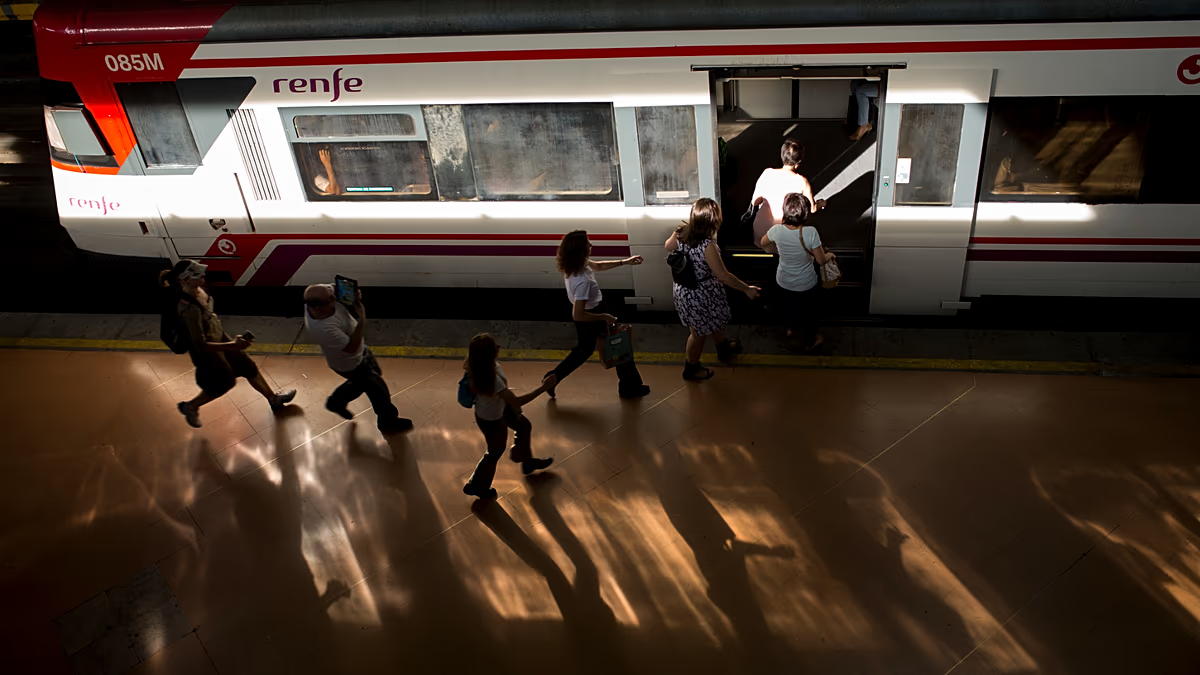
The Unexpected Halt to Spain’s Train Chaos
Imagine waking up in Madrid or Barcelona on a crisp February morning, only to find that your daily commute or weekend getaway is thrown into limbo by a nationwide train strike. That’s exactly what greeted thousands of Spaniards on Monday, February 9, 2026, when the Spanish Railroad Engineers and Trainmen’s Union (SEMAF) kicked off planned walkouts set to last three agonizing days. The disruption hit hard, with over 330 high-speed and regional trains canceled across major operators like Renfe, Iryo, and Ouigo. For families planning to visit relatives in Seville or business travelers heading to meetings in Valencia, it felt like a cruel twist of fate. The strike wasn’t just about labor gripes—it stemmed from a tragic high-speed rail crash in southern Spain back in January, which claimed 45 lives and injured more than 150. As a country that prides itself on its efficient rail network, this accident heightened fears about safety, pushing SEMAF to demand urgent improvements to standards across the entire system. commuters shared stories on social media of frantic changes to bus alternatives or canceled vacations, highlighting how such strikes ripple through everyday lives. Yet, just hours after the disruptions began, the union called off the action, agreeing to a deal with the Ministry of Transport after four rounds of tense negotiations. It was a relief for passengers who had already faced enough uncertainty, proving that dialogue can sometimes prevail over standoffs. This episode underscored the delicate balance between workers’ rights and public needs in modern infrastructure.
Delving deeper, the human side of the strike revealed frustration brewing long before the walkouts. SEMAF, representing train drivers and railway workers, had been vocal since the devastating January crash, where a high-speed train derailed, killing passengers and shattering families. Union leaders like those in Madrid recounted how this wasn’t an isolated incident; Spain had seen a series of railway accidents marking the new year, sparking a national outcry over working conditions, stagnant salaries, and the pressing need for better operational protocols. For drivers like Juan, a longtime engineer from Andalusia, the strike was a cry for help—a way to protest against feeling undervalued and overworked. He shared with local reporters how the job’s demands had intensified, with longer shifts and dwindling resources, making the push for safety upgrades feel like a matter of preserving lives, not just jobs. The government, through the Ministry of Transport, acknowledged these concerns, but initial talks dragged on through three meetings, leaving unions to take the drastic step of striking. Passengers empathized with the workers’ plight, even as they hunted for refunds or rerouted journeys, turning what could have been divisive labor action into a shared narrative of resilience. By Monday afternoon, with an agreement in hand, both sides emphasized that they were united in protecting Spain’s rail future, reducing the strike from potential days of chaos to a brief but impactful pause.
For affected travelers, the strike brought a mix of panic and practical hurdles, but consumer rights stepped in as a lifeline. Under EU law, if your train was canceled due to strike action, you’re entitled to a full refund within 30 days—no questions asked. Alternatively, you could swap your ticket for another at no extra cost, giving some flexibility amid the upheaval. Renfe, the state-owned giant, went a step further by allowing passengers to cancel or modify bookings free of charge, no matter where they bought the tickets. This was a godsend for María, a student from Bilbao who had tickets for a trip to Granada; after her morning class, she logged onto the website and swiftly rescheduled, saving both time and money. Details for claims were readily available on operators’ sites, avoiding the nightmare of long calls or in-person queues. Even for delays, passengers had rights: compensation at 25% of the ticket price for delays between 60 and 119 minutes, and 50% for anything over two hours. Consumer watchdog Facua reminded everyone that these protections didn’t apply to tickets snapped up during known strike days or if you were warned about delays upfront. Nast by checking service statuses before heading to the station, as schedules could shift like quicksand throughout the day. These provisions turned what might have been a frustrating ordeal into a lesson in passenger empowerment, reminding us that in crisis, rights can provide a safety net.
The background to the strike painted a picture of a rail system under strain, with calls for reform echoing from every junction. Spain, once a poster child for high-speed rail, had lagged in network inspections, as revealed by specialized train drivers hired by state-owned manager Adif. According to reports in El Mundo, these professionals often found themselves twiddling their thumbs without assigned duties, their contracts unfulfilled despite the critical role they played in monitoring tracks. One driver, Ana from Catalonia, described the disarray vividly: “We’re trained for precision, but the management felt like a revolving door, leaving us idle while the fleet for inspections sat broken or awaiting approvals.” This wasn’t just inefficiency; it raised alarms about the potential for overlooked maintenance issues, contributing to the accidents that had plagued the start of the year. Critics saw it as a symptom of broader problems—uncoordinated infrastructure upkeep that prioritized speed over safety. An injunction from the Labor and Social Security Inspectorate highlighted the lack of work calendars, a fundamental gap that hindered everyday operations. For commuters relying on reliable travel, stories like this added emotional weight to the debate, transforming abstract policy talks into personal stakes. It was this mounting pressure that propelled unions into negotiations, illustrating how worker testimonies from the front lines can drive national change.
As the strike unraveled prematurely on Monday, February 9, it left a trail of lessons and lingering questions. Initially slated to stretch through Wednesday, February 11, the walkout was a bold move from SEMAF, pressuring the Ministry and rail companies to address safety and labor enhancements. But in just one day of action, the fourth meeting yielded agreement, halting the disruptions and allowing services to resume mostly on schedule. Union representatives hailed it as a victory for endurance, while the government praised collaborative spirit. Passengers like Pedro, a businessman from Valencia, breathed a sigh of relief as his canceled trip was refunded outright, turning frustration into gratitude. Minimum services had been in place to ensure essentials—commuters heading to work or emergency travel—but the relief came fast. Yet, the episode spotlighted ongoing debates about Spain’s rail evolution, from aging infrastructure to the human cost of neglect. Families affected by the January crash demanded accountability, their voices amplifying calls for reforms. For Spain, this near-miss with prolonged chaos served as a wake-up call, fostering a culture of dialogue between workers, policymakers, and the public.
Looking ahead, the resolved strike offered hope for a safer, more stable rail network, but it also called for vigilance. Experts predicted increased investments in technology and training to prevent future incidents, with unions poised to monitor progress. Travelers, meanwhile, armed with new awareness of their rights, felt more empowered to navigate potential turbulence. Stories from the strike—drivers advocating for their safety, passengers adapting on the fly—humanized the machinery of transport policy, reminding us that behind every delay or directive are real people striving for connection. As Spain recommitted to its reputationas a rail powerhouse, the momentary halt became a turning point, blending pragmatism with compassion to build a reliable system for generations. With lessons learned, the nation moved forward, united in the belief that collaboration could turn infrastructure challenges into opportunities for everyone involved. This wasn’t just about trains; it was about trust, safety, and the everyday journeys that define us.