




Imagine stepping off a plane onto the sun-kissed tarmac of Barcelona, the salty Mediterranean breeze whispering promises of adventure and relaxation. For millions of travelers in 2025, Spain wasn’t just a destination—it was a sanctuary from the mundane, a place where vibrant tapas bars buzzed with laughter, ancient cathedrals echoed with hushed awe, and sun-drenched beaches offered a tranquil escape from everyday stresses. Among these globe-trotters was Maria, a weary office worker from London, who found herself rejuvenated by the rhythmic waves of Costa del Sol, her body unclenching as she watched the horizon bleed into pinks and oranges at sunset. And there was Ahmed, a young entrepreneur from Dubai, wandering the cobblestone streets of ancient León, marveling at how history seemed to breathe through the stone walls, reminding him of his own family’s roots in bygone eras. This surge of humanity wasn’t just numbers on a spreadsheet; it was stories of connection, of people seeking solace, joy, and perhaps a touch of the exotic in their lives.
Picture the collective heartbeat of nations throbbing with excitement as data rolled in from Spain’s National Statistics Institute on February 3, 2026. A staggering 96.8 million foreign visitors graced the Iberian Peninsula in 2025, a 3.2% leap from the previous year’s 94 million—a testament to Spain’s magnetic pull as one of the world’s premier playgrounds for wanderlust. But beyond the thrilling tally was the pulse of a thriving economy; tourism pumped vitality into the nation’s veins, accounting for a robust 12.6% of its gross domestic product. Ranking just behind the United Kingdom and France in the UN World Tourism Barometer’s earnings ladder, Spain’s allure shimmered brightly. Visitors splurged generously, leaving behind €134.7 billion in earnings, a hearty 6.8% increase from the €126 billion seen in 2024. Gloria Guevara, the eloquent president and CEO of the World Travel & Tourism Council, captured it poignantly when she mused, “If we were a country, we would be the third largest economy in the world.” This wasn’t mere commerce; it was families budgeting for that once-in-a-lifetime flamenco show, couples scrimping to savor paella, or solo travelers investing in memories that lasted longer than any material possession.
Zoom out from Spain’s shores, and the world in 2025 painted a tapestry of unprecedented mobility and economic synergy. Global tourism soared to €10 trillion, fueling 10.3% of the planetary economy and spiking 6.7% higher than the prior year. It employed a staggering one in three workers worldwide, weaving livelihoods into the fabric of daily existence—from the Italian barista crafting espressos for jet-lagged tourists to the Kenyan safari guide sharing whispers of local lore under starry savannas. Over 1.5 billion souls ventured across borders, an 80 million boost over 2024, with an average daily influx of 219,000 international arrivals signaling a triumphant rebound from pandemic-induced hibernation. Europe, in particular, reveled in this renaissance: tourism contributed €2.5 trillion to its GDP, a solid 10% slice, growing 5.1% year-on-year and an impressive 11.6% since the pre-COVID year of 2019. Guevara’s optimism rang true: “We are better off than before the pandemic and better off than in 2024.” Yet, amidst this revival, lives were intertwined in profound ways—consider Elena, a pandemic-weary grandmother from Italy, who finally embraced her grandchildren on a Sicilian beach, tears of reunion mingling with the sea spray, or Raj, an Indian software engineer, whose first international trip since lockdowns led to unexpected friendships forged over shared plates of gazpacho.
Delving deeper into Spain’s geography, certain regions emerged as beacon lighthouses for this human exodus, each offering unique flavors of respite and wonder. Catalonia, with Barcelona at its pulsing heart, lured around 20.1 million adventurers—a mere 0.6% tick upward from 2024—drawing crowds to Gaudí’s whimsical architecture that seemed to dance against the skyline, or the vibrant La Sagrada Família soaring like a dream made stone. Following closely were the sun-soaked Mediterranean and Canary Islands, epitomizing Spain’s legendary “sun and beach” allure, where golden sands whispered old sailors’ tales and lush palms swayed in eternal balmy rhythms. Tourists flocked predominantly from the UK (19 million), France (12.7 million), and Germany (12 million), their passports stamped with shared cultural heritage and linguistic echoes. This marked Spain’s third consecutive record-smashing year since 2019, the cusp of a global upheaval that had paused the world in its tracks. For many, like Ana from Berlin, who strolled hand-in-hand with her partner through Ibiza’s nightlife alleys, it was a reawakening—a chance to reclaim stolen time, to laugh freely without masks, to feel alive in a world finally loosening its pandemic grip and embracing the joy of togetherness.
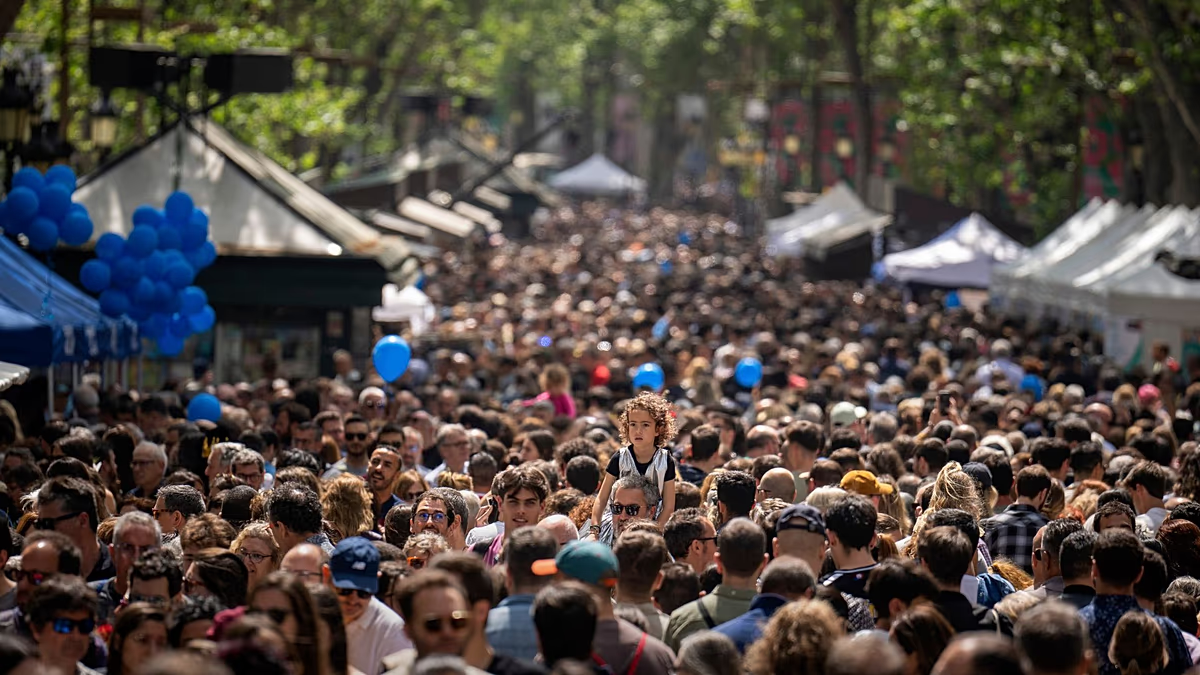
Yet, this boom carried a bittersweet undercurrent, a reminder that unchecked growth can strain the very soul of a place. As tourism rebounded, Spain grappled with accommodation woes, especially in bustling city centers where short-term rentals mushroomed like wildfire, displacing locals and inflating housing costs. Families like the Garcias, a Madrid-based couple with two young children, watched helplessly as their neighborhood transformed into a transient hub, their once-affordable apartment now rented nightly to globetrotters from afar. This friction simmered with resentment; many residents felt alienated, their daily lives overshadowed by crowds clogging streets and driving up essentials. It was a tangible tension—mothers haggling over rising grocery prices while tourists sipped cortados, retirees evicted for profit-led developments, or young professionals priced out of starting homes in tourist hotspots. The global tide wasn’t immune either, contributing to ingrained inequalities; wealthier nations dominated mobility, while destinations like Spain bore the environmental brunt of increased flights and waste. Still, voices like those from the Ministry of Tourism hinted at hope, envisioning a pivot toward sustainable tourism that prized quality experiences over sheer numbers, fostering harmony between visitors and inhabitants.
Looking ahead, the horizon for Spain and global tourism gleams with possibilities, though it demands conscious stewardship to protect its fragile beauty. As we ponder 2026 and beyond, experts foresee a world where digital nomads blend with eco-adventurers, where artificial intelligence personalizes journeys, and where carbon footprints shrink through innovative travel. Families like the Patels, diaspora dreamers from India now settling in Valencia, anticipate cultural exchanges that bridge divides, perhaps through virtual reality tours that let armchair explorers taste Spain’s essence without boarding a plane. Entrepreneurs eye niches in sustainable lodgings—think solar-powered hostels or community-owned resorts—while policymakers weigh bans on excessive rentals to patchwork the social fabric torn by mass influxes. Gloria Guevara’s words linger as a rallying cry: stronger than ever. And for individuals like you and me, this is an invitation to travel mindfully, to soak in Spain’s warmth not just as spectators, but as stewards. By choosing ethical paths—supporting local artisans, respecting rituals, minimizing waste—we become architects of a future where travel nourishes souls without eroding landscapes. In the end, the true record of 2025 isn’t just visitors or euros; it’s the countless moments of connection that remind us of our shared humanity, beckoning us to explore with hearts wide open.