


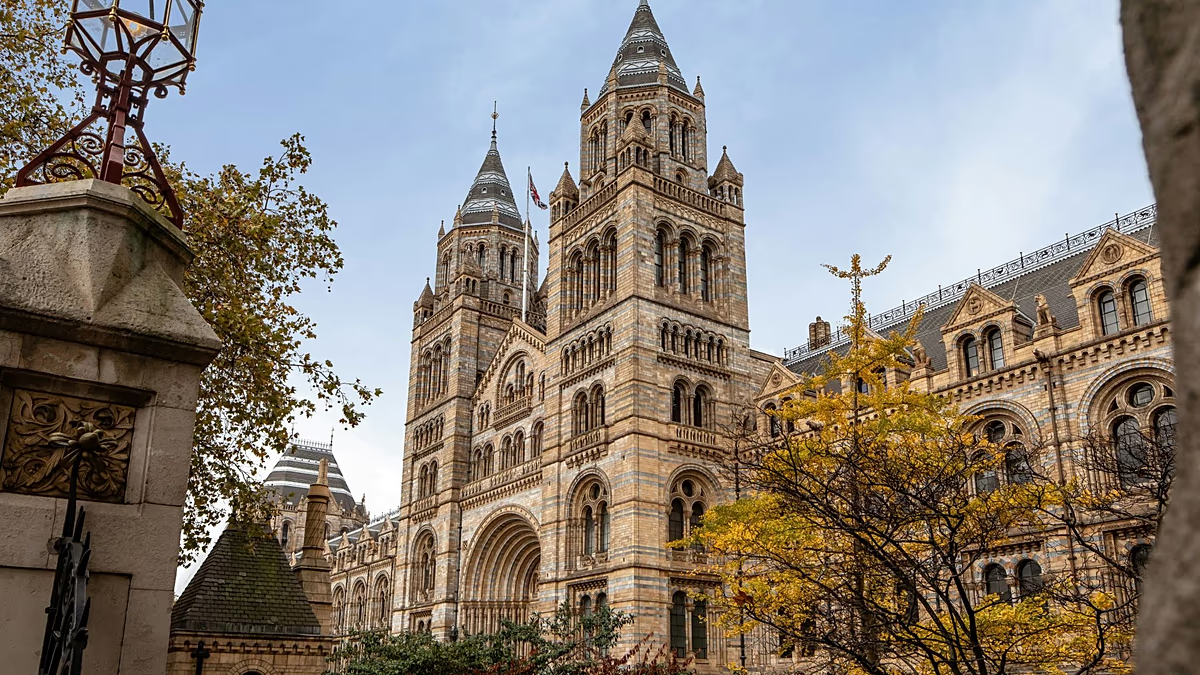
In the bustling year of 2025, the United Kingdom’s tourist industry lit up with unprecedented enthusiasm, drawing millions to its treasure trove of attractions. It was a time when wanderlust seemed to reign supreme, with families, history buffs, and curious minds crisscrossing the nation. At the heart of this phenomenon was London’s Natural History Museum, perched in the elegant South Kensington district, which shattered all expectations by welcoming a staggering 7.1 million visitors over the calendar year. This wasn’t just a number; it was a testament to the allure of discovery and the sheer joy of exploring our planet’s evolutionary marvels. Imagine schoolchildren wide-eyed at dinosaur skeletons, couples stealing moments amidst the fossils, or solo adventurers losing track of time in the grand halls that house wonders from far and wide. For many, a visit here wasn’t merely about ticking off a list; it was about reconnecting with the awe-inspiring narrative of life itself. The museum’s triumph marked it as the undisputed champion of UK tourist spots, leaving others in the dust and setting a new benchmark for what heritage institutions could achieve in an increasingly competitive world. People came from all corners—Europeans seeking respite from routine, Asians chasing dreams of British history, and locals rediscovering their backyard gems. This spike in footfall reflected broader societal shifts, including a post-pandemic hunger for culture and a growing emphasis on sustainable tourism that educated as much as entertained. The air buzzed with excitement, not just in London but across the country, as attractions became hubs of shared human experiences and economic vitality.
What made the Natural History Museum’s 2025 success even more extraordinary was its timing and innovative offerings, turning a historical site into a living, breathing storyteller. For the first time in UK museum history, any single institution had topped the seven-million mark—a feat that spoke volumes about strategic reinvention amid global challenges. Central to this was the unveiling of “Our Story with David Attenborough,” an immersive, state-of-the-art experience that transported visitors through the eons of evolution on Earth. Narrated by the legendary British broadcaster himself through meticulously crafted audio and visuals, the exhibit wasn’t just educational; it was an emotional journey. Families huddled together, parents explaining the wonders to their kids, while elders reminisced about their own childhood fascinations. Guests wandered through recreated landscapes, from primordial oceans teeming with ancient life forms to futuristic glimpses of biodiversity’s future, all designed to foster a deeper understanding of our planet’s fragility. David Attenborough’s voice, warm and authoritative, guided them, emphasizing conservation and the interconnectedness of all living things—a timely message in an era of climate awareness. This wasn’t passive viewing; interactive elements allowed visitors to contribute to global citizen science projects, making everyone feel like a steward of nature. Behind the scenes, the museum’s team had poured heart and soul into accessibility, with multilingual guides, sensory-friendly zones for neurodiverse visitors, and virtual reality headsets for those unable to navigate physically. The result? A record that celebrated human curiosity and the museum’s role in inspiring generations to think bigger about our place in the universe.
The numbers painting this vibrant picture came from the reliable Association of Leading Visitor Attractions (ALVA), which has been meticulously tracking member figures since 2004, providing a data-driven roadmap for the industry. Their 2025 report didn’t just list statistics; it highlighted how these visits ripple through the economy, nurturing jobs and communities far beyond the attractions themselves. Patricia Yates, the dynamic CEO of VisitBritain/VisitEngland, encapsulated the sentiment beautifully: “Every year, millions of people come to Britain drawn by our first-class heritage and cultural attractions, including the world-renowned Natural History Museum, inspired by the mix of history, storytelling, the brilliant exhibitions, and experiences.” She spoke of how these initial draws sparked wider explorations, boosting the nation’s high streets, pubs, hotels, and restaurants. Imagine a family from the Midlands, after a day at the museum, venturing to a nearby café for a traditional tea, chatting animatedly about what they’d learned. Or international tourists, their bags packed with souvenirs, deciding on impromptu road trips to Scotland or Cornwall, injecting life into rural economies. Yates emphasized the holistic impact: ticket sales for attractions like these generated millions in revenue, but the interconnected web of tourism supported artisans, local farmers, and service industries, creating a virtuous cycle. In 2025, with economic recovery in full swing and digital marketing amplifying reach, these attractions became catalysts for recovery, helping the UK bounce back stronger. Visitors weren’t just consumers; they were cultural ambassadors, sharing stories of magical encounters on social media, drawing even more to the islands. This human element— the joy of discovery and the sense of connection—was the true currency, proving that tourism was about hearts as much as wallets.
Shifting the spotlight to the broader leaderboard, the year’s top attractions painted a vivid portrait of eclectic appeal, blending urban sophistication with the charm of quintessentially British landscapes. Securing third place was Windsor Great Park, nestled on the outskirts of London and managed as part of The Crown Estate—a serene escape that stood out as the only non-London entrant in the top 10. Visitors flocked here for languid strolls down The Long Walk, a picturesque four-kilometre avenue flanked by majestic trees leading to the iconic Windsor Castle, where the rhythm of footsteps on gravel mingled with the rustle of leaves. Rumors of glimpsing King Charles added a royal intrigue, turning picnics into potential photo ops, while the expansive deer park offered tranquil moments of wildlife watching, families letting children chase after curious roe deer. It was a place for reflection, where urban dwellers shed stress amid rolling hills and ancient oaks, embodying the UK’s blend of pomp and natural beauty. Trailing closely was the Tate Modern on Southbank, a labyrinth of contemporary art housed in a repurposed power station, drawing art lovers into curated worlds of abstraction and innovation—think interactive installations that sparked debates and selfies. Fifth came The National Gallery in Trafalgar Square, a treasure trove of masterpieces from Van Gogh to Vermeer, where visitors lingered in reverent silence or guided tours, connecting centuries through paint and canvas. These spots weren’t isolated; they thrived on the city’s vibrancy, with nearby Southbank Centre in sixth place hosting vibrant festivals, concerts, and comedy shows that pulsed with creative energy.
Diving deeper into London’s elite museums and galleries, the list continued with elegance and innovation, showcasing the capital’s unrivaled magnetism. Seventh on the podium was the V&A South Kensington, a design utopia bursting with decorative arts that inspired shoppers and trendsetters alike—families wandering orb-clad rooms, pondering the origins of everyday objects from ornate thrones to sleek smartphones. Tenth place belonged to the Science Museum, a hub of wonder for tech enthusiasts and budding inventors, where hands-on exhibits like robotic arms and space simulators ignited imaginations, reminding us of humanity’s quest to explore the unknown. Eighth was Somerset House, a versatile gem in the heart of the Strand that morphed with the seasons: summer feasts of open-air concerts under starlit skies, winter revelries on an iconic ice rink, and year-round exhibitions blending fashion, photography, and culture. It was a venue where laughter echoed during festive markets and quiet contemplation reigned in gallery spaces, making it a democratic playground for all ages. Ninth spot went to the UNESCO-listed Tower of London, steeped in medieval mystique with its crown jewels, yeoman warders (Beefeaters) in their striking uniforms, and tales of kings, executions, and ghosts—visitors shivered with delight at raven roosts and torturous histories, turning time travel into an adrenaline rush. Beyond these, the top 10 encapsulated London’s magnetic pull, where every corner seemed to offer a slice of history or creativity, fostering a sense of belonging for global travelers.
Venturing beyond the metropolis revealed the UK’s diverse tapestry, with six additional attractions cracking the top 25, each weaving unique threads into the nation’s tourist narrative. The National Museum of Scotland claimed 12th place in Edinburgh, a grand repository of artifacts from ancient clans to industrial revolutions, where Viking longships and Enlightenment-era relics sparked wonder and community events. Fifteenth was Edinburgh Castle, perched dramatically atop Castle Rock, a fortress of stone that blended warfare’s grit with scenic vistas, drawing history aficionados to its one o’clock gun salute and ghost tours under misty skies. The Scottish National Gallery, ranking 16th, offered a refined counterpoint with its collection of European masterpieces, serene indoor sanctuaries for art lovers escaping the hustle. Further south, Windsor Castle ranked 23rd, a royal residence echoing with pomp and circumstance, where tourists imagined coronations past while exploring opulent chambers. Nearing the list’s end, 24th place went to RHS Garden Wisley, a verdant paradise in Surrey showcasing horticultural splendors—lilac-scented paths, butterfly houses, and seasonal plant fairs that nurtured green-thumbed families and romantics alike. Finally, 25th was the enigmatic Stonehenge, Wales’ ancient standing stones aligned with celestial mysteries, evoking prehistoric rituals and drawingNew Age seekers for solstice gatherings under vast Wiltshire skies. These outliers highlighted the UK’s balanced appeal, where urban thrills complemented rural retreats, ensuring that 2025 wasn’t just a peak for numbers but a celebration of varied human experiences. Visitors returned home not just with photos, but with stories of connection—to heritage, nature, and one another—reinforcing the immeasurable value of places that make our world feel a little more magical and united. In this record-breaking year, UK tourism emerged stronger, proving that in the face of uncertainties, our shared love for exploration endures, inviting all to join the adventure.