



Paris has always held a special place in my heart, and no matter how often I find myself wandering its charming streets, I can’t help but feel that familiar thrill when the Eiffel Tower comes into view. It’s not just a landmark; it’s a beacon of romance, history, and sheer human ingenuity. Over the years, I’ve made it a point to photograph it from every conceivable angle—standing at the base gazing up, from nearby cafés sipping coffee, or even from boats on the Seine. The camera roll on my phone is practically a shrine to this iron lady, with shots in golden hour sunsets that bathe its lattice structure in warm hues, rainy days where the mist gives it an ethereal glow, and nighttime twilights where its lights twinkle like stars brought down to Earth. And yet, despite all these memories, Paris keeps surprising me, drawing me back with promises of new experiences. This time, the draw is the Vertigo of the Tower, a daring addition that lets visitors step out into the abyss for a heart-pounding perspective I never thought possible. It’s one of those moments that reminds you why travel is so addictive—you think you’ve seen it all, but there’s always something more to discover, something that makes your heart race and your eyes widen. As someone who’s stood on solid ground and admired from afar, crossing this bridge feels like whispering secrets with the tower itself, a private conversation suspended high above the bustling city below.
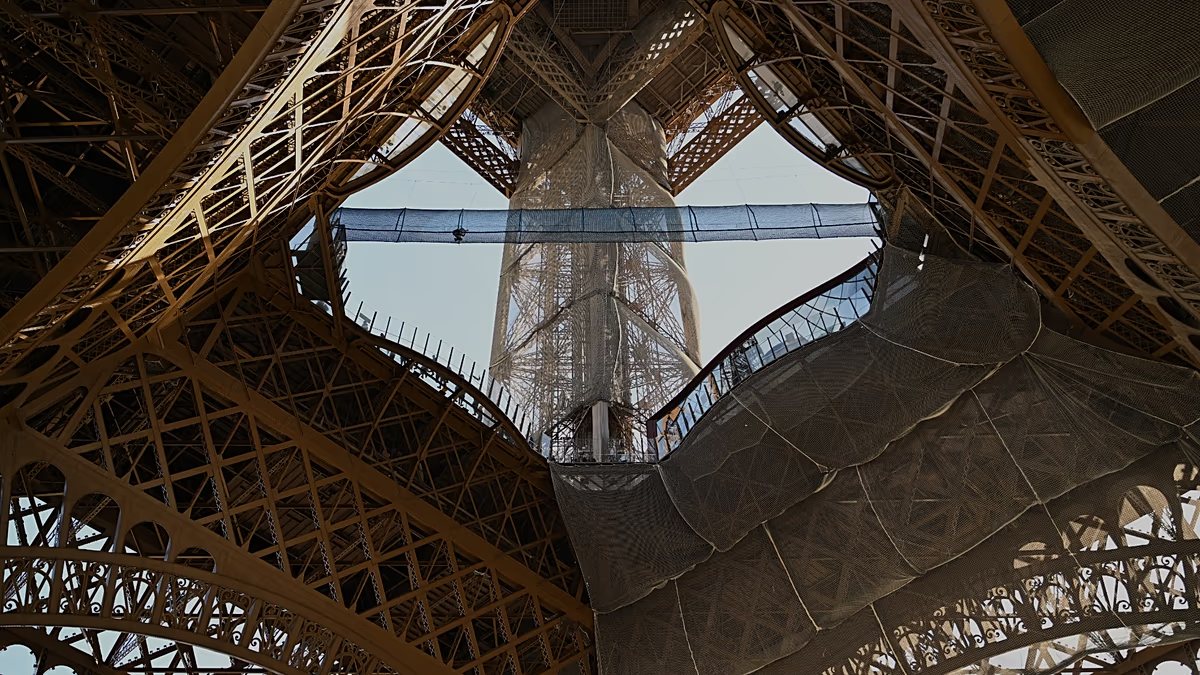
The Vertigo of the Tower is nothing short of breathtaking, a 40-metre suspension bridge stretching between the monument’s east and west pillars, suspended nearly 60 metres off the ground. It’s designed like a delicate web, fully netted with over 25,000 mesh panels that cradle you as you walk, providing both safety and an exhilarating sense of exposure. I imagine the engineering behind it must have been a feat—blending Victorian elegance with modern thrill-seeking. Stepping onto it for the first time, you might feel that initial wobble in your knees, the kind that mixes fear with wonder, like the rush of a rollercoaster without the tracks. From this vantage, the city unfolds beneath you like a living tapestry: the Seine ribboning through, Notre-Dame’s spires in the distance, and people scurrying about like ants in an anthill. It’s intimate yet expansive, a chance to see Paris not as a tourist but as a soul, vibrant and alive. The bridge isn’t some noisy attraction; it’s serene, a suspended walkway where the wind whispers through the netting, and only the occasional distant hum of traffic reminds you of the world below. For anyone who loves a good adventure, this is the spot to get that unique shot—leaning out over the edge, feeling the gentle sway, and capturing the Eiffel Tower from inside its own embrace. It’s humanizing, really, making you feel small yet connected to something grand, a reminder of how far we’ve come in turning dreams into steel and suspense.
Walking the Vertigo of the Tower is entirely free for anyone holding an Eiffel Tower ticket, which feels generous and inclusive, like the city inviting you for an extra hug without extra cost. Access starts from the first floor, where you’re greeted by helpful staff who guide you through the process—scan a QR code right there on your phone, pop in your details, and book a time slot within the next 60 minutes. It’s all very seamless, designed to minimize crowds and maximize the personal experience, since only four people are allowed on the bridge at any one time. I love how this controlled access turns what could be chaotic into something almost meditative, giving each group a turn to wander without distraction. Imagine the anticipation building as you wait your turn, perhaps sharing stories with fellow adventurers—a couple celebrating an anniversary, a group of friends on a spontaneous outing, or solo travelers like me, reflecting on life’s highs and lows. Once on, you pace slowly, taking in the 360-degree views, but mindful of the others—it’s courteous, communal, a shared thrill in a city that thrives on togetherness. The freedom of it all, tied to something so iconic, makes me appreciate how Paris balances grandeur with approachability. No wonder the tower’s team thought this through; it’s not just an add-on, it’s an extension of the magic that draws millions back year after year.
Originally unveiled in a soft launch last year, the Vertigo of the Tower is now entering its second season with gusto, open until May 3rd, just in time to catch the city transitioning from the blush of spring to summer’s warmth. It’s thrilling to think how this feature evolved—from concept to reality, bridging (literally) the gap between tradition and innovation. The bridge adds a layer of dimension to the Eiffel Tower’s legacy, proving that even after more than a century, there’s room for fresh intrigue. I’ve read stories from early testers who described it as a mix of calm reflection and adrenaline rush, perfect for those contemplative moments high up. Seasoned tourists and first-timers alike are buzzing about it online, sharing selfies where gravity seems suspended, transforming the tower into an interactive muse. It’s humanizing because it caters to our innate curiosity, our desire to push boundaries while feeling secure. During my last trip, I wandered the Champs-Élysées and imagined crossing it soon, feeling that excitement build like a child on Christmas morning. The extension into May means warmer days for lingering, perhaps with a picnic at the summit afterward or just strolling under blooming trees, letting the experience settle in. This second season feels like a promise, a way for Paris to say, “Come see me again—I’ve got more to show.”
Diving into the facts, the Eiffel Tower stands as a testament to ambition, built as the dazzling centerpiece for the 1889 World’s Fair, a celebration of progress and artistry. Ironically, it was slated for demolition after just 20 years, deemed too garish by some critics, but public adoration turned it into an eternal symbol instead. Today, it boasts the Guinness World Record for the most visited paid-for monument, welcoming over seven million souls in 2014 alone—a number that’s eye-popping and humbling, reflecting how one structure can unite cultures. I often think about those visitors, each with their own story: families creating lifelong memories, artists sketching the skyline, lovers exchanging vows at its base. The tower isn’t just seen; it’s felt, a landmark that whispers of resilience and vision. Its three viewing platforms add layers of discovery—the first at 57 metres offering cozy intimacy, the second at 116 metres for broader panoramas, and the top at 276 metres where the world shrinks to a postcard view. Each level tells a story: from the bustling first floor amid tourists snapping photos, to the serene second where you can spot Montmartre’s hill in the distance, up to the pinnacle where winds carry echoes of history. It’s almost poetic how these heights mirror life’s journeys—starting ground-level with excitement, ascending to wisdom. Restaurants and bars weave through it all, from casual spots for light bites to the luxurious champagne bar at the top, where toasting with bubbles feels like conquering the clouds.
What strikes me most is the tower’s blend of function and fantasy, a structure that’s both practical and mythical. Those seven million annual visitors turn it into a living pulse, a hub where cultures clash and connect—the chatter of languages, the laughter of children chasing pigeons below, the occasional proposal popping the question amidst the iron beams. The levels aren’t just floors; they’re emotional altitudes, each step up revealing more of yourself and the city. On the first floor, you’re still earthbound, surrounded by the hum of daily life, souvenirs vendors hawking miniatures, popcorn scents mingling with fresh croissants. Climb to the second, and isolation sets in just enough for quiet reflection, perhaps journaling or simply watching sunsets paint Paris gold. But the top—oh, the top—is where dreams loft, 276 metres high, with the Seine curving like a silver necklace and lights flickering on as dusk falls. Additions like the champagne bar make it indulgent, a place to sip elegance while the world spins below. It’s humanizing because it invites not just sightseers but seekers, people like me who find solace in heights. The tower endures, a silent guardian over generations, reminding us that beauty often hides in bold ideas. As I plan my next visit sandals ready for the Vertigo Bridge’s thrill—I know it’ll be as magical as the first time, capturing the essence of what makes Paris, and the Eiffel Tower, eternally captivating.