

Emerging Transport Hubs: A Global Transformation on the Horizon
In a world increasingly defined by connectivity, nations from Eastern Europe to East Africa are undertaking ambitious infrastructure projects that promise to reshape global transportation networks over the coming decade. Poland, strategically positioned at the crossroads of European trade routes, is developing sophisticated multimodal hubs that will integrate rail, road, and air transport systems. These developments reflect not just logistical improvements but Poland’s evolving role as a gateway between Western Europe and emerging markets further east. Polish authorities have embraced this opportunity with forward-thinking urban planning that balances economic growth with sustainability, understanding that tomorrow’s transport centers must accommodate not only increased capacity but also shifting environmental priorities.
Meanwhile, across the Mediterranean and into Africa, Ethiopia stands as a testament to infrastructure development as a catalyst for economic transformation. The country’s ambitious plans include expanding Addis Ababa Bole International Airport into a regional aviation powerhouse and developing integrated rail networks connecting previously isolated regions to global markets. These projects represent more than concrete and steel—they embody Ethiopia’s vision of leapfrogging traditional development pathways to position itself as East Africa’s logistical nerve center. Local communities are already experiencing the early impacts of these developments, from new employment opportunities to improved access to goods and services, though the transition has not been without growing pains as traditional ways of life adapt to rapid modernization.
Throughout Asia, emerging transport hubs are taking shape with breathtaking speed and scale. China’s Belt and Road Initiative continues to spawn massive infrastructure projects, creating new logistics corridors that promise to compress time and space for global trade. In Southeast Asia, countries like Vietnam and Indonesia are developing ports and airports that will serve as crucial links in these new supply chains, reflecting a regional commitment to infrastructure-led development. These projects are often characterized by their dual nature—serving both domestic economic needs while simultaneously positioning these nations within global networks. The human dimension of these developments is profound, as communities that have existed for generations on the periphery of global commerce suddenly find themselves at critical intersections of international trade.
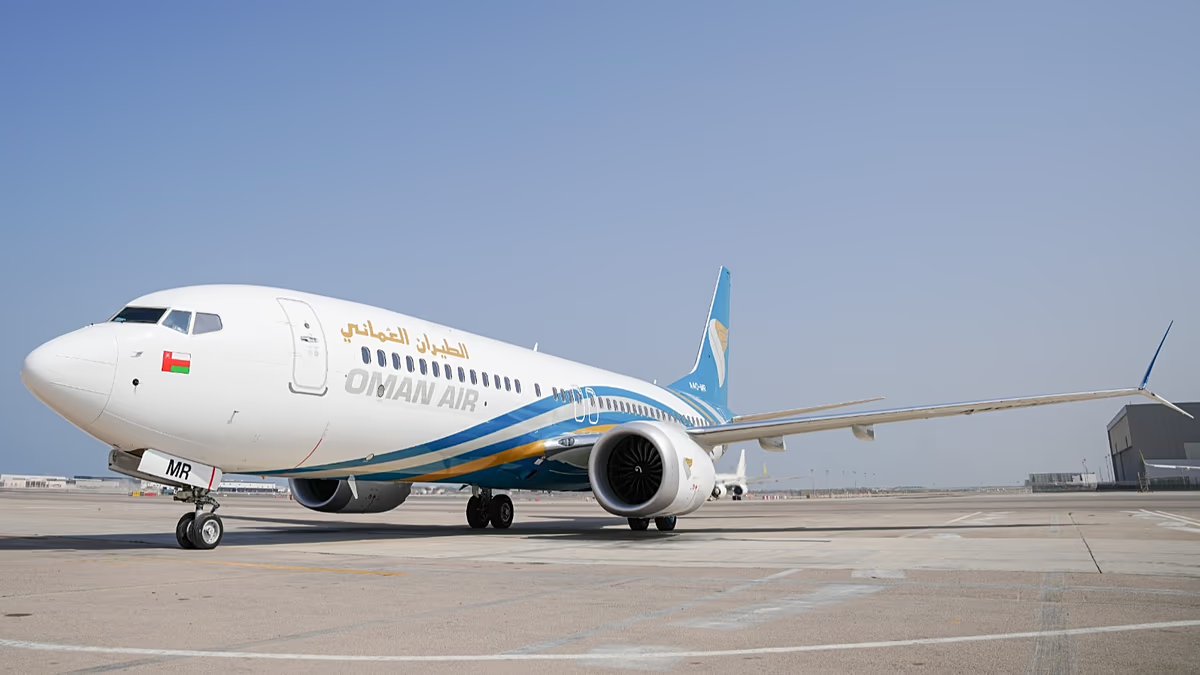
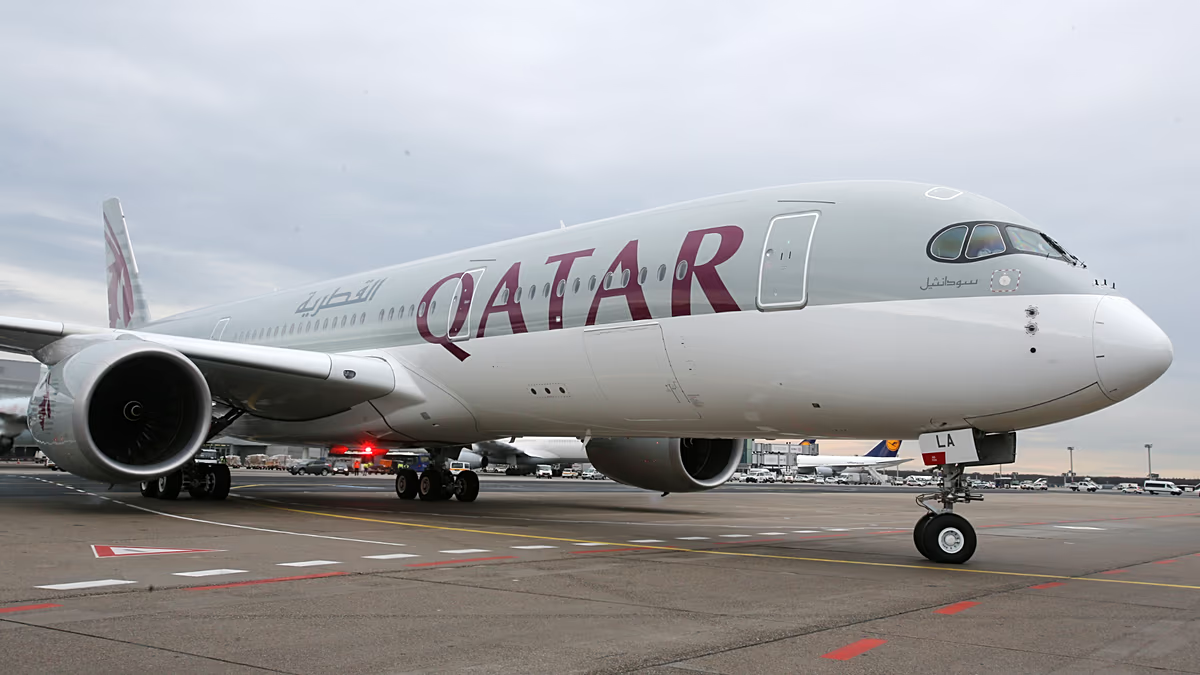
The Middle East, already home to aviation powerhouses like Dubai and Doha, continues its trajectory toward transport preeminence with next-generation facilities designed to handle ever-increasing passenger and cargo volumes. Saudi Arabia’s ambitious NEOM project represents perhaps the most futuristic vision, integrating cutting-edge transportation technologies within a comprehensive urban development framework. These hubs are distinctive in their emphasis on passenger experience and technological innovation, setting new global standards for what transport infrastructure can achieve. Behind these gleaming facilities are the stories of millions of workers, many migrant laborers, whose hands physically construct these monuments to mobility while navigating complex social and economic realities of their own.
In the Americas, both established powers and emerging economies are reimagining transportation infrastructure to meet changing demographic and economic needs. The United States is finally addressing its aging infrastructure through targeted investments in multimodal transportation hubs that connect revitalized urban centers. Further south, countries like Mexico and Brazil are developing strategic ports and logistics centers that leverage their geographic positions to enhance regional trade. These projects often represent collaborations between public authorities and private capital, reflecting evolving models of infrastructure finance and governance. Communities surrounding these developments frequently experience both opportunity and disruption—new jobs and economic activity arrive alongside increased traffic, noise, and fundamental changes to neighborhood character.
What unites these diverse projects across continents is their common recognition that transportation infrastructure represents not merely physical connections but the skeleton of future economic and social development. The most successful emerging transport hubs share key characteristics: integration of multiple transport modes, environmental sustainability, digital connectivity, and responsiveness to human needs. As these facilities take shape over the next decade, they will do more than move people and goods—they will shift the center of gravity in global commerce, create new patterns of urban development, and potentially help address pressing challenges from climate change to economic inequality. For the communities where these hubs emerge, the transformation will be profound and complex, bringing both opportunities and challenges that will require thoughtful management to ensure the benefits of connectivity are widely shared.