







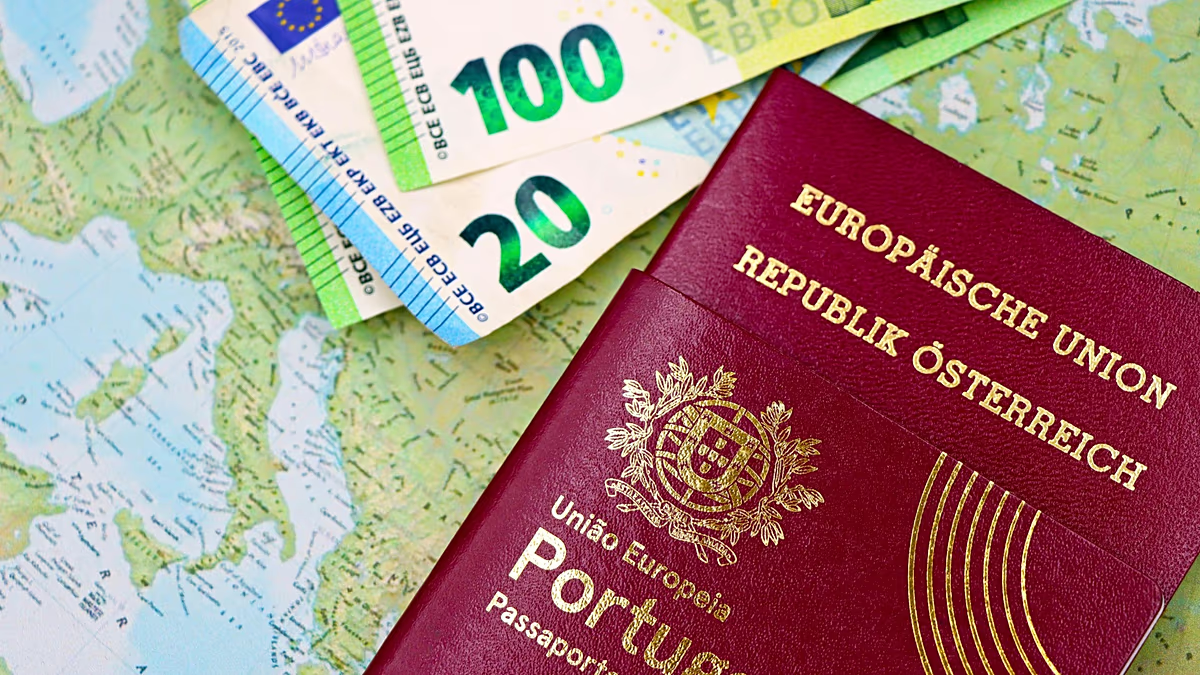
Are you feeling the weight of geopolitical tensions, skyrocketing house prices, and shifting immigration laws back home? Many people are, and that’s why golden visas—those golden tickets for long-term residency in the EU—have become a hot topic in 2026. Picture this: with the average UK home costing around £301,000 (about €347,776), folks are dreaming of greener pastures in Europe where their money might buy more breathing room. But getting into most EU countries isn’t a walk in the park; it’s often a maze of paperwork, fees, and waiting games. Golden visas used to be the easy way, letting wealthy individuals “buy” residency through big investments in property or other assets. You didn’t even have to live there full-time. Yet, times are changing—Spain yanked its property-based golden visa at the end of 2025, and others are following suit. Now, it’s less about flaunting fancy second homes and more about securing safety nets in a volatile world. Nikolas Avgousti from Philippou Law in Cyprus puts it well: “In 2026, families aren’t chasing holiday fantasies anymore. They’re looking for options, freedom, and a solid backup plan against global uncertainty.” For those still eyeing an affordable European escape—under that UK house price average—let’s break down the top spots where you can snag a golden visa without breaking the bank. Think of these as personal stories of real people weighing their options, not just dry facts.
Take Hungary, for instance, which has exploded in popularity lately thanks to its Guest Investor Program (GIP). Imagine a family from a bustling UK city, tired of endless rainy days and high living costs, who decides to invest for a fresh start. For non-EU citizens, it’s as simple as plunking down €250,000 into a Hungarian National Bank-approved real estate fund that invests at least 40% in residential properties. Boom—you get a 10-year residency permit that your spouse and kids can share, and there’s no rule saying you have to live there. It’s like having an emergency passport for Europe, perfect if your life is still centered elsewhere. After three years of maintaining the investment, registering an address, getting health insurance, and hitting 183 days of residence per year, you can apply for permanent residency. Stick around for eight years straight, and citizenship becomes possible. Cost of living? A whopping 40% cheaper than the UK, per Philippou Law. That means your money stretches further for daily life, groceries, or even treating yourself to Budapest’s vibrant culture. No wonder folks are flocking there—it feels like a smarter, more flexible bet in these uncertain times.
Greece, with its endless sunshine and beaches, is another enticing option for golden visa seekers. Let’s say you’re drawn to the Mediterranean vibe, wanting to escape the UK’s gray skies without shelling out a fortune. While most Greek golden visas now demand €400,000 to €800,000—especially in hotspot like Athens—there are two affordable paths starting at €250,000 for five years of residency, renewable indefinitely. One route is restoring historic buildings: you pour money into fixing up a listed gem, completing the work before renewal. The other is converting commercial spaces, like old offices, into homes. In both cases, the property must be legally residential and can’t be used for short-term lets on platforms like Airbnb. The beauty? No size or location limits, and zero stay requirements. Your family—spouse and kids under 21—comes along for the ride. After seven years of continuous residence, maintaining your investment and tax residency, citizenship is on the table. With living costs 30% lower than the UK, it’s easy to imagine a retiree or young professional rediscovering joie de vivre here, sipping ouzo while soaking up the sun.
Cyprus stands out as a beacon of stability, especially if you value a common law system and a crystal-clear property registry—think of it as that trustworthy friend in a sea of unknowns. Picture a business executive weary of constant policy flip-flops elsewhere, opting for Cyprus’ Permanent Residence Program. For €300,000 invested in real estate, funds, or company shares, non-EU citizens get permanent residency covering spouses and dependent kids up to 25. You must pop in once every two years, keep a clean criminal record, and show an annual foreign income of €50,000 (bumping up by €15,000 for a spouse and €10,000 per child). After seven years, citizenship beckons. Avgousti emphasizes the British influence here: “It’s like carrying a piece of England to the Mediterranean, with property security you can count on.” Add 3,400 hours of sunshine and tax perks that cover your lifestyle, and it’s no wonder retirees or entrepreneurs are choosing Cyprus—at 25% cheaper than the UK— for a stress-free, sunny haven.
Italy, with its rich history, mouthwatering food, and stunning landscapes, has emerged as a golden visa darling. Envision an artist or tech innovator investing €250,000 in an Italian innovative startup for a two-year renewable visa—no living there required—and the chance for permanent residency after five years. Your whole clan (spouse, kids, even parents) is included. There are pricier paths too, like €500,000 into an Italian LLC or €1 million for public interest projects in culture or research. With costs 15% lower than the UK’s, it’s a dream for food lovers and history buffs. Citizenship comes after ten years of legal residence, making it a long-haul plan for those who envision blending Italian culture into their lives.
Portugal, once notorious for property-driven golden visas, shifted gears in 2023 to curb speculation, but it still offers appealing options. Picture families enchanted by its walkable vibes and 300+ sunny days, seeking cultural donations. The cheapest route? €250,000 (or €200,000 in low-density areas) to arts projects preserving heritage, granting five years of residency with just one week of annual stays. Previously, Portugal’s visa lured investors with property deals, but now it’s about meaningful contributions. Other paths include €500,000 in funds or R&D. Residency holders can push for citizenship after five years, keeping investments intact. With stunning coastlines, it’s like swapping a hectic life for a laid-back Portuguese rhythm.
Before you dive in for a 2026 golden visa, pause and think like a savvy planner. Golden visas sound magical, but they’re not foolproof—ensure your setup is “grandfathered” in, meaning your rights stick even if rules change. EU regs are evolving fast, so consult experts to protect yourself. Remember, the minimum investment isn’t the endgame; factor in stamp duties, legal checks, and health insurance. Crucially, distinguish legal residency (your visa) from tax residency—a few days on the ground might keep your permit, but months could trigger global tax duties. Research your income sources and family structures early—Portugal requires a legal rep, Cyprus demands income proofs. In a world full of unpredictability, these visas are insurance, but approach with eyes wide open, perhaps chatting with folks who’ve done it. After all, it’s about building a future you love, not rushing into hasty decisions.