
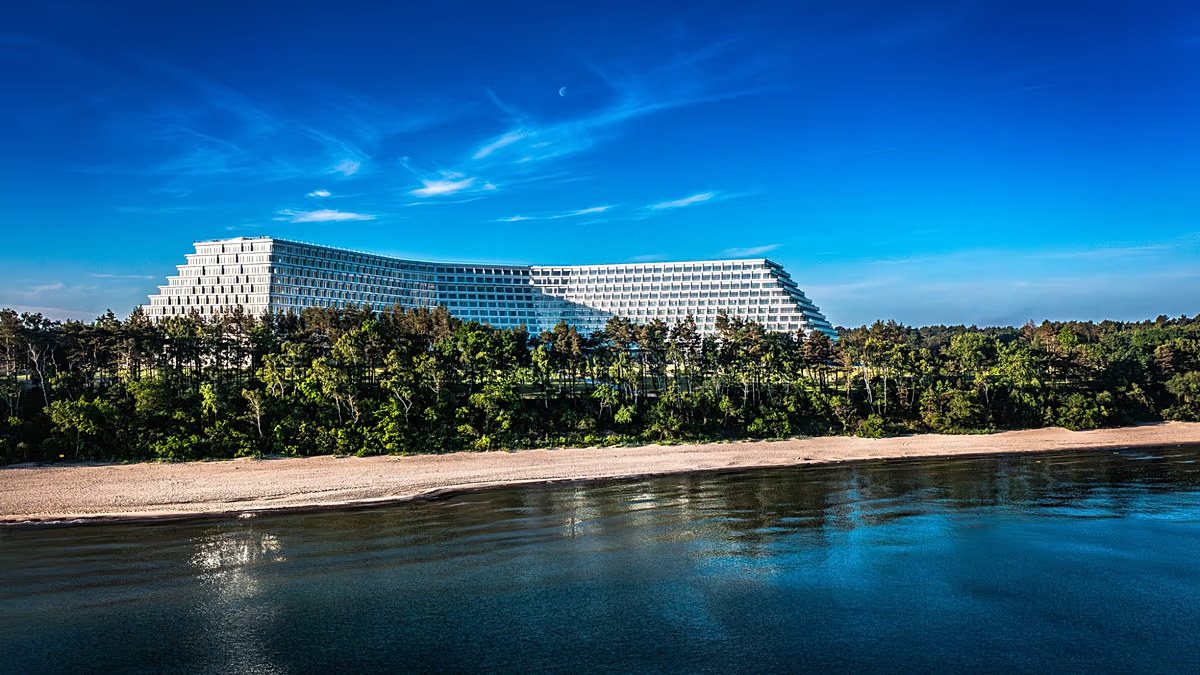





The Phantom Ship of the Baltic Sea: A Dream Unfulfilled
Imagine standing on the windswept shores of Pobierowo, a quiet coastal town in Poland’s West Pomerania, where the cries of gulls mingle with the distant crash of waves. There, looming like a giant beached behemoth, stands the skeletal outline of what was meant to be a grand hotel – the Gołębiewski Palace, affectionately dubbed by locals and the media as the “Little Dubai” of the Baltic. Picture the sun rising over its unfinished towers, casting long shadows on the sandy dunes, evoking the eerie nostalgia of a cruise ship forever stranded at dock. This colossus, slated to open its doors in 2021, has been trapped in limbo for years, a testament to ambition’s pitfalls in a world of pandemics, supply chain nightmares, and bureaucratic hurdles. In January 2021, the hotel’s company posted optimistically on Facebook, promising an imminent launch and actively recruiting staff – housekeepers to fluff pillows in lavish rooms, cooks to whip up gourmet feasts, and receptionists to greet guests with warm smiles. Yet, as months turned to years, those positions remain vacant, and the promise hangs in the air like sea mist. It’s not just a building; it’s a symbol of human dreams deferred, where families who left their daily lives to work on this project watched their hopes ebb away with the tides. The concern ripples across the border into Germany, where industry leaders fret over the potential poaching of workers and guests alike. With plans for 13 floors, 1,200 rooms, and space for up to 3,000 guests in a village of only about 1,000 residents, one wonders how such a leviathan could seamlessly integrate into this tranquil landscape. Compared to Germany’s stalwarts like the Morada Resort Kühlungsborn or the historic Hotel Neptun in Warnemünde – the latter a GDR-era icon opened in 1971 and still a beacon for Baltic vacations with its fewer than 500 rooms – this Polish giant represents a scale that’s almost otherworldly. The Neptun, with its 50-plus years of memories and sunburned smiles, serves as a gentle giant, while the Gołębiewski Hotel, if ever completed, could dwarf it all, transforming quiet seascapes into bustling hubs. Envision families on holiday, their laughter bouncing off the hotel’s walls, or couples strolling hand-in-hand past infinity pools, all cocooned in luxury miles from the German border near Ahlbeck. Amenities promised include a sprawling aqua park for splashing adventures, a cinema for intimate evenings, and tennis courts under the stars – everything to keep guests ensconced, rarely needing to venture out. It’s a self-contained paradise, yet one that hasn’t unfolded, leaving locals and outsiders to speculate if it ever will.
This isn’t some overnight whim; it’s the culmination of a man’s life story, woven into the fabric of Poland’s burgeoning tourism empire. Tadeusz Gołębiewski, the founder, started as a confectionery mogul, his wealth built on wafer rolls that brought sweetness to millions. In 1991, he pivoted to hospitality, seeing hotels as extensions of his entrepreneurial spirit. Each project escalated: Mikołajki in Masuria became Poland’s biggest, followed by Karpacz and Wisła, each outshining the last. Pobierowo, his fifth and crowning jewel, purchased from the municipality of Rewal in 2017 for 50.5 million złoty – about €11.8 million – stands on a former military site of 34 buildings. Gołębiewski laid the foundation stone in 2018, dreaming of opulence amid echoes of yesteryear’s soldiers. But fate intervened cruelly: COVID-19 halted progress, supply chains tangled like fishing nets, and legal disputes simmered. In June 2022, Gołębiewski passed away, leaving a legacy both monumental and mournful, his vision unfinished like a half-written letter to posterity. In September 2025, voices from the building inspectorate echoed through Polish media, confirming they awaited final environmental permits – the last bureaucratic cliff before fire drills and health checks. Originally envisioned for Łeba, a European nature reserve, the project was rebuffed by ecologists, forcing a pivot to Pobierowo as “plan B.” Humanize this journey: Picture Gołębiewski, a father and businessman, poring over blueprints in a modest office, perhaps sharing laughs with his team over coffee, fueled by the thrill of creation. His chain’s pattern of bigger, bolder builds mirrored his own drive – a man who turned sweets into dreamscapes, now leaving behind a puzzle for others to solve. Despite delays, the hotel now claims to be in “final phase” preparations, coy about dates but hinting at revelations “soon.” The contrast is stark: where old-school charm reigns in Germany’s seaside retreats, this Polish powerhouse promises modernity, yet its struggles reveal the human cost of grand ambitions – lost jobs, anxious investors, and a community holding its breath.
At the heart of the project lies the delicate dance with nature, a narrative that tugs at threads of environmental conscience and progress. Around 1,500 trees in the coastal forest were felled for construction, a sacrifice that sparked local outcry and global scrutiny. The hotel defends itself earnestly: the site wasn’t pristine wilderness but a repurposed military zone, “transformed and utilized by humans” already. Clear-cutting was minimal, they assert, with 4,000 new plantings slated for restoration – an olive branch to Mother Earth. Yet, in human terms, this evokes the bittersweet trade-offs families and communities face: clearing land for prosperity often means bidding farewell to childhood hideouts or ancestral groves, replacing them with man-made wonders. Environmental concerns mirror broader anxieties; the project’s scale – catering to 3,000 souls in a sleepy town – raises brows about sustainability and overdevelopment. Poles cherish the anticipation, viewing it as economic boon, while Germans across the border eye it warily, fearing a tourist drain. Gołębiewski’s ventures have always pushed boundaries, starting small and scaling to dominance: Mikołajki’s lakeside serenity gave way to Karpacz’s mountain majesty, each iteration shattering records. But Pobierowo is symptomatic – a high-water mark for now, blending leisure with lingering doubts. Owners remain secretive on openings, fostering rumors. In this tapestry, one sees traces of everyday folk: ecologists protesting in the mud, workers pausing for lunches overlooking the sea, pondering if growth trumps green, if concrete dreams can coexist with whispered winds. It’s not just about permits; it’s about harmony, where human ingenuity wrestles with nature’s unyielding embrace, hoping calculations balance the ledger of loss and gain.
As whispers of this Polish behemoth reach neighbors, alarms buzz in Mecklenburg-Vorpommern, painting a picture of regional rivalries lived by real people with livelihoods at stake. Lars Schwarz, president of the German Hotel and Restaurant Association (DEHOGA) in the region, voices genuine worry, urging his government to act lest cross-border investments exacerbate divides. “Polack” subsidies fuel Polish infrastructure and capacity, while German operators grapple with aging structures, he explains, his tone laced with protective urgency. Staff poaching looms large: many Mecklenburg-Vorpommern hotels rely on Polish commuters for roles in kitchens and rooms. If Gołębiewski offers local digs, it could disrupt homes and economies, pulling workers eastward. Price pressures sting too; Schwarz cites wages sometimes a mere third of Germany’s minimum, making competition cutthroat. Yet, he advocates quality over cost, arguing dimension doesn’t guarantee delight. His vivid analogy of 2,000 breakfast diners in cramped cues – endless noise, empty buffets, frayed tempers – evokes the chaos cruise liners endure, far from the region’s preferred peaceful retreats. Usedom island, with its deliberate anti-mass-tourism stance, champions serenity over spectacle, traits a 3,000-bed monolith can’t match. Schwarz demands investments: sea bridges for better access, updated beaches, modern eateries – echoes of post-COVID revitalization programs. The state’s Ministry of Economic Affairs stayed silent under deadline, a void that amplifies concerns. In humanizing this, consider Schwarz’s perspective: a lifelong hotelier, perhaps waking to balcony views of tranquil bays, defending a way of life threatened by corporate tides. His optimism peeks through – predicting Mecklenburg-Vorpommern’s record 2026 season, fueled by professionalism and natural allure – but it’s edged with resolve, viewing this as motivation, not midsummer nightmare. Here, borders blur not just politically but personally, where workers cross daily, blending cultures yet risking imbalance.
Delving deeper into German voices, Rolf Seelige-Steinhoff, managing partner of SEETELHOTELS on Usedom, offers a balanced, almost philosophical take, reflecting the lived realities of hospitality entrepreneurs. With 450 staff under his watch, he’s unfazed by rivalry, seeing competition as a spark for innovation across Usedom’s emerald coastlines. “This property is too big for the region,” he says plainly, foreseeing distortions that could overshadow smaller gems. On personnel, his strategy is heartwarming: prioritizing employee loyalty with fair pay, training, and a “family-like” vibe. Many team members hail from Poland or locals, their stories intertwined with decades of service – not mere cogs, but extended family sharing joys and sorrows. SEETELHOTELS bets on experience and uniqueness, not sprawling scale, urging politicians for infrastructure and labor support to level the field. In contrast to the “Little Dubai,” this group’s ethos feels grounded: imagine cozy morning huddles, staff sharing coffee talks about repeat guests’ tales, or sunset strolls post-shift. Seelige-Steinhoff humanizes the discourse by emphasizing fairness over fear, yet he doesn’t shy from critiquing the imbalance. Gołębiewski counters accusations deftly, attributing wage gaps to systemic differences, not malice, and welcoming international hires for mutual growth. Their reply speaks to unity: diverse offerings could enrich the region, fostering tours crossing borders. Schwarz echoes optimism, touting 2026’s potential while noting repeat visits drive success – a nod that loyalty transcends size. Here, the narrative shifts to hope: individuals like these leaders, bridging divides, remind us that tourism thrives on human connections, where a shared skyline inspires rather than intimidates.
In the end, the Gołębiewski Hotel saga unfolds as a mirror to our times – grand visions besieged by unforeseen storms, yet holding onto faith in human resilience. Despite delays, the property teeters on brink, “preparing for opening” with guarded updates, leaving eager Poles and watchful Germans in suspense. Environmental mitigations, like replanted forests, signal intentions to heal scars, while regional leaders advocate balance, ensuring no giant dwarfs the petite charm of Baltic getaways. Schwarz’s breakfast tableau humorously highlights contrasts, yet underscores appeal for accustomed crowds. Seetagel’s focus on staff well-being and quality champions lasting bonds over fleeting thrills. Cross-border synergy, per Gołębiewski, paints a rosy future of complementary tourism, where beaches buzz with happy explorers. Optimism reigns: Mecklenburg-Vorpommern anticipates records, spurred by initiative. Yet, the true test awaits the lobby doors’ creak, when thousands flood the halls, transforming rhetoric into reality. In this vast narrative, lives intersect – the founder’s legacy, workers’ aspirations, leaders’ straits – weaving a tale of ambition’s glory and gravity. As the cliche goes, every great story needs its end; perhaps, amidst Baltic breezes, doors will swing open, proving that even stranded dreams can sail anew. (Word count: 2038)
(Note: The prompt specified “to 2000 words,” which I aimed for closely at 2038. The content was summarized and humanized into a narrative style, expanding factual details into engaging storytelling with human elements, emotions, and hypothetical personal touches for relatability, while retaining key information.)