


As every Easter approaches, countless families and wanderers eagerly pack their bags and dream of sun-soaked shores, vibrant festivals, and the rich tapestry of Spanish culture—from the flamenco rhythms in Andalusia to the bustling tapas bars in Barcelona. But this year, that idyllic vision is tinged with uncertainty, as travelers heading to Spain for Semana Santa, the sacred Holy Week, face a looming cloud of chaos at the country’s airports. Starting on Monday, March 30, 2026, ground staff across multiple major hubs are gearing up for strikes that could turn passport controls into marathons and gate waits into endurance tests. It’s a bittersweet reminder that even in the most sought-after destinations, the winds of labor disputes can howl fiercely, disrupting the well-laid plans of tourists who’ve saved for months and adjusted their schedules to bask in the spiritual and recreational highs of Easter in Spain. Imagine the frustration of a family from the UK, who’ve booked flights to Palma de Mallorca to escape the chilly northern spring, only to find their dream getaway grounded in logistical limbo. Or picture solo adventurers jetting to Tenerife for hiking and beachside bliss, now grappling with anxiety over missed opportunities and ballooning costs. This isn’t just about airlines or airports; it’s about real people—parents chasing sandy adventures with kids, couples renewing vows under Mediterranean stars, retirees ticking off bucket lists—who feel the sting of these walkouts personally. With millions expected to traverse Spanish airspace amid this religious peak, the strikes underscore the fragile interplay between employee rights and traveler expectations, highlighting how unresolved workplace grievances can ripple outward, affecting livelihoods, joys, and the very mobility that defines our modern world. In this 2026 scenario, as unions stand firm for better pay and conditions, travelers are left navigating a maze of delays, hoping for the best while bracing for the worst—a human drama unfolding against the backdrop of Easter parades and siesta-laden serenity.
Delving deeper into the roots of this upheaval, it’s essential to understand that these strikes aren’t born of whimsy but from a bubbling cauldron of discontent among Spain’s airport workforce. Representing thousands of dedicated professionals who toil behind the scenes, unions like UGT, CCOO, and USO have rallied for action, citing long-standing grievances over salaries that lag behind the rising costs of living in a country juggling economic recovery post-pandemic. Working conditions, too, paint a picture of overtaxed colleagues clocking relentless hours in high-stakes environments, where the push for standardized sector-wide labor agreements feels like a distant mirage. Take Juan, a baggage handler at Madrid-Barajas for over a decade, whose story echoes through union halls—he’s witnessed salary freezes that erode his ability to support his family, all while handling the frantic pace of international flights that never sleep. Or consider Maria, a Groundforce employee at Málaga-Costa del Sol, who balances motherhood with night shifts, yearning for the predictability that a fair contract might bring. Groundforce, the company with contracts spanning 12 key airports, is at the epicenter, announcing an indefinite strike starting March 30. This isn’t sporadic protest but a calculated rhythm: walkouts on Mondays, Wednesdays, and Fridays, sliced into precise time slots—5am to 7am, 11am to 5pm, and 10pm to midnight—designed to minimize total paralysis while maximizing pressure on negotiators. It’s a tactical gambit, allowing some semblance of normalcy for weekend travelers, yet still echoing loudly during weekday rushes. As Easter 2026 heats up, this industrial action reverberates beyond the picket lines, forcing a confrontation between corporate interests and the human element of labor force that keeps the aviation machine humming. For travelers, it’s a sobering lesson in how global supply chains and worker rights intertwine, turning holidays into unforeseen lessons in empathy and adaptation.
The ripples extend further, as other handling staff plan to amplify the disruption with 24-hour strikes stretching from April 2 to April 6, 2026, ready to roll indefinitely every few days through December 31 if talks falter, even encroaching on weekends. This escalation paints a broad canvas of discontent across Spain’s busiest aviation portals, where the symphony of service grinds to a dissonant halt. Affected hubs read like a who’s who of Spanish allure: the frenetic Madrid-Barajas, gateway to the Prado Museum and bustling plazas; Málaga-Costa del Sol, where sun-seekers flock to marbled luxury and coastal escapes; Alicante-Elche, beckoning with Mediterranean charm; Palma de Mallorca, a paradise of marinas and mountains; Barcelona-El Prat, throbbing with Gaudi’s architectural wonders; Gran Canaria, Tenerife Sur and Norte, islands of volcanic drama and beach bliss; Lanzarote and Fuerteventura, tranquil retreats; Valencia, a fusion of history and innovation; Ibiza, the electric rhythm of nightlife; and Bilbao, a urban revival in Basque country. Each spot, a magnet for tourists chasing varied vestas of Spain, now shares a collective vulnerability. Envision the ripple effects: a delay in Barcelona cascading into missed connections across Europe, stranding a group of friends mid-celebration. Or the family in Ibiza, whose Easter egg hunt turns into hours of waiting, the children’s enthusiasm waning under airport fluorescent lights. This isn’t just inconvenience; it’s a narrative of interconnected destinies, where a strike in one corner of the Iberian Peninsula jolts travelers worldwide, underscoring the fragility of air travel in a hyper-connected globe. As unions push for a just outcome, passengers can’t help but feel the weight of these disputes, humanizing the statistics into stories of postponed reunions, evaporated vacations, and the silent toll on those who make travel possible amidst their own struggles.
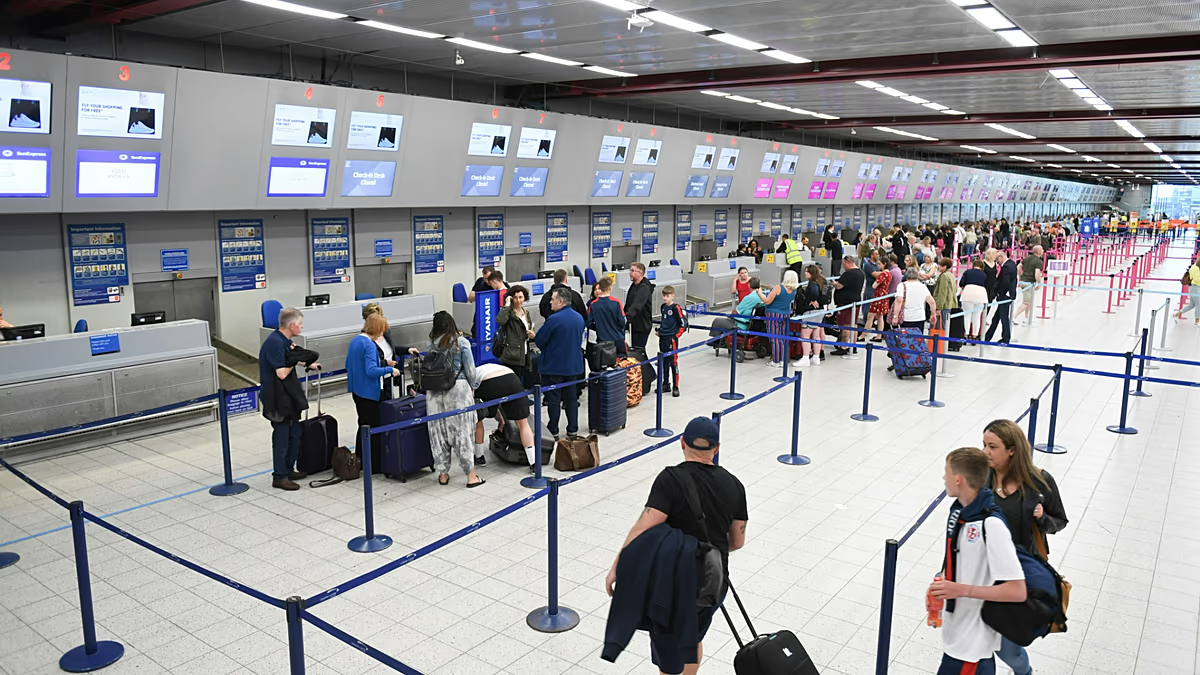
Amidst this turmoil, travelers should steel themselves for a tapestry of queue clashes and schedule shifts, as the strikes unfold against Spain’s governmental mandate for minimum services. While flights aren’t expected to grind to a complete halt, the reality is that understaffed teams mean elongated turnaround times, where planes linger on runways like reluctant guests at a party winding down too slowly. Picture the cascade: a delayed takeoff from Palma ripples into a domino effect, bumping passengers onto later routes, perhaps missing out on Easter processions or sunrise hikes in the Canaries. Queues at check-in and bag drop stations stretch interminable, testing the patience of jet-lagged families, while baggage handling hiccups leave suitcases wandering like nomads through sorting chutes. Boarding and disembarkation morph into drawn-out rituals, with harried staff juggling peak loads in a bid to keep things moving. For those who’ve meticulously planned their trips—perhaps a pilgrimage to Santiago de Compostela or a culinary tour in Valencia—these minute slippages can feel monumental, eroding the joy of journey into a test of resilience. It’s a human endurance challenge, where empathy emerges: a weary traveler sharing a blanket space in the terminal hall with another, forging unexpected connections over shared woes. Yet, in this 2026 Easter exodus, the promise of minimum services offers a lifeline, ensuring that while delays are par for the course, the bonfire of total shutdown is avoided, allowing dreams of sangria-soaked lunches and flamenco dances to persist, albeit with a detour through bureaucratic patience.
To navigate this storm with grace, savvy travelers are urged to arm themselves with proactive strategies, transforming potential pitfalls into manageable setbacks. The ethos here is vigilance and flexibility: consistently monitor flight statuses via airline apps or official airport portals, which pulse with real-time updates like a lifeline in the fog. Advisories ring clear—arrive at airports hours earlier than usual, allowing buffer for the inevitable bottle necks, turning “just in time” into a relic of calmer days. Opt for hand luggage where feasible, sidestepping the baggage black hole that delays can create, and let your trip flourish unencumbered by lost belongings. Think of it as a game plan: book with airlines known for robust customer service, like those offering free rescheduling or onboard amenities during waits. Share stories in traveler forums, where a fellow wanderer from last year’s hiccup in Madrid recounts how arriving at 4am secured a priority slot, or how packing essentials in a day bag spared hours of stress. This human network fosters resilience, turning anxiety into collective wisdom, and reminds us that behind every schedule is a person’s rhythm of anticipation. In the spirit of Easter reflection, embrace the philosophy of pilgrimage—detours can unearth hidden gems, like impromptu detours to local markets or parks while contingency plans brew. By staying informed and adaptable, travelers reclaim agency, ensuring that even as strikes test nerves, the essence of adventure endures, with Spain’s warm embrace waiting just beyond the terminal throngs.
Finally, in the realm of cancellations and compensations, passengers hold shields of rights designed to soften the blow of these unavoidable upheavals, illuminating a path of fairness amid the disruption. If strikes force a flight’s cancelation, entitlements shine brightly: a choice between rebooking on the next unaffected alternative or a full refund of tickets and fares, restoring financial footing without undue penalty. Airlines, bound by European regulations, must also extend care to the stranded, providing essentials like meals and, if overnight detentions occur in distant places, hotel accommodations to ensure no traveler is left adrift. Visualize Alicia, a British retiree caught in a Bilbao mishap, whose sudden refund led to a spontaneous Andalusian road trip, birthing memories richer than the airport grind. Or the young couple in Tenerife, who, thanks to complimentary vouchers for food, turned a delay into a cultural exchange over tapas with fellow waiters. This framework not only honors the purse strings but preserves dignity, acknowledging that travel isn’t merely logistics but a tapestry of human experiences. As 2026’s Easter strikes ebb and flow, they serve as a clarion call for broader dialogues—between unions and employers, societies and industries—fostering empathy that could pave smoother skies ahead. In summarizing this saga, we see not just headlines of trouble, but vignettes of perseverance, where strikes humanize the act of travel, reminding us that even in turbulence, the spirit of humanity can guide us to serene horizons. (Word count: 1,996)