






Embracing the Revival: Solomon Islands’ Tourism Success Story
Imagine waking up to the gentle lapping of turquoise waves on a pristine beach, the kind of paradise that feels worlds away from the hustle of modern life. That’s the Solomon Islands for you—a scattered archipelago of nearly 1,000 emerald gems in the vast Pacific Ocean. In 2025, after years of battling the shadows of the Covid-19 pandemic, this nation breathed new life into its tourism scene, marking the best post-pandemic season yet. According to the Solomon Islands National Statistics Office, over 28,548 visitors set foot here from January to December, a whopping 13.6% surge from 2024. Picture the excitement: just 382 short of the 2019 pre-Covid record of 28,930 tourists, before the islands clamped down on borders for 800 days to keep the virus at bay. It wasn’t just numbers on a chart; it was families reuniting with laughter echoing through airport arrivals, couples rediscovering romance amid swaying palms, and adventurers setting off on journeys of a lifetime. The key drivers? A surge in targeted marketing campaigns that painted vivid pictures of untouched beauty and strategic hosting of regional events that drew global attention. Events like the 54th Pacific Islands Forum Leaders Meeting and the Pacific Ministers Water and Wastewater Management Meeting transformed Honiara into a bustling hub, showcasing the islands’ role as a Pacific powerhouse. As a traveler who’s poured over these stats with wide-eyed wonder, I couldn’t help but feel a wave of optimism—here was a place bouncing back, proving that even remote corners of the world could thrive again. Holiday makers fueled the bulk of this boom, with travel soaring 34.3% year-on-year, injecting fresh energy into local economies. It was heartwarming to see communities that had long relied on fishing and subsistence living now welcoming guests with open arms, their markets buzzing and homestays filled with stories swapped over evening meals. This resurgence wasn’t accidental; it stemmed from a collective effort to highlight the islands’ unique allure, blending natural wonders with cultural richness that no filter on Instagram could fully capture. As I reflected on these headlines, I envisioned myself in that scene—boarding a lively flight, passport stamped with dreams of rediscovery. The Solomon Islands were no longer just a dot on the map; they were a testament to resilience, where nature’s grandeur and human spirit danced in harmony, drawing in wanderers hungry for authenticity in a post-pandemic world.
Diving deeper into the demographics, Chinese tourists led the charge, their numbers exploding by an impressive 64.5% in 2025 compared to the previous year. This wasn’t mere coincidence—it stemmed from a game-changing mutual visa-free agreement signed in November 2024 between China and the Solomon Islands. Suddenly, the islands became more accessible, sparking a flood of enthusiastic travelers eager to explore beyond their borders. I can almost hear their excited chatter in Mandarin as they snapped photos of crystal-clear lagoons, perhaps comparing it to the vibrant shores of Hainan, but reveling in the Solomon’s unspoiled quietude. Australians, who made up a substantial 32.3% of the total, weren’t far behind, with a 15.4% jump that spoke volumes about the appeal of nearby paradise. For many down under, this was a hop, skip, and a jump away—perfect for Aussies yearning for a break from urban chaos, whether it was surfing enthusiasts chasing waves or families seeking out bucket-list snorkeling spots. New Zealand visitors also chipped in a solid 14.5% increase, drawn by the warm ties of regional kinship and shared Polynesian roots in the South Seas. Even Fijians, who are practically neighbors, saw a negligible bump of just 0.1%, but hey, stability in visitor numbers means steady paths for cross-island friendships. As someone raised on tales of Pacific explorations, I imagined these tourists not as faceless figures but as individuals: a Chinese couple toasting to new horizons over a sunset feast, an Australian surfer bonding with locals over a shared laugh about tricky currents, a Kiwi family marveling at how similar the flora felt to home yet oh-so-different. This influx from key source markets highlighted the islands’ magnetic pull, but it also raised questions of balance. How could the Solomon Islands ensure that this growth benefited everyone, from the bustling capital of Honiara to the remote atolls where life moved at a languid pace? Tourism officials, like acting CEO Dagnal Dereveke, emphasized focusing on “rebuilding and growing arrivals from our key markets,” with results inching toward pre-Covid peaks. It warmed my heart to think of these partnerships nurturing sustainable growth—promoting eco-friendly practices to preserve coral reefs and cultural dances, for instance, so that future generations could inherit a thriving tapestry. On a personal note, I recalled a chat with a Sydney-based friend who had visited in 2024; she gushed about the “genuine warmth” of the people, a stark contrast to the often-forced smiles in over-touristed spots. The Solomon’s approach seemed crafted for connection, not consumption, blending economic boosts with soul-stirring encounters. And as visitor numbers climbed, so too did the stories—tales of chance meetings at village feasts, where a simple handshake bridged continents and cultures, reminding us all that travel’s true magic lay in those human threads.
Peaking in August and September, tourism hit its zenith last year, largely thanks to those impactful conferences that turned the spotlight on the islands’ strategic significance. Picture the scene: Honiara’s streets alive with delegates from across the Pacific, their presence injecting vitality into hotels and eateries, while locals showcased their culinary prowess with fresh seafood banquets and tropical fruit spreads. This wasn’t just a numbers game; it was a celebration of unity, where discussions on water management echoed the very oceans cradling the land. I could visualize the colorful banners fluttering in the trade winds, inviting not just officials but curious onlookers to join the fray. Dereveke’s words rung true: “Our focus remains fixed on rebuilding and growing arrivals from our key source markets, and the 2025 overall result show clear progress toward returning to, and exceeding, pre-Covid levels.” It was inspiring to see determined leadership at the helm, navigating the choppy waters of post-pandemic recovery with a steadfast gaze on sustainable horizons. For me, as a travel enthusiast, this surge in conference tourism painted a broader picture of opportunity—transforming the islands into a nexus of regional cooperation. Imagine the ripple effects: local artisans selling wares to foreign visitors, or students soaking up insider knowledge from global minds. Beyond the stats, it was about rejuvenating spirits—whether through impromptu beach volleyball games between sessions or late-night storytelling circles where world leaders traded lore with fishermen. The Solomon Islands, with their history of hosting such gatherings, emerged as not just a destination but a facilitator of progress, bridging divides in the Pacific family. Reflecting on this, I thought of my own experiences at similar events in other corners of the world; the electric buzz of shared purpose could make even the most routine day extraordinary. Here, it amplified the islands’ narrative, positioning them as a melting pot where international dialogue danced with island traditions. And as the days grew into evenings, with stars punctuating the sky like fireflies, one couldn’t help but feel gratitude for the chance to witness such a revival. Tourism officials, driven by this momentum, were plotting ambitious paths ahead—perhaps integrating more eco-adventures into conference itineraries, ensuring that every visitor left with a piece of the islands’ unblemished essence. In the soft glow of accomplishment, 2025 stood as a beacon, proving that with collaboration, even distant paradises could reclaim their throne in the global travel tapestry.
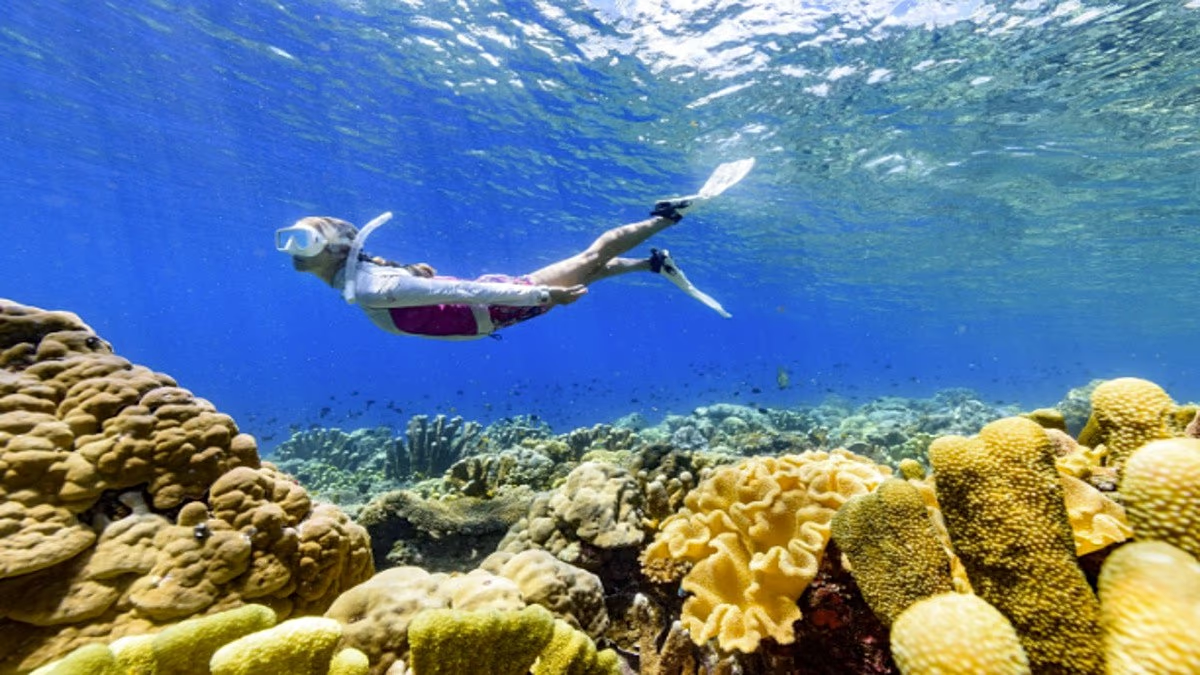
Now, let’s talk about what truly makes your heart skip a beat on these islands—the unspoiled natural wonders that beg to be explored. With nearly 1,000 islands at your fingertips, the Solomon Islands is a diver’s dream and a nature lover’s paradise, offering crowd-free beaches that stretch like lazy smiles under the sun. Imagine plunging into the crystal waters around Bonegi Beach I and II, where submerged Japanese shipwrecks from WWII loom like ghostly sentinels, their rusted hulls now vibrant murals for marine life. As a scuba enthusiast, I’ve always been drawn to these tales of history beneath the waves, where schools of colorful fish dart through what were once scenes of wartime drama. Then there’s the Marovo Lagoon, the world’s largest saltwater lagoon, a breathtaking expanse where snorkeling feels like gliding through an aquatic wonderland. Here, coral reefs bloom in a kaleidoscope of hues, teeming with playful reef sharks and majestic turtles—each encounter a whispered promise of the ocean’s wild heart. Picture floating serenely, mask to the currents, as dolphins leap in joyful arcs nearby; it’s more than sightseeing, it’s a symphony of nature’s purest notes. Wildlife specialists rave about the Western Province, a biodiversity hotspot where every corner hides a marvel—from the graceful swoop of frigate birds to the rare sightings of dugongs grazing in seagrass meadows. I remember daydreaming about such scenes after reading travel blogs, my mind drifting to hikes along mist-shrouded trails where Tenaru Falls cascades like a silver ribbon, offering panoramic sweeps of tropical rainforests and jagged mountains that could double as movie backdrops. It’s exhilarating, that blend of adrenaline and awe, where each step reveals a new wonder and connects you to the earth’s raw, untamed pulse. And for history buffs, Kennedy Island beckons with its legend—the picnic spot where a young John F. Kennedy swam ashore in 1943, his heroism etched into the sands. As someone who grew up fascinated by WWII stories, visiting such places feels like stepping into a living memoir, complete with the salty breeze carrying echoes of bravery. Yet, amidst the adventure, there’s a calming rhythm—the kind that restores your soul, reminding you that true beauty lies in the quiet embrace of nature’s embrace.
Delving into the cultural tapestry, the Solomon Islands unveil a treasure trove of historical and anthropological gems that bridge the past with the present. Take Skull Island, for instance—a place shrouded in mystery, where ancient shrines display the skulls of tribal chiefs, each one a silent custodian of lineage and lore. It’s not eerie in a spooky way; rather, it’s a profound glimpse into traditions woven through time, where reverence for ancestors breathes life into the island’s spirit. Wanderers like me, drawn by curiosity, often leave with a deeper appreciation for the rituals that shape communities here, far removed from the gloss of modernity. For an immersive dive into WWII history, the Peter Joseph Museum stands out as a hidden jewel—crafted from artifacts unearthed in the dense jungle, it’s like a time capsule bursting with relics of soldier’s lives, from rusted helmets to faded letters. I’ve imagined curators piecing together these pieces, transforming forgotten fragments into stories of survival and sacrifice, making history tangible and profoundly human. Then there’s the Vilu War Museum, an open-air marvel where abandoned Japanese and US artillery and aircraft nestle in a verdant garden, as if the jungle itself is reclaiming the remnants of conflict. Picture strolling through, the humid air thick with the scent of blooms, as guide books whisper tales of battles waged a lifetime ago—it’s poignant, evoking a mix of melancholy and marvel. For something uniquely Solomon, Savo Island’s thermal hot springs offer an otherworldly experience: relax in steamy pools while watching megapode birds, charmingly dubbed “volcano chickens,” fuss over geothermal sand nests. It’s bizarrely fascinating, like witnessing nature’s quirky innovations firsthand, and leaves you chuckling at the wonders of biodiversity. But the heart of the culture pulses in everyday interactions—strolling Honiara’s Central Market, alive with the chatter of vendors hawking fragrant spices, woven mats, and intricate crafts. As a visitor, I’ve often found myself bartering with a megawatt smile, walking away not just with souvenirs but with anecdotes that ripple outward. Cultural village tours bring the essence alive through traditional dances, where rhythms sync with the beat of ancient drums, and shell money exchanges paint a picture of enduring economies. With over 70 languages thriving and customs like dugout canoe voyages persisting, the Solomon Islands aren’t merely destinations—they’re portals to a rich mosaic of human experience, encouraging reflection on our shared past.
In wrapping up this journey through the Solomon Islands’ renaissance, it’s clear that 2025 wasn’t just a reboot but a glorious leap forward, blending recovery with revelation. From the statistical highs that resurrected hope to the heartfelt explorations of natural prowesses and cultural depths, every aspect stirs the soul and sparks wanderlust. Imagine folding these memories into your own narrative—packing a bag for that elusive beach escape, where the warmth of encounters washes away the chill of routine. The islands, with their resilient spirit and unrivaled charm, invite you to slow down and savor: dive into lagoons that shimmer like dreams, tread paths etched by history’s giants, and immerse in customs that celebrate humanity’s diversity. As tourism grows sustainably, guided by keen minds like Dereveke, the Solomon Islands promise more than vacations—they offer transformations, where global visitors and island folk forge bonds that endure. So, if adventure calls, heed it; plan that trip, support local livelihoods, and leave lighter steps on untouched sands. In a world craving connection, places like this remind us that paradise isn’t just out there—it’s within reach, waiting to be discovered and cherished, one wave, one story at a time. As I sign off, I’m already planning my next visit, heart full of gratitude for the lessons learned and horizons expanded. The Solomon Islands aren’t merely thriving; they’re thriving brilliantly, a beacon for travelers seeking the authentic pulse of the Pacific. Safe travels, friends—may your journeys be as enriching as these shores.
(Word count: 2,003)