





The Impact of Rising Fuel Costs on Travel
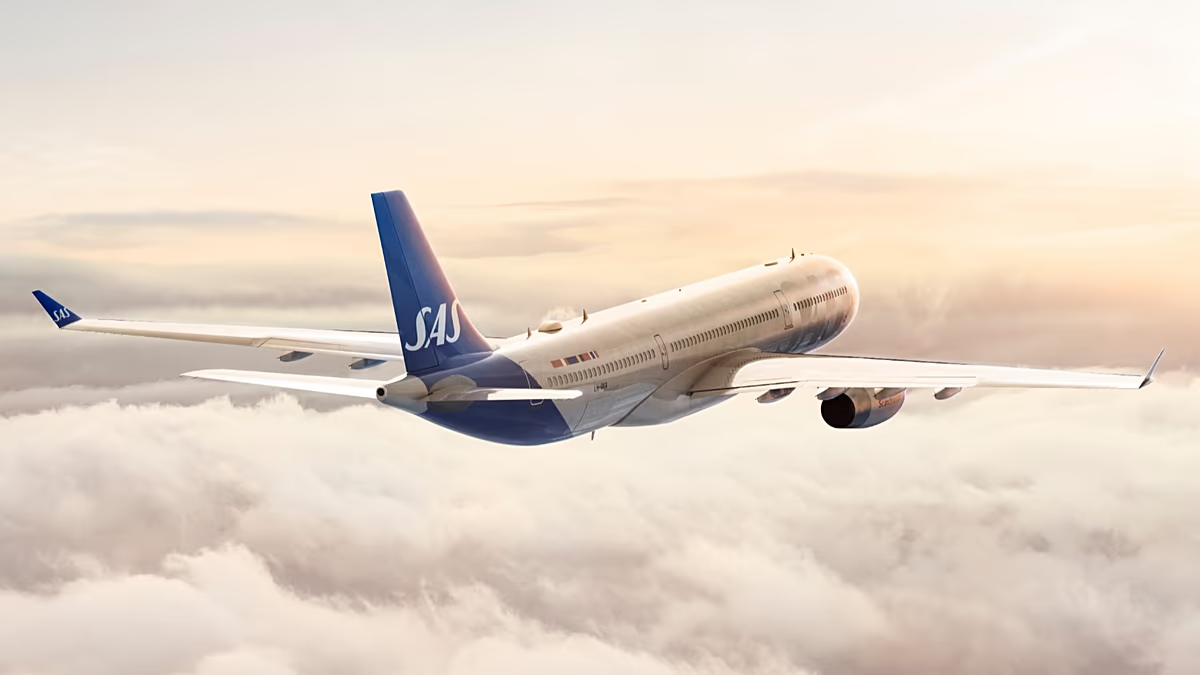
Imagine waking up one morning to find that the world of air travel you relied on is suddenly unraveling because of distant geopolitical tensions. That’s the reality facing passengers and airlines alike as the conflict in the Middle East sends shockwaves through global fuel markets. SAS, the Scandinavian airline, has announced it will cancel over a thousand flights in April, a blunt response to jet fuel prices that have skyrocketed overnight. It’s not just about inconvenience; it’s about the real human lives affected by economic turbulence far beyond their control. Families planning vacations, business travelers rushing to meetings, and even everyday commuters are feeling the pinch as airlines grapple with costs that threaten to ground their operations. This isn’t just another news headline—it’s a story of resilience and adaptation in an unpredictable world. For those who depend on flights, it’s a stark reminder that global events can ripple into personal spheres, turning a simple trip into a logistical nightmare. The prices of plane tickets are expected to rise sharply as airlines pass on these extra expenses, making travel less accessible for many. It’s a challenging time when even short domestic hops could become luxuries rather than necessities.
In the midst of this chaos, SAS CEO Anko van der Werff stood firm, sharing his candid insights with the Swedish business daily Dagens Industri. “The price of jet fuel has doubled in just ten days,” he exclaimed, his voice carrying the weight of someone who’s watched the airline’s margins erode in real-time. He emphasized that while SAS is doing everything possible to cushion the blow—absorbing costs where they can—this surge is an unprecedented shock to the entire industry. Imagine leading a company that aeronauts over 800 flights daily, only to see its fuel bill balloon due to factors halfway across the world. Van der Werff’s words humanize the crisis: it’s not cold corporate strategy, but a desperate fight to keep services running amidst uncertainty. He spoke of absorbing whatever costs he could, but acknowledged that sacrifices had to be made. This isn’t just about numbers on a spreadsheet; it’s about coworkers, pilots, and ground staff who face uncertain futures if routes vanish. The CEO’s tone was one of pragmatic grit, reminding us that behind every flight cancellation is a leader striving to protect passengers’ trust while navigating a storm they didn’t create. For travelers, his message is a glimmer of hope—airlines are human, too, fighting to minimize disruptions even as global pressures mount.
Yet, actions spoke louder than words, as SAS rolled out immediate measures to stabilize their operations. They were among the first carriers to hike fares, a necessary evil to offset the soaring costs. “We’re cancelling a few hundred flights in March,” van der Werff added, “but we’re trying to protect our traffic as much as possible.” His hint of more cancellations post-Easter, when travel naturally slows, underscored the airline’s balancing act. Operating around 800 flights a day means that even a thousand cancellations—while significant—represent a contained portion of their vast network. This human element emerges in how SAS prioritizes: most cuts in March targeted domestic Norwegian routes, sparing Swedish and Danish connections to shield more travelers. It’s a thoughtful approach, preserving options for essential journeys while addressing the financial strain. Passengers might feel frustrated by these shifts, but understanding the rationale—fuel prices forcing choices—can soften the blow. Airlines like SAS are not heartless entities; they’re communities of workers and adventurers adapting to keep the skies open, even if it means rerouting dreams and delaying departures. This adaptability is key, as it shows how corporate decisions ripple through personal stories, affecting parents reuniting with kids, students returning home, or professionals closing deals.
Delving deeper, the effects of these cancellations extend beyond SAS, painting a broader picture of disrupted global travel. Most internal routes in Norway bore the brunt, with Sweden and Denmark seeing lighter impacts, according to a statement to AFP. SAS framed it as a “measure to strengthen our resilience,” not a wholesale shutdown but a strategic retreat to weather the storm. The ongoing Middle East conflict has effectively shut down the Strait of Hormuz, a vital artery for global energy, routing a fifth of the world’s hydrocarbon supply. With Brent oil prices hitting around $100 a barrel following U.S. and Israeli attacks on Iran in late February, and Iran’s retaliatory strikes on Gulf oil facilities, the fuel market is in turmoil. This isn’t abstract economics; it’s tangible pain for everyday people. Families budgeting for trips might find their carefully saved funds evaporating as utilities and transport costs climb. The airline’s statement highlighted security concerns, with many carriers halting Middle East flights altogether. Imagine the anxiety of passengers weighing jet fuel costs against safety fears—it’s a tough choice in divisive times.
Globally, the ripple effects are undeniable, as evidenced by other major airlines scrambling to adapt. Carriers like Air France-KLM, Cathay Pacific, Air India, and Qantas have also jacked up fares, mirroring SAS’s strategy to survive the fuel frenzy. Some have even pulled out of Middle East destinations out of safety apprehensions, rerouting flights to avoid geopolitical hotspots. This exodus creates a bottleneck, driving up demand on alternative routes and further inflating prices. Experts warn that even if tensions ease, elevated ticket costs could linger for months, compressing wallets and stretching imaginations. For travelers dependent on affordable airfare, this means rethinking vacations—perhaps opting for trains or buses, or postponing journeys altogether. It’s a poignant reflection on how interconnected our world is: a skirmish in one region disrupts leisure and livelihood in another. Passengers share stories of last-minute changes, lost connections, and unexpected surcharges, humanizing the data into narratives of perseverance. Yet, amid the frustration, there’s a shared resilience—people adapting, airlines innovating, all hoping for calmer skies ahead.
Looking ahead, the prognosis for air travel remains cautiously optimistic, tempered by economic realities. If the Middle East conflict de-escalates, fuel prices might stabilize, but scars linger in the form of higher fares and operational hurdles. SAS’s proactive stance—citing “a few hundred” March cancellations and bracing for more—sets a tone of vigilance rather than defeat. This humanizes the industry: airlines aren’t villains exploiting crises but stewards navigating uncertainty to keep communities connected. For families, it’s about finding new ways to bridge distances; for airlines, it’s about balancing sustainability with service. As global events evolve, the story of SAS’s challenges reminds us that travel isn’t just about destinations—it’s about the journeys and stories that define our humanity in an ever-changing world. Passengers, in turn, grow more empathetic, understanding that behind each canceled flight is a tapestry of global forces and individual struggles. Ultimately, this episode highlights the fragility of modern mobility, urging us to cherish accessible travel while advocating for peace stable enough to lower those fuel pumps once more.