


Ryanair Threatens Mass Route Cuts in Europe as Tax Battle Intensifies
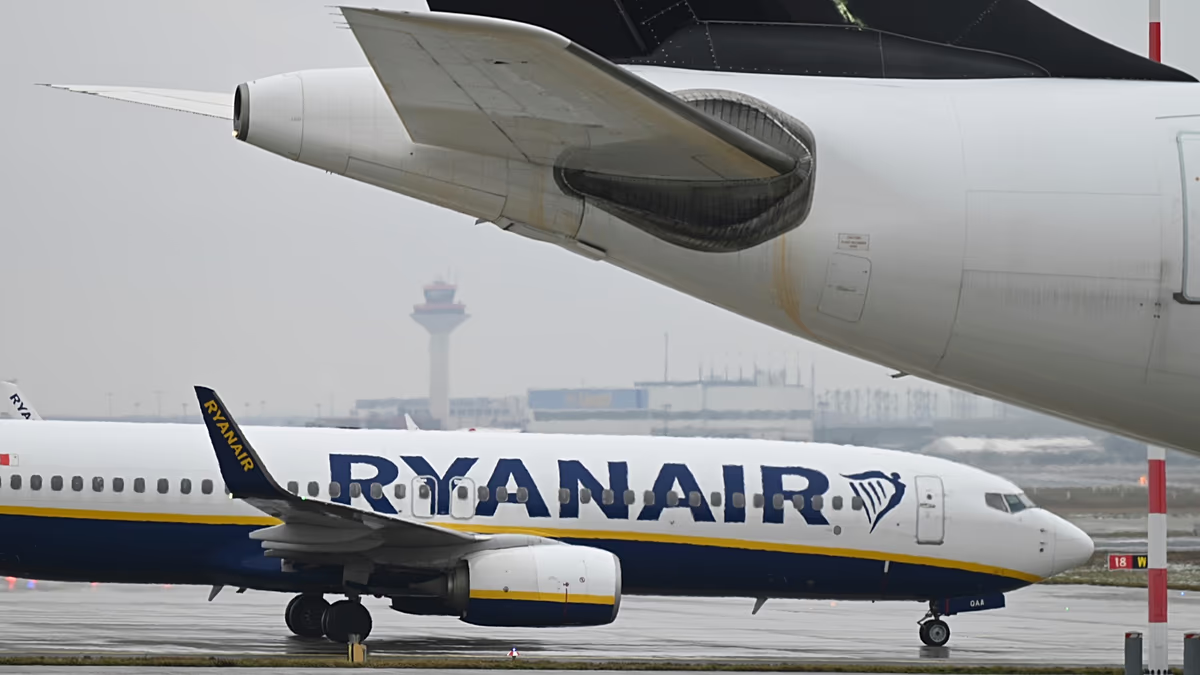
Ryanair, Europe’s leading budget airline, has escalated its conflict with European authorities by threatening to eliminate 20 additional routes across the continent, citing increasing aviation taxes and access costs as the primary cause. The airline has specifically targeted Belgium’s decision to raise its aviation levy to €10 per departing passenger for short-haul flights by 2027, along with Charleroi city council’s proposal to implement a €3 tax per departing passenger starting next year. According to the airline, these tax increases would significantly reduce demand while driving up airfares, making air travel less accessible to budget-conscious travelers. This aggressive stance continues Ryanair’s pattern of pushing back against what it perceives as excessive taxation across its European network, despite growing environmental concerns about aviation’s carbon footprint.
The Belgian tax increase comes as part of a larger budget strategy to address a €9.2 billion deficit by 2029, with Prime Minister Bart De Wever defending the move after months of difficult negotiations. Airports throughout Belgium have already warned that these additional costs will inevitably be passed on to passengers through higher ticket prices. In response, Ryanair has announced plans to remove five aircraft based at Belgian airports and cut 20 routes from its Brussels Winter 2026/27 schedule if both tax measures are implemented. This reduction would eliminate one million seats, representing a substantial 22 percent decrease in Ryanair’s Brussels traffic. Such dramatic cuts highlight the airline’s willingness to follow through on threats when faced with what it considers unfavorable regulatory changes, creating significant uncertainty for travelers who rely on the carrier’s typically affordable options.
Ryanair’s Chief Commercial Officer, Jason McGuiness, has been particularly vocal about the potential consequences of Belgium’s tax policy, arguing that repeatedly increasing aviation taxes risks making Belgium “uncompetitive” compared to other European Union nations. McGuiness pointed to countries like Sweden, Hungary, Italy, and Slovakia, which have eliminated similar taxes to stimulate air traffic and tourism growth. “Despite so many other EU countries taking this step to support their economies, Belgium is going in the opposite direction, driving up access costs and pushing airlines and tourism elsewhere,” McGuiness stated, urging Prime Minister De Wever to “scrap this damaging aviation tax before Belgian traffic, tourism, jobs and the wider economy collapse any further.” The airline executive specifically described Charleroi’s proposed aviation tax as “lunacy,” warning that thousands of local jobs could be lost if authorities proceed with the plan, emphasizing the economic interdependence between Ryanair’s operations and local employment.
This Belgian dispute represents just the latest chapter in Ryanair’s increasingly confrontational approach to aviation taxes across Europe. Just last month, the airline threatened to cancel all flights from Portugal’s Azores islands due to rising levies, potentially eliminating six routes and affecting approximately 400,000 annual passengers. Similar patterns have emerged in Spain, where Ryanair has already suspended winter services to cities like Santiago de Compostela, and in France, where the airline has signaled potential withdrawal from several regional airports. The carrier’s consistent argument follows a familiar template: accusing airport operators and governments of pricing themselves out of competitive markets while calling for taxes to be abolished or reduced to preserve service and jobs in affected regions.
What makes this conflict particularly significant is the tension between Ryanair’s business model—which relies on high-volume, low-margin operations—and the growing environmental imperative to address aviation’s climate impact. While Ryanair frames these taxes as purely economic burdens that harm consumers and regional economies, many of these levies are at least partially designed to help offset carbon emissions from short-haul flights and fund environmental initiatives. The airline’s aggressive opposition comes at a time when the aviation industry faces increasing pressure to address its environmental footprint, raising questions about the appropriate balance between affordable air travel and environmental responsibility. This fundamental tension appears likely to intensify as European countries pursue their climate objectives while airlines fight to maintain their operational models.
The outcome of this standoff between Ryanair and various European authorities will have significant implications not just for travelers seeking affordable flights but also for regional economies that have grown dependent on the connectivity and tourism that budget airlines provide. While Ryanair portrays itself as defending consumer interests and economic growth against excessive taxation, governments must balance these concerns against broader fiscal needs and environmental goals. As this conflict continues to unfold across multiple European countries, it highlights the complex challenges of regulating an industry that simultaneously provides essential connectivity, supports economic development, and contributes significantly to climate change. Whatever the resolution, it seems certain that the European aviation landscape will continue evolving in response to these competing pressures, potentially reshaping travel patterns and economic relationships throughout the continent in the coming years.