


Ryanair’s Short-Lived Prime Membership: A Loyalty Scheme That Cost More Than It Made
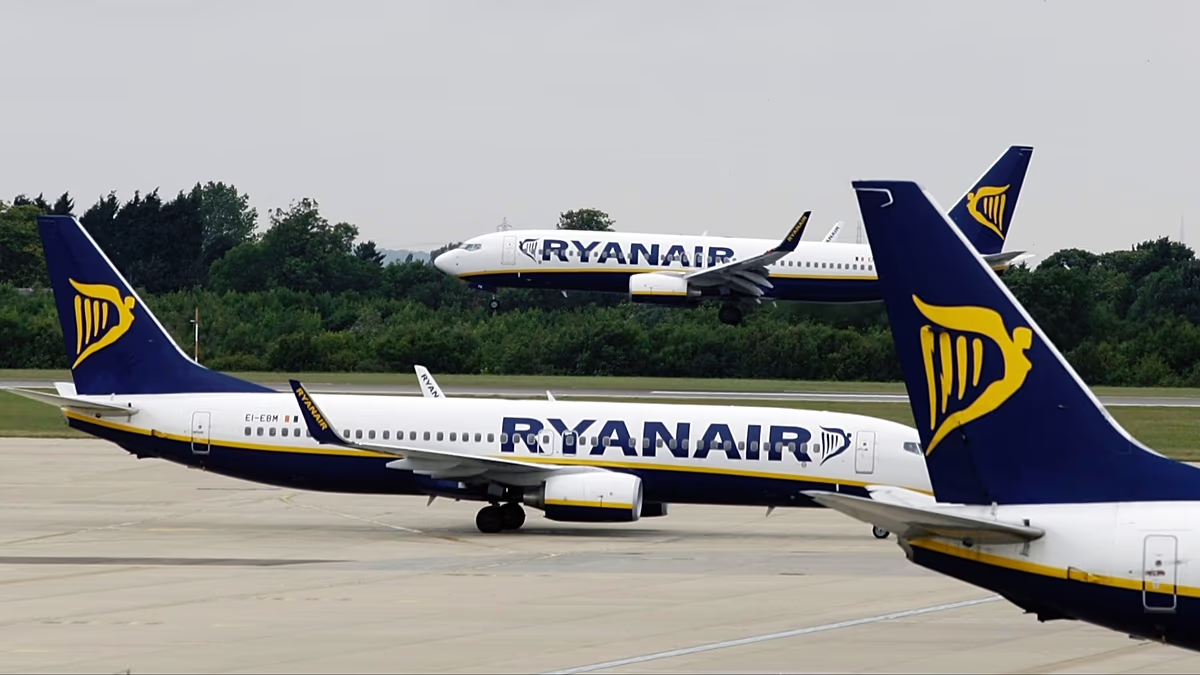
Ryanair’s ambitious Prime membership loyalty program has come to an abrupt end after just eight months, highlighting the challenges airlines face when balancing customer benefits with profitability. Launched in March 2025 as a premium option for frequent flyers who wanted perks without “breaking the bank,” the €79 annual subscription promised substantial savings and exclusive benefits. The program offered attractive features including free reserved seats, comprehensive travel insurance, and access to 12 member-exclusive seat deals throughout the year. Ryanair initially marketed the program with impressive savings projections, claiming that customers flying 12 times annually could save up to €420, while even those flying just three times yearly could benefit from savings around €105. These promises attracted 55,000 subscribers—a substantial number, but far short of the 250,000 customer limit Ryanair had established on a first-come, first-served basis.
The sudden termination announcement on November 28th revealed an uncomfortable truth for the budget airline: the loyalty program had become a victim of its own generosity. Despite generating approximately €4.4 million in subscription revenue over its brief lifespan, Ryanair admitted the program had provided members with more than €6 million in fare discounts and benefits. This imbalance created a financial drain rather than the revenue-boosting loyalty builder the airline had likely envisioned. Ryanair’s Chief Marketing Officer Dara Brady explained the decision in straightforward terms, stating that “this level of memberships or subscription revenue does not justify the time and effort it takes to launch monthly exclusive Prime seat sales for our members.” With Ryanair serving over 207 million passengers annually, the company determined that focusing on its core business model of providing Europe’s lowest fares to all customers made more financial sense than continuing to offer premium benefits to what Brady described as “this subset of 55,000 Prime members.”
For existing Prime members, the news isn’t immediately disruptive, as Ryanair has confirmed that current subscribers will continue to enjoy their benefits until their 12-month membership expires. However, the company has made it clear that renewals will not be possible, and November 27th marked the final day for new sign-ups. This approach allows Ryanair to honor its commitments to existing members while gradually phasing out the program without the negative publicity that would accompany an immediate termination. The handling of the program’s end reflects a strategic approach to minimizing customer disappointment while cutting losses on an initiative that simply wasn’t working as planned. It’s worth noting that Ryanair never described the program as a “trial” when it launched, suggesting that the airline had initially planned for Prime to become a permanent fixture of its customer offerings before the financial reality became clear.
The failure of Ryanair’s Prime program reveals interesting insights about airline loyalty schemes and customer behavior in today’s market. Unlike traditional frequent flyer programs that rely on accumulating points or miles for future redemption, Ryanair’s subscription model provided immediate, tangible benefits with each flight. This structure appears to have attracted customers who skillfully maximized the value of their membership, effectively taking advantage of the program’s generosity to such a degree that it became financially unsustainable for the airline. The outcome suggests that passengers—particularly those flying with budget airlines—are increasingly savvy about extracting maximum value from loyalty programs, potentially creating challenges for airlines trying to build customer loyalty without sacrificing profitability. The experience may cause other carriers to reconsider their approach to loyalty programs, perhaps favoring structures that more carefully balance customer benefits with sustainable business practices.
While the demise of Ryanair’s Prime membership represents a setback for the airline’s customer engagement strategy, it coincidentally aligns with growing environmental concerns about programs that encourage increased air travel. Campaign group Stay Grounded has been advocating for the prohibition of frequent flyer programs and the implementation of frequent flying levies, arguing that schemes incentivizing more flights contribute to climate breakdown. Similarly, the European Environment Agency has expressed concerns that loyalty programs promoting unlimited flying could worsen environmental degradation, overtourism, and carbon emissions—directly contradicting EU member states’ policies aimed at reducing transport-related greenhouse gas emissions by 14.3% by 2030. Though Ryanair’s decision was financially rather than environmentally motivated, the termination of Prime membership could be viewed positively by environmental advocates as a small step toward discouraging excessive air travel in an era of growing climate consciousness.
The short-lived Ryanair Prime membership story encapsulates broader tensions in the airline industry between competitive pricing, customer loyalty, profitability, and environmental responsibility. As airlines navigate the post-pandemic travel landscape, finding the right balance between attracting customers with appealing benefits while maintaining financially sustainable operations remains challenging. Ryanair’s experience suggests that overly generous loyalty programs may not be viable for budget airlines operating on thin margins, particularly when savvy travelers fully capitalize on the benefits offered. While the 55,000 Prime members may be disappointed by the program’s discontinuation, Ryanair’s decision to refocus on delivering low fares across its entire customer base reflects a return to the core business model that made it Europe’s largest low-cost carrier. As the industry continues to evolve, airlines will likely continue experimenting with different loyalty structures, seeking the elusive perfect formula that builds customer relationships without undermining financial performance or environmental goals.