




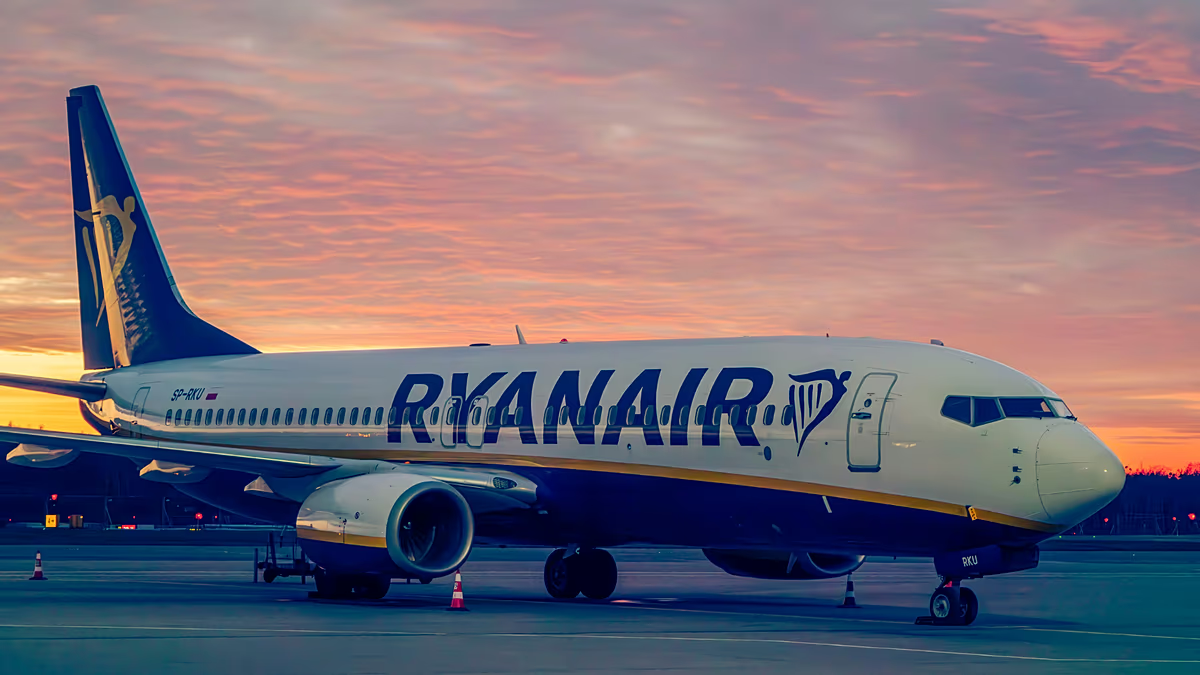
Ryanair’s Global Route Adjustments: The Big Shift in 2025-2026
In a year of significant transformation for Ryanair, 2025 has marked both expansion and contraction for Europe’s leading budget airline. While the carrier has announced exciting growth in its winter schedule across the UK, Finland, and Italy—including attractive new routes connecting London to Murcia and Rovaniemi to various UK destinations—it has simultaneously revealed plans for substantial route cuts across Europe in 2026. These changes reflect the airline’s strategic response to varying economic pressures and market conditions throughout its network.
The airline’s CEO, Michael O’Leary, has been vocal about ongoing challenges with Boeing, describing the aircraft manufacturer’s management as “running around like headless chickens” amid persistent delivery delays. Simultaneously, Ryanair’s recent transition away from physical boarding passes has generated considerable customer dissatisfaction. However, the most far-reaching announcement has been the planned elimination of numerous routes across major European countries including Germany, Spain, France, Belgium, and Portugal. This restructuring will potentially eliminate approximately three million seats from Ryanair’s overall capacity, with particularly noticeable impacts on regional connectivity for smaller cities that rely heavily on the airline’s services.
In Germany, the situation appears particularly severe, with Ryanair announcing cuts to 24 routes for Winter 2025/2026, eliminating nearly 800,000 seats. Nine German airports have already experienced service reductions, including major hubs like Hamburg and Berlin, while operations at Leipzig, Dresden, and Dortmund will remain suspended throughout 2026. Ryanair attributes these decisions to Germany’s prohibitive aviation taxes, excessive air traffic control fees, security charges, and frequent airport changes that undermine competitiveness. The airline has pointedly contrasted Germany’s approach with countries like Ireland, Spain, and Poland that have eliminated aviation taxes entirely, or with Sweden, Hungary, and parts of Italy that are reducing access costs to stimulate travel and economic growth. With German air traffic still operating at just 88% of pre-pandemic levels, Ryanair warns of further withdrawals unless the government addresses these cost issues—though environmental advocates might note these taxes also serve to account for aviation’s climate impact and encourage greener transportation alternatives.
Spain faces similar reductions, with Ryanair planning to cut approximately 1.2 million seats from its summer 2026 schedule for regional destinations. This includes ceasing all operations to Asturias and Vigo, closing its Santiago de Compostela base, reducing capacity for Santander and Zaragoza, and diminishing connections to the Canary Islands. The airline has already halted service to Tenerife North, Jerez, and Valladolid. These decisions stem from disputes with Spanish airport operator Aena over rising fees and taxes, along with government regulations on baggage fees that Ryanair characterizes as “illegal bag fines.” The airline argues that smaller Spanish airports now cost similar amounts to operate from as major hubs like Madrid and Barcelona but generate less revenue, making them uncompetitive compared to alternatives in Morocco, Italy, and elsewhere. Fortunately for Spanish travelers, competitors including Vueling, Binter, Iberia, and Wizz Air have moved to fill many of the service gaps.
France, Belgium, and Portugal are experiencing similar disruptions to their regional air connectivity. In France, Ryanair has already cut 750,000 seats and 25 routes for winter 2025, suspending service to Bergerac, Brive, and Strasbourg due to increasing French aviation taxes, though Bergerac service will resume in summer 2026 following negotiations with authorities. Belgium will lose 20 routes and one million seats from Brussels and Charleroi for winter 2026/27, representing a 22% capacity reduction, as Belgium doubles its aviation tax to €10 per passenger. Portugal faces particularly severe impacts in the Azores, where Ryanair will eliminate all six routes by March 2026, affecting approximately 400,000 passengers annually and representing a 22% reduction in the airline’s Portuguese capacity. The airline blames Portuguese airport operator ANA (Vinci) for imposing higher fees while exempting longer routes from EU emissions regulations, a claim ANA firmly denies.
Beyond these major markets, Ryanair is also implementing cuts in Bosnia and Serbia for summer 2026, primarily to redirect resources toward growing summer demand in neighboring Croatia. This includes reducing weekly flights from Banja Luka and Niš. Throughout these announcements, Ryanair has consistently positioned itself as responding to government-imposed cost increases rather than initiating service reductions, suggesting it would gladly restore or expand service if aviation taxes and airport fees were reduced. While this narrative serves the airline’s commercial interests, it also highlights the complex balance governments must strike between generating revenue, addressing aviation’s environmental impacts, and maintaining affordable air connectivity for their citizens. As these changes unfold throughout 2026, travelers in affected regions may need to explore alternative carriers or transportation options while Ryanair continues to optimize its route network for maximum profitability in an increasingly competitive and tax-burdened European aviation landscape.