






Montenegro, a gem tucked away in the Balkans, is quietly captivating the hearts of travelers weary of overcrowded destinations. Known as the “Black Mountain,” this pint-sized nation—home to just over 620,000 people and traversable by car in a mere two hours—has embraced a tourism strategy that prioritizes pristine experiences over sheer numbers. In a world where bustling resorts dominate, Montenegro stands out by championing authenticity, with untouched landscapes that beckon adventurers seeking genuine connections. As Tourism Minister Simonida Kordić puts it in a candid chat with Euronews, “We aim to be a premier spot for high-end services and stays, where visitors discover an untouched paradise perfect for active holidays and real, heartfelt moments.” It’s not just talk; the country has steadily drawn 2.5 million tourists annually, a staggering feat for the eighth-smallest European nation. Tourism fuels about a quarter of its GDP, sustaining livelihoods and inspiring pride among locals who cherish their homeland’s natural bounty.
The heartbeat of this resurgence lies in its evolving infrastructure, which blends luxury with accessibility. Major players like Hilton, Hyatt, Melia, Radisson, and Iberostar have invested in opulent complexes along the coast, transforming spots like the exclusive Porto Montenegro and the serene Bay of Kotor into havens for the discerning elite. Bursting with around 500 hotels—including an expanding roster of five-star palaces and intimate boutique retreats—these establishments cater to those who appreciate elegance without the frenzy. Air connectivity has also skyrocketed, with over 60 airlines linking Montenegro to European hubs and beyond, including direct flights from the U.S., China, and Israel. Kordić notes the thrill of having 130-plus direct connections from airports in Tivat and Podgorica, even welcoming summer services from Madrid and Barcelona. As a Euro-using country (without formal EU ties), Montenegro exudes a sense of sophistication, drawing Western Europeans alongside an eclectic mix of global wanderers.
Nestled at the crossroads of East and West, Montenegro’s rich tapestry of cultures adds layers of charm to every journey. Bordering Serbia, Bosnia and Herzegovina, Croatia, Albania, and Kosovo, its history as a cultural melting pot shines through in arched architecture, savory dishes melding oriental spices with Mediterranean zest, and time-honored traditions. What makes it magical is its compact scale—picture starting your day with a rugged mountain hike and ending with Adriatic waves lapping at your feet. Kordić captures the essence perfectly: it’s a surprise package of natural wonders, historical echoes, and unexpected joys in a country this diminutive. Exploring Montenegro feels like flipping pages in a living storybook, where each corner reveals a new chapter of adventure and discovery.
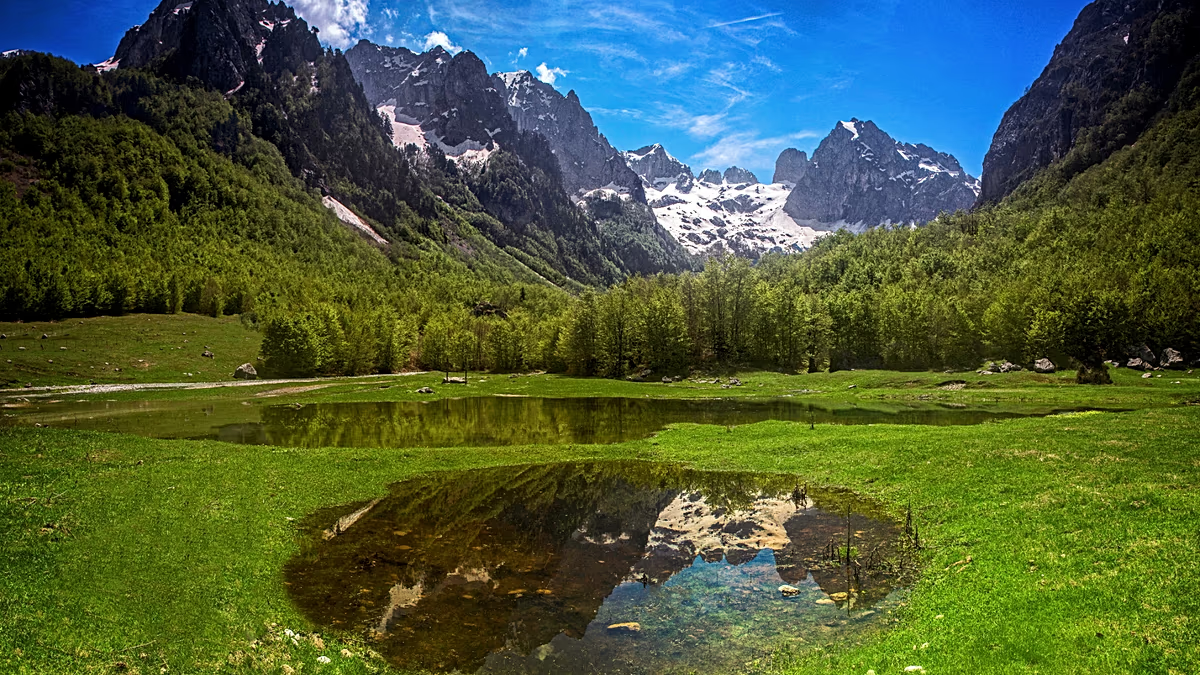
At the core of its allure are five national parks that preserve untouched wilderness, inviting explorers to commune with nature. Pride of place goes to Durmitor National Park in the north, a UNESCO World Heritage Site luring hikers from across Europe with its jagged peaks and crystal-clear alpine lakes. Adjacent to it, the Tara Canyon—rivaling the Grand Canyon in depth—cuts through verdant forests, offering vistas that stir the soul. Journeying southward, you’ll encounter the Ostrog Monastery, a 17th-century Orthodox pilgrimage perched dramatically on a sheer cliff in the Ostroška Mountains, its ethereal visage commanding breathtaking panoramas. These sites aren’t mere stops; they’re portals to introspection, where the rustle of wind through ancient woods and the echo of distant waterfalls remind you of the world’s enduring beauty.
Yet, it’s the Adriatic Coast that steals the show for most visitors, stretching nearly 300 kilometers of sun-kissed, fortress-lined shores. Budva, a vibrant city with 2,500 years of history, pulses as the Balkans’ answer to Saint-Tropez—think lively nightlife, golden beaches, and bobbing luxury yachts against a backdrop of Venetian echoes. At the southern edge, Ulcinj’s Velika Plaza tempts with over 13 kilometers of powdery sand, Europe’s longest uninterrupted beach. Echoing this coastal splendor are Cetinje, the erstwhile royal capital with presidential residences nestled between the Bay of Kotor and the expansive Skadar Lake, and Kotor itself—a UNESCO-listed medieval-walled jewel. Famously dubbed the “City of Cats” for its feline inhabitants (complete with a dedicated museum), Kotor’s bay, carving 30 kilometers inland, frames postcard-perfect scenes of craggy mountains meeting azure seas, a symphony of nature’s grandeur.
In an era where travelers crave sustainable, authentic escapes free from contrived spectacles, Montenegro emerges as a refreshing alternative, melding dramatic alpine vistas with luminous coastlines and a storied heritage. Minister Kordić’s words ring true: “Here, you embrace life’s genuine rhythm, not manufactured tourist tropes—we deliver fresh, authentic experiences.” With the euro strengthening its appeal and ambitions for EU accession potentially by 2028, Montenegro is shedding its veil of secrecy. It’s no longer an off-the-beaten-path whisper but a bold claim on the European tourist stage, promising adventures that linger in memory long after the journey ends. For those seeking respite from the mundane, the Black Mountain calls, inviting you to wander its hidden trails, savor its diverse flavors, and uncover a nation that’s wisely chosen depth over dazzle.