


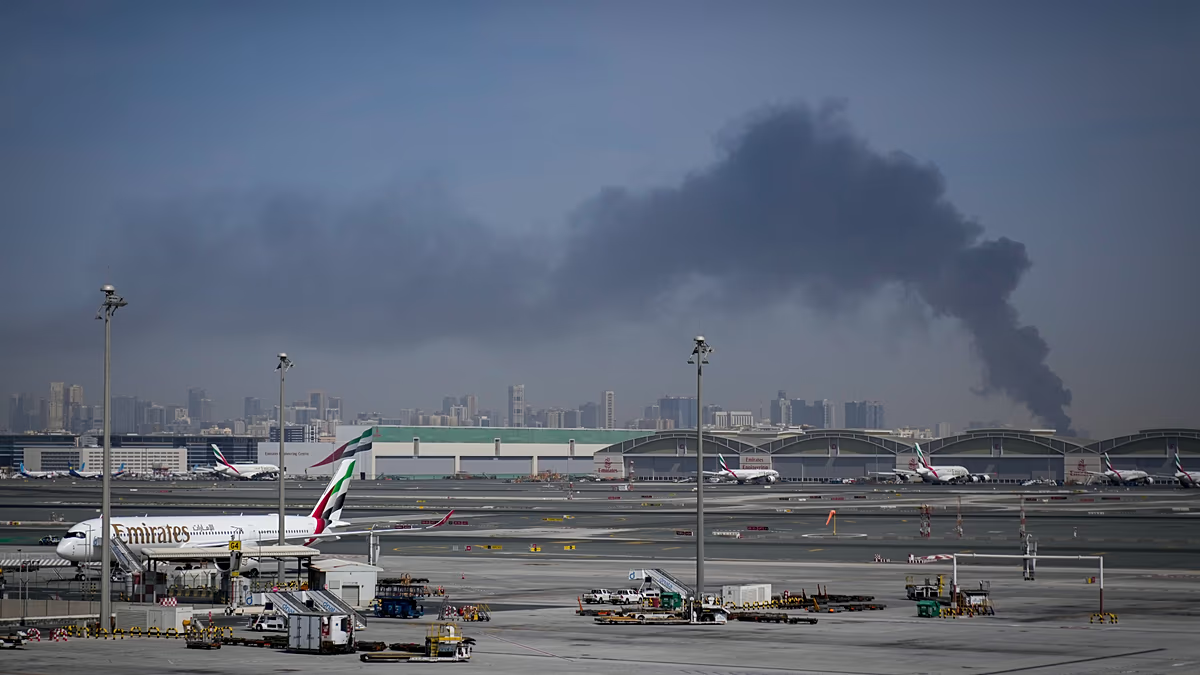
Shockingly, in the midst of escalating tensions, social media has exploded with vivid clips from thrill-seeking influencers and wide-eyed tourists capturing Iran’s retaliatory missile strikes being expertly intercepted over the Middle East skies. It’s like everyone with a phone turned into an accidental war correspondent overnight, but amid the buzz, local authorities are sounding urgent alarms. They’re warning that posting these seemingly harmless videos or photos could land you in serious hot water legally. Imagine scrolling through your feed, seeing those dramatic explosions, and thinking it’s just exciting content—until you realize you might be playing a dangerous role in real-world security. Officials stress that every shared clip risks exposing the exact locations of defensive military sites or the precise spots where attacks were thwarted, potentially aiding adversaries in perfecting their aim for future assaults. It’s a stark reminder that what feels like innocent sharing online can have profound, unintended consequences far beyond the screen.
Diving deeper, these restrictions aren’t born out of thin air; they’re rooted in the harsh realities of warfare. Similar rules restrict the public in Ukraine during Russia’s ongoing invasion, where loose lips—or in this case, unchecked posts—could jeopardize troops and operations. Picture the stress: citizens are gripped by anxiety, militaries are scrambling under potential leaks, and all while foreign powers might be analyzing every frame for weaknesses. It’s a modern twist on an old truth: information in conflict zones is a double-edged sword. As someone who grew up in a world of viral trends, it hits home how something as casual as hitting “upload” could fuel real harm, blurring the line between personal expression and national security. The human cost? Lives potentially endangered, all because curiosity trumped caution.
The situation escalated dramatically on February 28 when Bahrain’s Ministry of Interior announced the arrest of two individuals caught in the act. They were nabbed for livestreaming and posting footage of the strikes on social media, actions deemed a direct threat to public order. In their stern X statement, the ministry emphasized that filming, posting, or even reposting scenes from these events triggers legal accountability—no ifs, ands, or buts. It’s a chilling example of how, in the heat of crisis, what might seem like harmless documentation can cross into criminal territory. As a parent trying to navigate digital dangers, I can’t help but worry about how easily anyone—young or old—could stumble into this trap, mistaking adrenaline for advocacy.
Echoing this vigilance, other Gulf nations are rallying with similar pleas. Kuwait’s interior ministry urged the public to steer clear of capturing missile interceptions or frontline officials at work, warning that such acts could spark panic, disrupt security efforts, and spread unreliable info that muddies the truth. Qatar and Dubai’s media office joined the chorus, stressing restraint to dodge legal pitfalls tied to sharing aftermath visuals or rumors. It’s like a regional call to arms against misinformation, where every shared story risks amplifying chaos. Personally, it’s eye-opening how interconnected our online lives are— a single misguided share could ripple out, affecting families far and wide, turning neighbors into nervous wrecks.
At the heart of these warnings lies a profound need to trust only official voices in the fog of uncertainty. Authorities across the board are flooding Twitter (or X, as it’s now called) and agency websites with verified updates to combat panic and falsehoods. For Bahrain, folks can tune into @moi_bahrain or @bna_en; UAE residents might follow @DXBMediaOffice and @ADMediaOffice. Qatar points to @QNAEnglish and @MOI_QatarEn, while Kuwait suggests @kuna_en and @Moi_kuw. Jordan’s updates come from @PetranewsEN and @moi_jor, and for Saudi Arabia, check @Spa_Eng or @MOISaudiArabia. Embassies are also stepping up, offering tailored alerts to registered citizens. It’s a concerted effort to empower people with facts, not fear, reminding us that in a world of endless scroll, discernment is key.
Finally, Euronews has stepped in with a live blog from its bureaux in Doha and Dubai, keeping the pulse on developments accessible right on their homepage. As someone who’s followed global news closely, this collaborative approach feels reassuring—a way to humanize the horror by grounding it in trusted, transparent reporting. But it begs the question: in our hyper-connected era, how do we balance the thrill of real-time sharing with the heavy weight of responsibility? These arbitrary acts of posting could unwittingly empower escalations, yet they also highlight our shared humanity in wanting to witness history. Perhaps the real lesson is empathy: think before you post, because behind every policy is a real person—or country—paying the price. In the end, security isn’t just a directive; it’s a community pact in uncertain times.
As tensions continue to simmer, it’s crucial to reflect on how social media shapes our perception of conflict. While those dramatic intercepts look heroic on video, each click could be a breach in the armor. Bahrain’s arrests highlight the tangible consequences, showing that legal nets are tightening around casual content creators. It’s not just about following rules; it’s about preserving stability for everyone involved. Imagine if your impulsive share inspired copycat behavior or worse—highlighting just how interconnected our actions are in the digital age.
Kuwait and Qatar’s pleas underscore a broader trend of community safeguards, where restraint becomes a form of patriotism. By avoiding footage that incites fear or spreads nonsense, individuals contribute to a calmer narrative. This humanizes the crisis, transforming potential agents of discord into active participants in peace-keeping. As someone with a global family, I see parallels in how misinformation has derailed lives elsewhere, and it stirs a call to action: verify first, share second.
Turning to official channels, those social handles serve as lifelines, offering unfiltered truth amidst the noise. Euronews’s live updates epitomize reliable journalism’s role in demystifying chaos, bridging the gap between global events and personal understanding. In a landscape rife with fake news, these sources empower us to stay informed without endangering others— a reminder that knowledge, when sourced right, is a shield, not a sword.
Ultimately, the call is to humanize our digital habits, recognizing that behind every post lies a potential ripple of real-world impact. Whether you’re an influencer chasing views or a concerned citizen, prioritizing security over spectacle fosters a safer, more united world. The Middle East’s standoff is a poignant teacher: in conflict’s shadow, our choices online echo loudly, shaping not just narratives, but destinies. As we navigate this era, let’s choose connection over indifference, ensuring our feeds fuel hope, not havoc.