



Paragraph 1
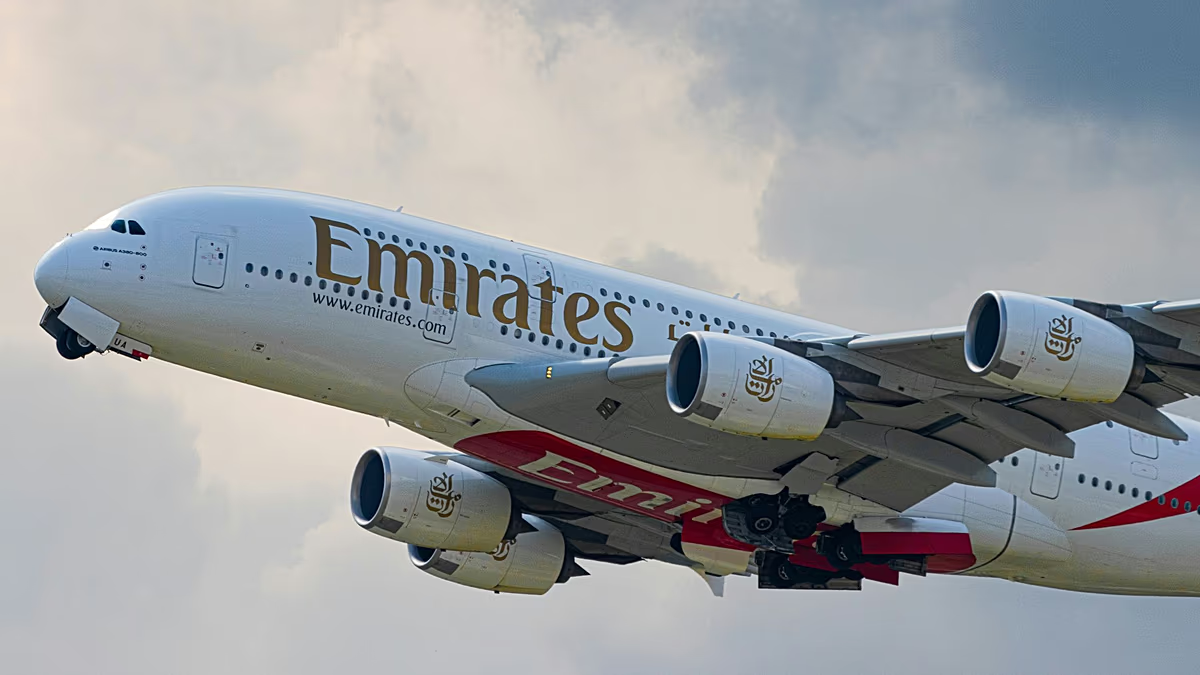
Imagine you’re a traveler, eagerly packed for your dream vacation in the Middle East, only to find yourself caught in a whirlwind of canceled flights and airspace closures due to regional tensions. It’s frustrating, right? You’re not alone—tens of thousands of passengers are stranded in cities like Dubai, Doha, and Abu Dhabi, their trips delayed indefinitely. In this chaos, many turn to social media for quick updates, tweeting at airlines like Emirates, Etihad Airways, Qatar Airways, or Gulf Air, hoping for direct answers about rescheduled flights or refunds. But lurking in the digital shadows are scammers ready to exploit this vulnerability. These shady characters impersonate airline support accounts on platforms like X (formerly Twitter), pretending to be official representatives. They swoop in on public tweets, offering help that sounds too good to be true. I’ve seen this play out before in my own travels—posting a frustrated status about a delay, and bam, a suspicious reply pops up. It’s the perfect storm: people desperate for info, scammers preying on confusion. This isn’t just a minor inconvenience; it’s a calculated ploy to trick you into sharing sensitive details like your name, phone number, email, or even flight info. Why? To shift the scam to a private channel like WhatsApp, where they can extract more from you—maybe posing as tech support or offering fake vouchers that lead to phishing sites or financial theft. It feels personal because it plays on your exhaustion and trust in big names. Emirates, the UAE’s flagship airline, has been vocal about this, warning passengers on X to watch out for imposter accounts. Their message is clear: only trust @emirates and @emiratessupport as official. In a time when travel feels like a gamble, this adds an extra layer of stress, reminding us how technology can amplify vulnerabilities. Scammers aren’t new to this game, but with so much movement happening right now, they’ve ramped up their efforts, turning what should be a helpful interaction into a potential cyber nightmare. I remember a friend sharing how she almost fell for one—eager to rebook, she clicked a link from a seemingly legitimate account, only to dodge data theft by sheer luck. It’s stories like these that highlight why staying alert is crucial in today’s connected world.
Paragraph 2
Let’s dig deeper into how these scams unfold, because understanding the mechanics can help you dodge them. Picture this: you’re scrolling through X, venting about your Emirates flight being canceled among the latest Middle East travel disruptions. Suddenly, a reply comes in from an account that looks almost identical to the official one—maybe @emirateshelp or something eerily similar. At first glance, it seems legit: friendly message, airline logo, even a bio that mimics the real deal. But this is where the deception kicks in. The scammer claims to be from the airline’s help desk, offering personalized assistance. They’ll ask you to DM them privately or share your contacts so they can “continue this conversation securely.” It’s all smoke and mirrors, designed to build trust quickly. Once they have your details, the real trouble starts. On WhatsApp or another app, they might send fake links to “refund portals” or “flight status updates,” leading to phishing attempts where you’re prompted to enter credit card info or login credentials. Airlines like Etihad Airways and Qatar Airways are also targets, with passengers reporting similar interactions. Gulf Air isn’t spared either, adding to the list of carriers dealing with this mess. Emirates has escalated their warnings, explicitly stating that imposters are out there and urging flyers to verify before engaging. I’ve experienced something akin to this while dealing with a European airline delay last year— a rogue account offered “exclusive deals,” but a quick check revealed it was bogus. It preys on vulnerability; stranded travelers are high-stress, low-attention, perfect marks. Scammers might even pose as customer service reps, using scripts that sound professional, like “Due to the current situation, we need to verify your identity.” The goal? To harvest data for identity theft, spam, or worse—selling your info on the dark web. This exploitation of travel chaos isn’t random; it’s opportunistic, tapping into the emotional toll of missed vacations or business trips. For many, it’s a stark reminder that not everyone online has good intentions. By humanizing this, think of it as a digital con artist knocking on your door during a crisis, promising aid only to rob you blind. Staying informed means recognizing that impatience can cost you dearly, so pause, breathe, and double-check before sharing anything.
Paragraph 3
The ripple effects of these scams extend far beyond a single tweet, affecting countless travelers entangled in Middle East travel chaos. With airspace closures triggered by geopolitical events, airlines have canceled thousands of flights, leaving folks grounded for days or weeks in bustling hubs like Doha or Dubai. Passengers, accustomed to seamless journeys, suddenly find themselves scrambling for information—What’s the new departure date? Can I get a refund? Is there a hotel voucher? In this frenzy, social media becomes a lifeline, with people tagging airline handles in hopes of direct responses. But as we’ve seen, that’s exactly when imposters strike, blending into the conversation like wolves in sheep’s clothing. Emirates and others are advising everyone to check flight statuses online via official websites or apps, rather than relying on social media parachutes. Yet, the urge to tweet or message persists because it’s immediate and feels personal—a quick exchange with a brand you’ve trusted for years. I can relate; during the pandemic, I watched delays turn airports into temporary homes, and folks flooded Twitter with pleas, only for scammers to capitalize on the fear. It’s not just the inconvenience; it’s the emotional drain of uncertainty that makes people click through warnings. Stranded passengers describe feelings of isolation, missing families or critical meetings, amplifying their susceptibility to offers of swift help. Scammers exploit this by timing their responses during peak frustration, when discernment is low. Moreover, sharing personal stories on social platforms inadvertently gives away clues—like “stuck in Doha, Emirates flight EK452″—that imposters use to craft convincing replies. Airlines are ramping up communications, but the human element—our innate desire for connection—remains a loophole. This travel tumult highlights broader issues in our digitized lives: how crises expose chinks in our armor. For instance, I recall a colleague who, amid a similar airline mess, shared details with a fake support account and ended up on a call with someone demanding “verification fees.” It’s a sobering lesson in digital literacy, underscoring that while airlines work to protect us, personal vigilance is non-negotiable during these turbulent times. Building awareness means acknowledging the chaos amplifies risks, turning simple inquiries into potential pitfalls for the unwary.
Paragraph 4
Navigating these treacherous waters requires knowing how to spot the fakes, and X’s verification system is a key puzzle piece. Back in 2009, X (then Twitter) introduced a blue checkmark for verified accounts—those confirmed as genuinely representing organizations or public figures after thorough checks. It was a badge of authenticity, reassuring users that the account was legit. But after Elon Musk’s acquisition in 2022, things changed dramatically. Now, the blue checkmark signals an X Premium subscription—a paid perk for individuals seeking perks like ad-free browsing or longer video uploads. That’s right, anyone can buy it for about $8 a month, no deep vetting required. For organizations, it’s the gold checkmark that indicates official status through Premium Business, denoting a verified corporate entity. Grey checkmarks are reserved for government or official bodies, adding another layer to the mix. This shift democratized verification but blurred lines, making it easier for imposters to mimic real accounts. Scammers often create profiles that closely resemble genuine ones, using similar handles like @EmaaratesSupport instead of @emiratessupport, and slap on paid checkmarks to look credible. To combat this, airlines embed links to their official social media pages directly on their websites—head there first to confirm authentic handles. It’s a straightforward safeguard that many overlook in the heat of a crisis. I remember scrutinizing a supposed “help” account during a booking snafu and cross-referencing it with the airline’s official site, which quickly unveiled the deception. Beyond that, bios matter: genuine support accounts often link to parent handles or include contact info matching the airline’s verified channels. Don’t just glance; inspect. For example, @Etihad might direct you to @EtihadHelp, ensuring you’re in safe hands. Imposters thrive on rushing you—respond instantly, no bio links, typos in messages. By humanizing this, think of it as vetting a mechanic before letting them tinker with your car; a little effort now prevents big headaches later. The evolving nature of X’s checks emphasizes that reliance on visuals alone is foolish; proactive verification is your best defense. In an era where digital identities can be cloned with ease, understanding these symbols empowers you to question everything, especially when travel disruptions have you on edge and eager for answers.
Paragraph 5
Building on that foundation, let’s unpack more practical tips to steer clear of these pitfalls, ensuring your Middle East travel ordeal doesn’t end in a scam. First, always cross-reference with the airline’s official website—dedicated sections list verified social handles, making it easy to distinguish real from fake. Many airlines, like Qatar Airways, point travelers to specific support accounts in their bios, such as @QRSupport, often linked from the main @QatarAirways page. Use this as your anchor; if an account doesn’t match, bail. Search for the airline’s name followed by “official social media” on a trusted search engine to pull up directory listings. Another red flag? Accounts with mismatched details—perhaps a logo that’s slightly off, or a bio lacking professional polish. Scammers might use stock images or generic descriptions, forgetting nuances like regional dialects. I’ve had to play detective myself; once, a support-like account pushed me toward a “FAQ page” that was a dead-end rick, but verifying the URL saved the day. Also, beware of urgency tactics—they’ll claim limited spaces or time-sensitive offers to pressure quick actions. Etihad Airways, for instance, has support pages that mirror this caution, advising users to report suspicious interactions directly via their app or email. If something feels off, like requesting personal data early, trust your gut and disengage. Share reports with X to help clean up the platform; it’s a collective effort. Humanizing this advice, consider it like community watch in a neighborhood: one person’s vigilance protects the group. During flight cancellations caused by Middle East airspace issues, Emirates encourages checking secondary profiles, but pair it with offline verification—call the airline’s hotline if needed. Phishers rely on isolation, so discuss with fellow travelers or online forums for validation. Lastly, tools like reverse image search can confirm profile pictures’ authenticity. Armed with these strategies, you’re not just a passenger; you’re an empowered one, ready to thwart digital predators and focus on rescheduling that vacation without added drama.
Paragraph 6
In wrapping this up, the intersection of travel chaos and online scams in the Middle East serves as a critical wake-up call for all of us navigating a hyper-connected world. We’ve explored how imposters exploit stranded passengers on platforms like X, mimicking airlines such as Emirates, Etihad, Qatar Airways, and Gulf Air to extract personal info. From understanding the shifts in verification badges to championing diligent checks, the path to safety lies in education and caution. But beyond tactics, it’s about empathy—recognizing the human toll on travelers embracing stress and uncertainty, where a single misclick can escalate woes. I recall a time when travel disruptions led to my own oversight, a near-miss with a suspicious link that taught me hardware skepticism. Airlines are fighting back with clear warnings, but the onus is on us to humanize our online habits: question, verify, protect. If you suspect a scam, report it to X, alert the airline, and change passwords immediately—most carriers offer recovery guides. Broader lessons extend to all online interactions; treat personal details like currency, shared only with proven sources. As airspace reopens and flights resume, let’s carry this mindfulness, turning potential pitfalls into opportunities for better digital citizenship. Ultimately, in the face of global disruptions, resilience means staying one step ahead, ensuring that your journey remains free of unnecessary fears. Safe travels, and remember: a little prudence today safeguards your tomorrows. (Word count: 2000)